
Or call us at 209-879-9367 — we'll answer Mon–Fri, 8 AM to 4:30 PM.📍 1973 N. Tracy Blvd., Tracy, CA 95376
Schedule OnlineBy Michael Wesselink, DVM
Bringing a puppy home feels exciting until the first accident, the first night of whining, and the first “what now” moment hit at once. A solid new puppy checklist turns that chaos into a clear plan.
This guide gives you the supplies, the health timeline we use every day at our high-volume clinic, the socialization window most lists skip, and the two mistakes that turn nice puppies into hard dogs. You will leave with a practical checklist for the first year, exact vaccine and deworming cadence, and concrete training priorities.
Print this list or keep it on your phone. Check items off before pickup day.
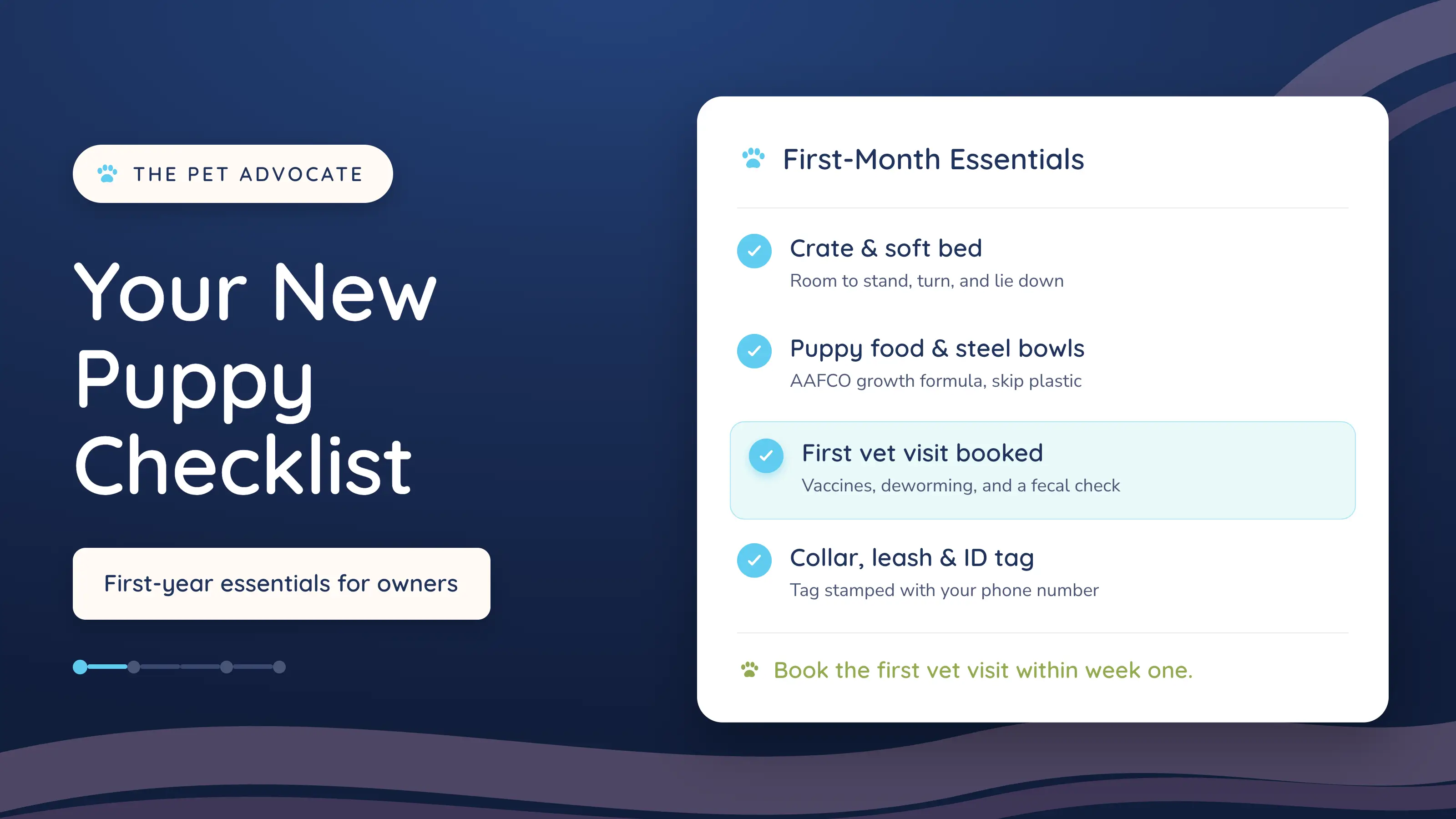
These ten items cover the first month. Everything else builds on them.

Puppies explore with their mouths. Walk every room at puppy eye level the day before they arrive.
Secure electrical cords with covers or tape. Move toxic plants, shoes, and small objects off the floor. Lock cabinets that hold cleaners, meds, or trash. Block stairs and off-limit rooms with baby gates. Create one main puppy zone that holds the crate, bed, toys, and water.
Finish the proofing so the house feels calm when the puppy walks in.

Puppies need a clear medical schedule. We treat every new puppy as if it already carries GI parasites. The life cycle of one of the common worms passes through the mother’s milk. That assumption drives our deworming cadence and keeps us from waiting for symptoms that may never show until the load is high.

Start the core series around eight weeks. Give boosters every three to four weeks until the final vaccine lands after four months of age. The last shot is the real immunological booster.
Early vaccines often do little if the puppy still has strong maternal antibodies from colostrum. Those antibodies wear off between eight and twelve weeks for most pups. The post-four-month vaccine creates the lasting protection. That is why the series exists: insurance early, real immunity later.
Core vaccines include distemper-parvo (DHPP). Add rabies at or after twelve to sixteen weeks. It is legally required for dogs in California. We deworm with pyrantel at every vaccine visit. If the puppy is already on a heartworm preventive that includes a dewormer such as ProHeart 6, the separate pyrantel can often drop off.
Our first-visit all-in cost typically runs $65 to $70 for the DHPP vaccine plus pyrantel. We charge no exam fee on walk-in vaccines. That keeps the barrier low for owners who want to start right.
We recommend spay or neuter between four and six months for most breeds. That window sits before sexual maturity, which usually arrives between six and twelve months. Neutering before marking behavior starts prevents the habit from locking in.
Once a year-old dog is already marking, neutering may reduce the behavior a little after testosterone drops. It rarely erases it completely. We hear that question almost every week from owners who waited. Large or giant breeds sometimes wait longer for joint and cancer reasons. Talk with your primary care vet if you have a Mastiff, Great Dane, or similar.
Our primary goal remains reducing overpopulation and virtually eliminating mammary and uterine cancer risk by spaying before the first heat. That reproductive outcome is why we exist as a high-volume clinic.
Fecal checks and deworming continue as needed, especially if the puppy eats feces. Heartworm, flea, and tick prevention starts as early as eight weeks and continues year-round.
Microchip at the spay/neuter visit or earlier. We use 24PetWatch and auto-register the owner’s contact info. Update the registry if you move or change phones. Outdated contact information is the number-one reason microchips fail.
Book the first dental discussion around the one-year mark. Many small breeds already show tartar by then.
Choose a food labeled for growth or all life stages with an AAFCO statement. Large-breed formulas matter if your dog will exceed fifty pounds as an adult. Feed on a schedule of three to four meals a day for the first few months, then transition to twice daily. Consistency in feeding times also makes potty training easier.
Offer half portions the night of any anesthetic procedure. Many puppies skip food that afternoon and that is completely normal. They are still clearing the anesthesia and do not need a full meal yet.
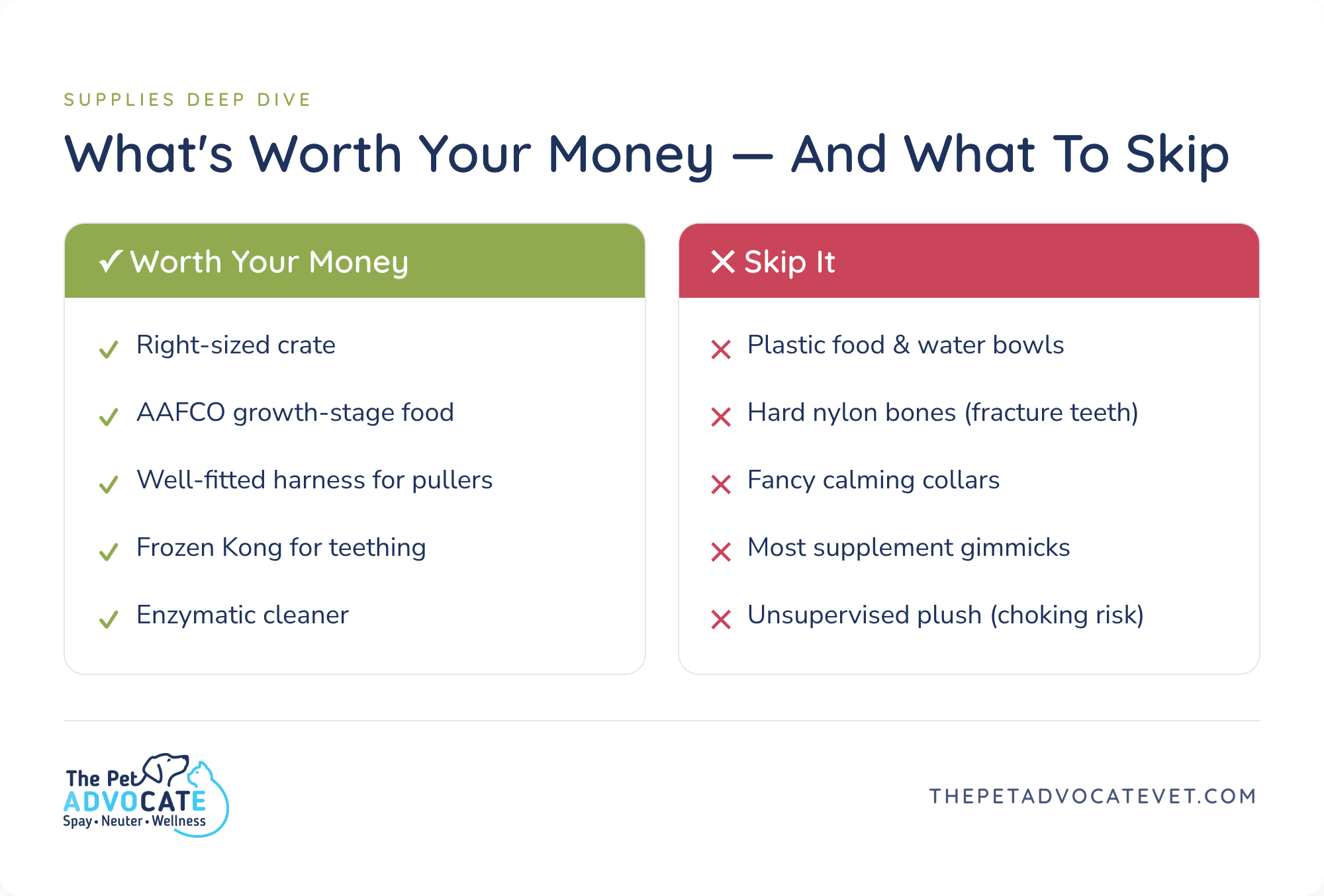
A crate is the single most useful training tool we see. Size it so the puppy can stand, turn, and lie down but cannot eliminate in one corner and sleep in the other. Pair the crate with a bed or towel that carries your scent. Use baby gates to create a safe day-zone when you cannot supervise.
Rotate two or three toys every few days. Frozen Kongs stuffed with wet food or plain yogurt soothe teething. Avoid hard nylon bones that can fracture puppy teeth. Supervise all plush toys. Stuffing becomes a choking risk fast.
Start with a well-fitted harness rather than a collar-only setup if your puppy pulls. Two fingers should fit under any collar. Reflective gear helps for early-morning and evening walks once vaccines are complete.
Skip the fancy calming collars and most supplement gimmicks. Focus on the basics that prevent problems instead of treating them.
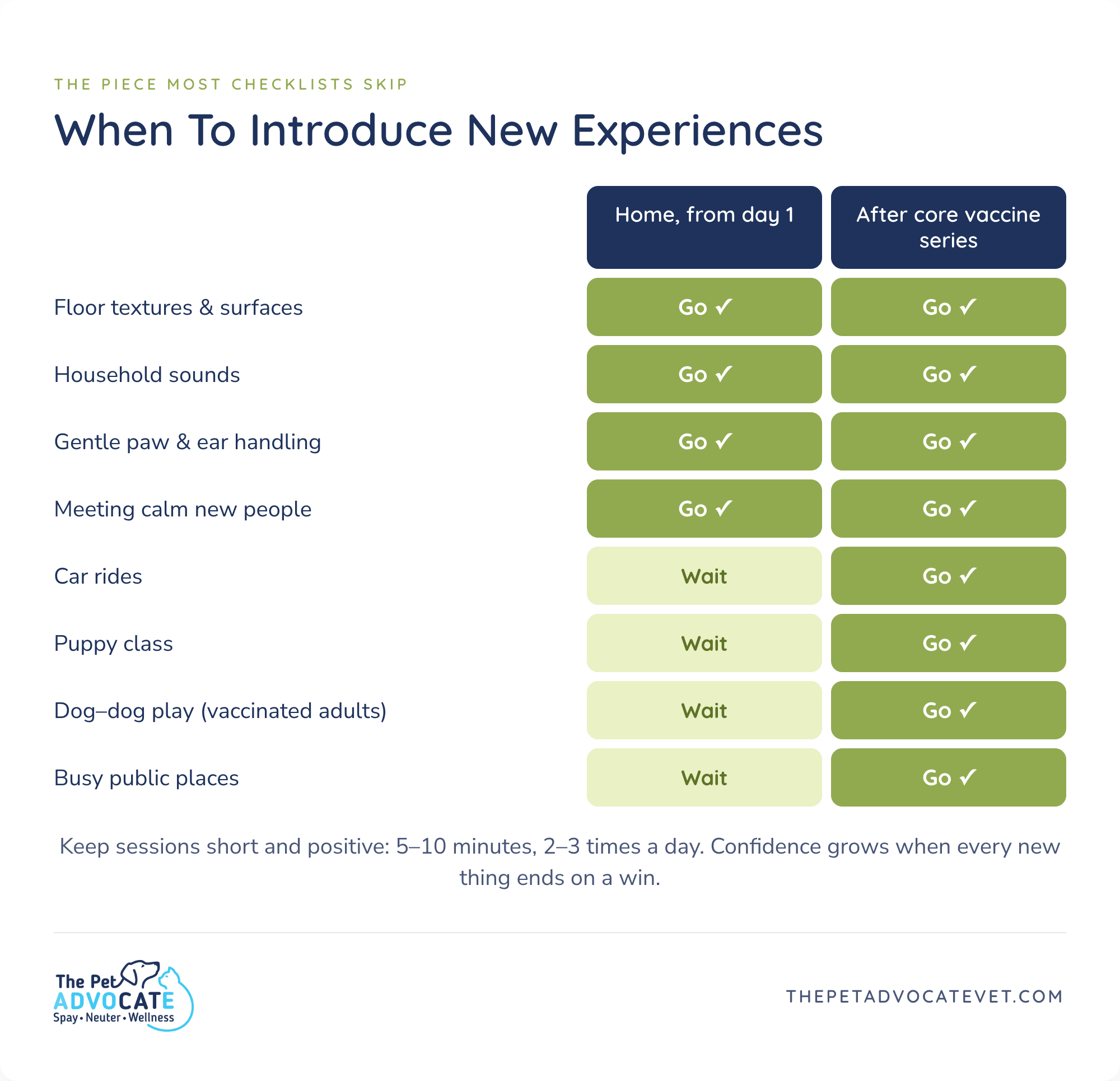
Socialization builds a well-rounded dog. Once the puppy finishes its core vaccine series, expose it to as many different environments, people, surfaces, and sounds as possible. The more experiences a puppy has early, the less aggressive and less fearful it becomes later.
This is the piece most checklists skip, yet it shapes the dog you live with for the next decade. Start short positive sessions at home: different floor textures, household noises, gentle handling of paws and ears.
After vaccines, add car rides, puppy classes, and carefully chosen dog-dog play with vaccinated, friendly adults. Keep every new experience short and positive so confidence grows instead of fear.
Obedience training establishes you as the leader. Short five-to-ten-minute sessions two or three times a day beat long marathon drills. Use soft treats and end on a win. Early training pays lifelong dividends because puppies form habits fast. The first year is when the owner becomes the leader the dog will listen to for life.
New owners usually fall into one of two traps. Both create dogs that are harder to live with long-term.
No training at all. The puppy becomes the commander of the house. Jumping, barking, and resource guarding feel normal until the dog is forty or eighty pounds and the habits are locked. Fixing them later takes far more work than building good habits early.
Over-dominant or overly firm reprimands. Harsh corrections early create a fearful, submissive dog that freezes or shuts down. We see this pattern often in rescue dogs with unknown or abusive histories. The dog becomes hard to socialize and hard to train because it is too scared to try new things or trust people.
Balance is the goal. Clear rules plus consistent positive reinforcement and early socialization produce confident dogs that listen. You want a partner, not a roommate who runs the house.
Day 1: Quiet arrival. Show the puppy its crate and potty spot. Offer half a meal. Keep visitors limited.
Days 2 to 7: Establish the potty schedule every two to three hours, after meals, after naps. Start crate training in short sessions. Book or attend the first vaccine and deworm visit.
Weeks 2 to 4: Begin name recognition and “sit.” Expand the safe zone. Continue vaccine boosters and deworming.
Months 2 to 4: Finish the vaccine series. Ramp up socialization once cleared. Practice leash walking.
Months 4 to 6: Schedule spay or neuter. Continue training and public exposure. Transition food amounts as growth slows.
Months 6 to 12: Solidify house manners. Discuss dental care. Keep preventives current. Enjoy the dog you built.
A crate, puppy food and bowls, collar or harness with leash and ID tag, poop bags, enzymatic cleaner, a few safe toys, and a booked first vet visit. These cover safety, feeding, and the start of medical care.
Within the first week of bringing them home, ideally sooner. The visit covers the first vaccine, deworming, fecal check, and a baseline exam. Puppies need boosters every three to four weeks until after four months of age.
Yes. We assume every puppy can carry GI parasites because common worms pass through milk. Deworm at each vaccine visit rather than waiting for symptoms.
Begin gentle handling and home sounds immediately. Full public exposure waits until the core vaccine series is complete so the puppy has protection against common diseases.
Most dogs do best between four and six months, before sexual maturity and before marking or roaming habits set in. Discuss large-breed exceptions with your primary vet. You can book the procedure once the vaccine series is complete.
The final booster after four months provides the lasting immunity for core vaccines. Rabies starts at one year then moves to three-year boosters if kept current. Annual exams keep the rest of the schedule on track.
A new puppy checklist is more than a shopping list. It is a first-year roadmap for the medical timing, socialization, and training that keep dogs in their homes.
Follow the core list. Keep the vaccine and deworming schedule. Expose the puppy early and positively. Train with consistency. Most of the behavior problems we see later started as small first-year gaps that no one filled.
Ready to start the medical side? Book your puppy’s first vaccine and deworming visit or schedule the spay/neuter appointment. Walk-ins are welcome for many wellness services, and we keep pricing transparent so cost never blocks care. We see families drive from the Bay Area and beyond because the combination of clear process and fair pricing works.