Or call us at 209-879-9367 — we'll answer Mon–Fri, 8 AM to 4:30 PM.📍 1973 N. Tracy Blvd., Tracy, CA 95376
Schedule OnlineBy Mike Wesselink, DVM (UC Davis School of Veterinary Medicine, 2015). Last updated September 2026.
Most dogs recover from a neuter within 10 to 14 days. Plan on 10 days of rest and a cone for 14 days. The night of surgery, many dogs will not touch their food. That worries owners, and it is completely normal.
I am Dr. Mike Wesselink. My team in Tracy performs these surgeries five days a week. I have watched thousands of these recoveries, from the surgery table to the follow-up call. The notes below are the same ones we walk through at pickup.
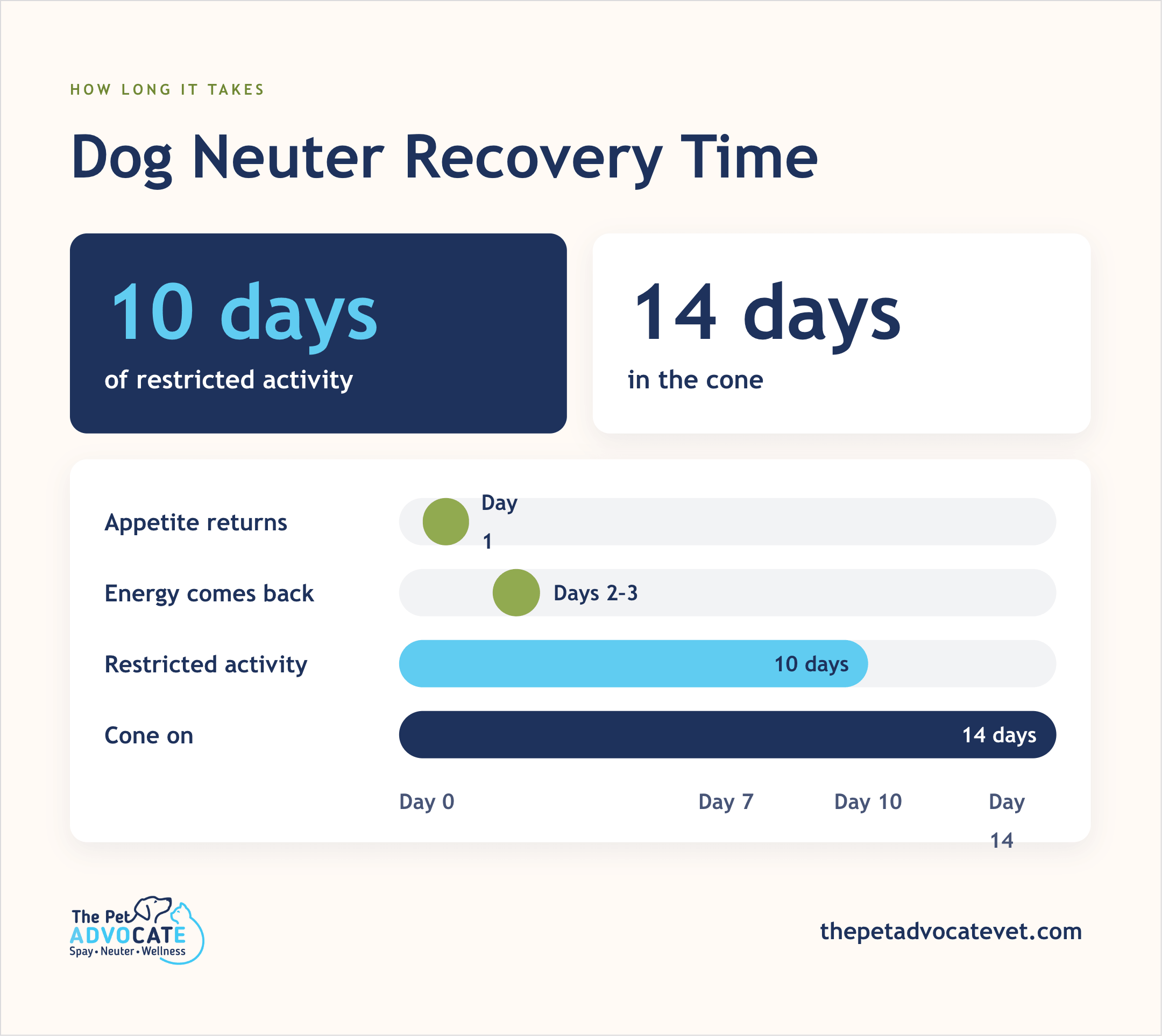
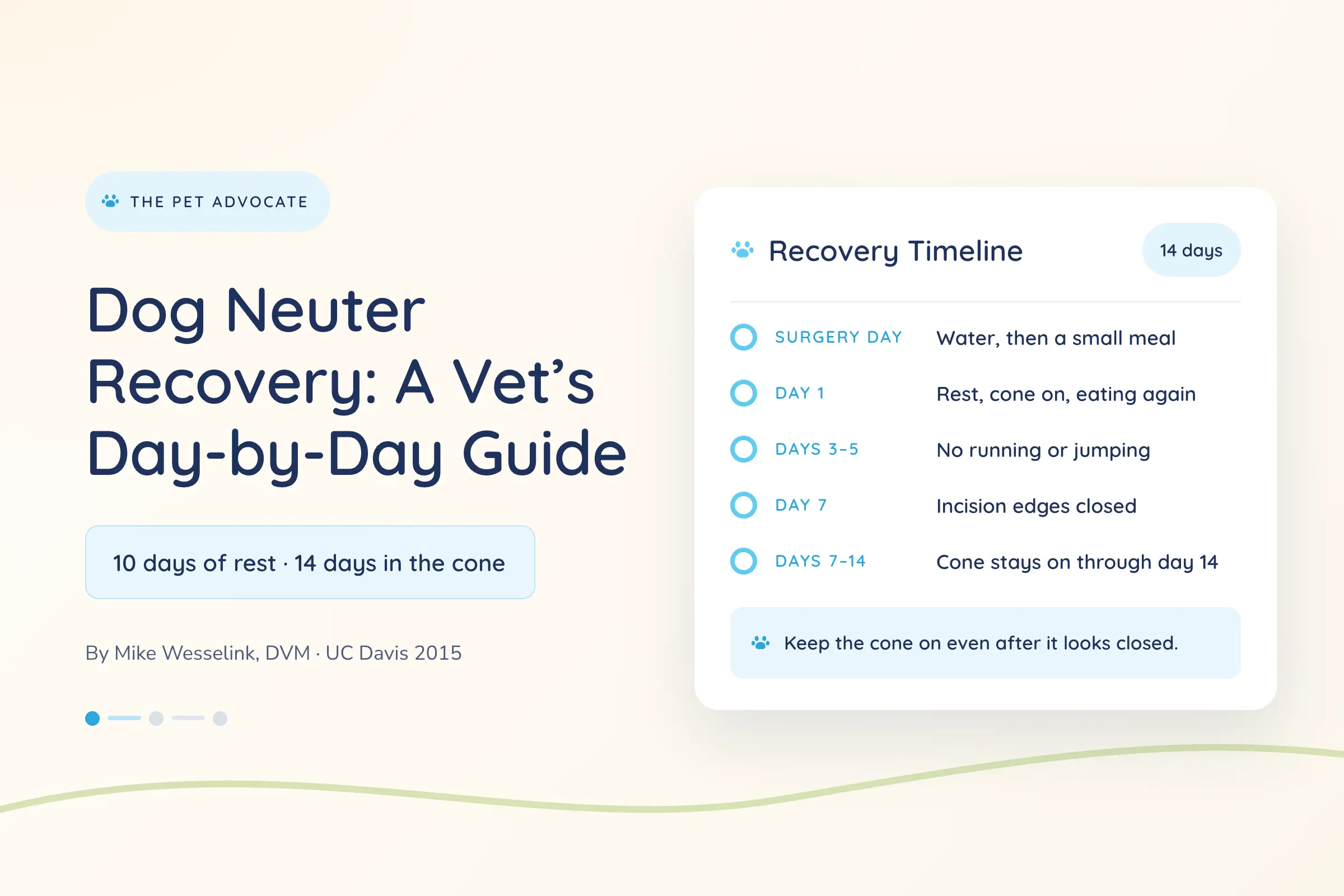
Most dogs need 10 days of restricted activity and a 14-day cone after a neuter. Appetite usually returns the day after surgery, and the urge to move comes back by day two or three.
The AKC’s post-surgical care guide tells owners to plan on 10 to 14 days and to keep walks short and on a leash. That matches the sheet we send home.
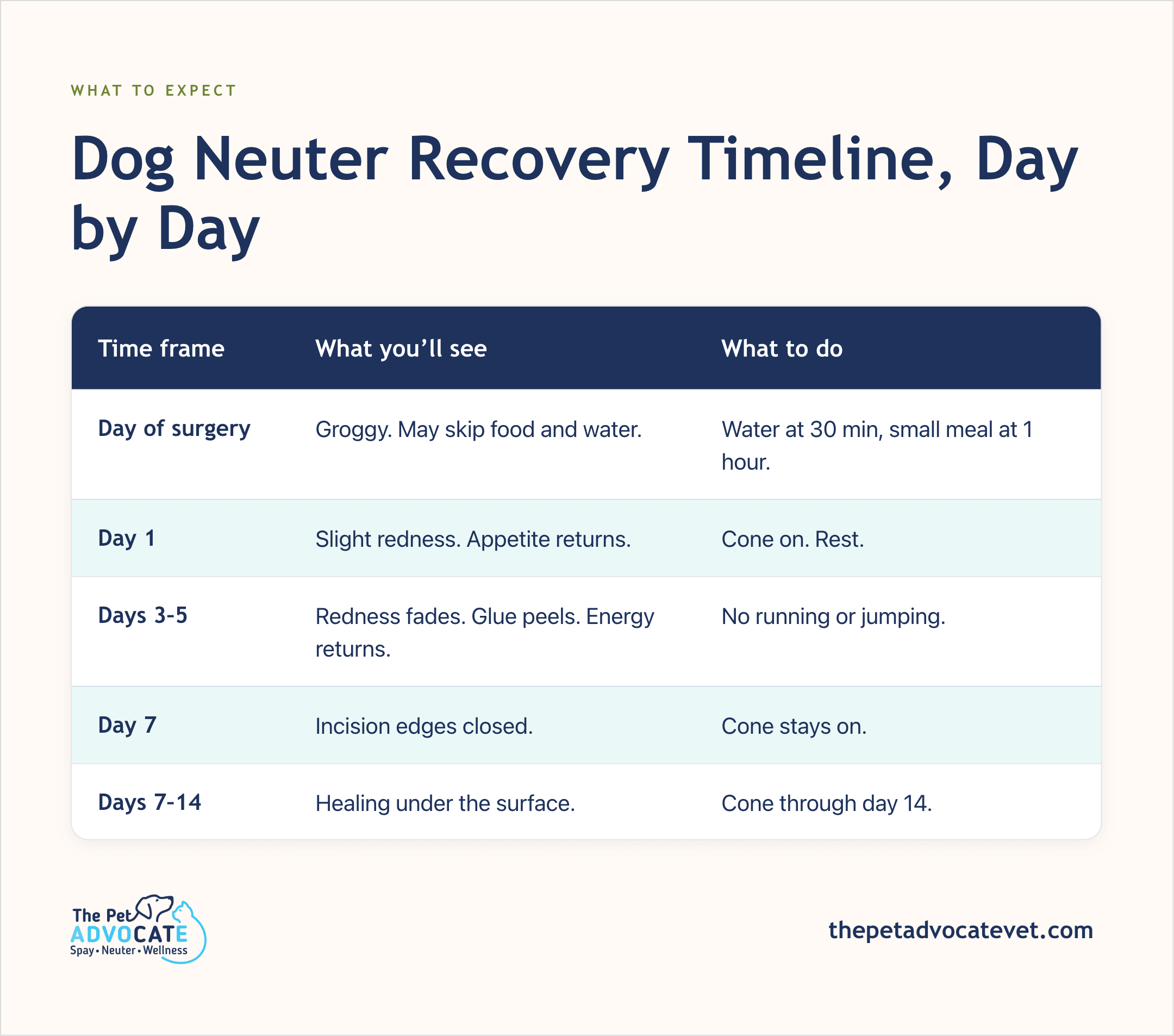
This is the dog-neuter timeline I give every owner at pickup. It matches the discharge instructions you take home.
| Time frame | What you will see | What to do |
|---|---|---|
| Day of surgery | Grogginess from anesthesia. Many dogs skip food and water that afternoon. | Offer water 30 minutes after you arrive, then a small meal one hour later. Keep your dog quiet. |
| The first day after | A little redness or puffiness at the incision. No large lump. No visible sutures. Appetite usually returns. | Keep the cone on and let your dog rest. |
| Days three to five | Redness fades. Bruising starts to clear. The tissue adhesive peels. The urge to play comes back. | No running or jumping. This is the window where dogs overdo it. |
| Day seven | Incision edges closed. | Keep the cone on. No running or jumping. |
| Days seven to fourteen | Steady healing under the surface. | Cone stays on through day 14. Mature males stay quieter longer. |
Your dog will be groggy from the anesthesia. Offer water about 30 minutes after you walk in the door. Offer a small amount of his regular food one hour later.
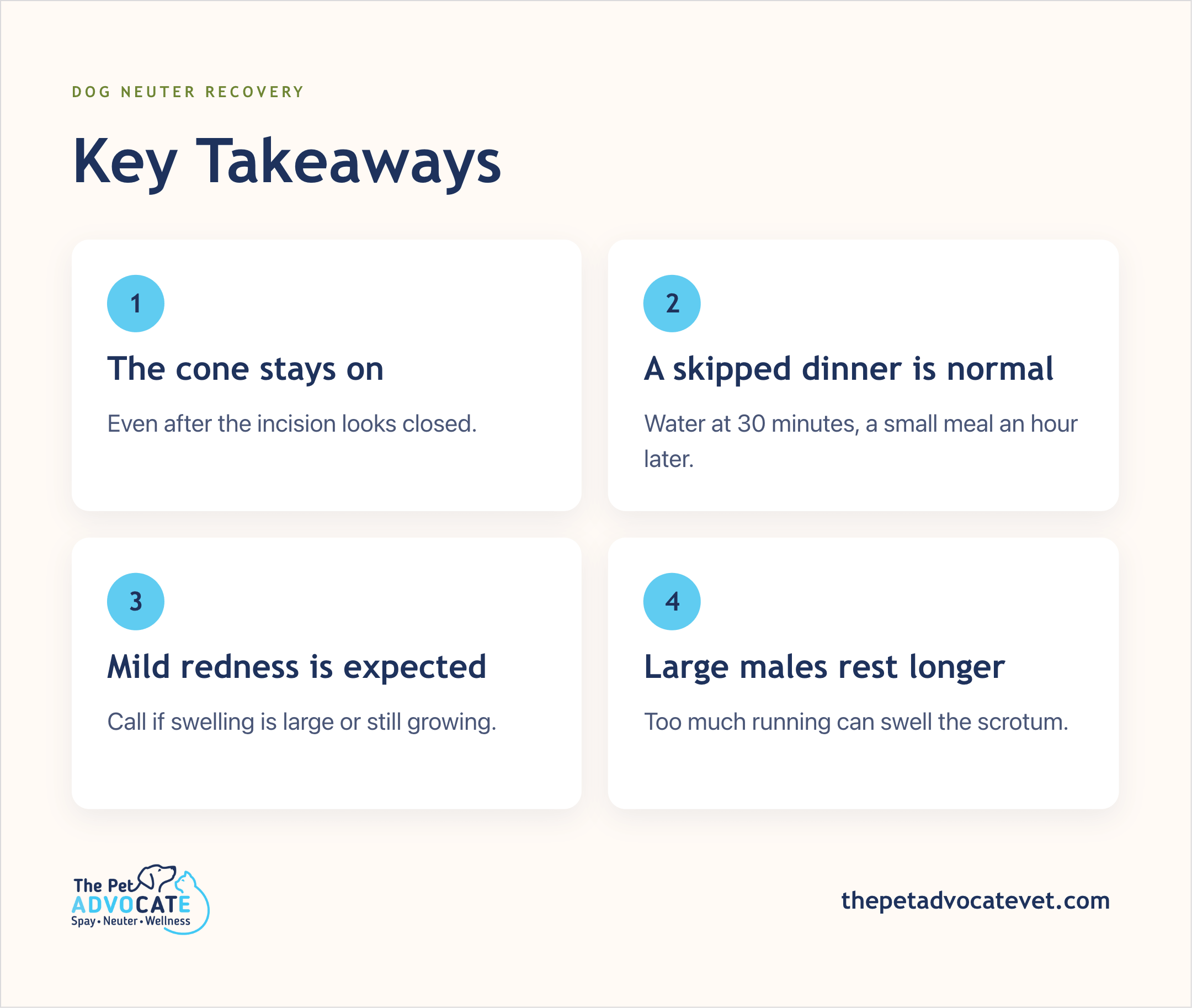
Many dogs want neither food nor water that afternoon. A half portion or a skipped meal that night is expected. Keep him quiet and stay close through the first night.
The incision might look a little red or puffy. You should see no large lump and no sutures on the outside. The sutures sit under the skin and dissolve on their own.
A dog that stays wobbly or sleepy for the first 12 to 24 hours is sleeping off the anesthesia. Now and then a dog takes two or three days to eat at a normal level. We still count that as normal.
Redness fades. Bruising from surgery, if it appeared, can take up to seven days to disappear.
The tissue adhesive over the incision begins to peel after two or three days. That peeling looks alarming, and we get a lot of calls about it. The glue on top can flake off without the incision opening. The skin underneath is what holds it.
Energy comes back in these few days. He feels well enough to run, which is when the incision gets pulled.
By day seven the edges are closed. We still leave the cone on through day 14 and limit running and jumping through day 10. Large mature males stay quieter longer so the scrotum does not swell.
If he licks the incision open, he needs another surgery under anesthesia to repair it. That is why the cone stays on after the incision already looks closed.
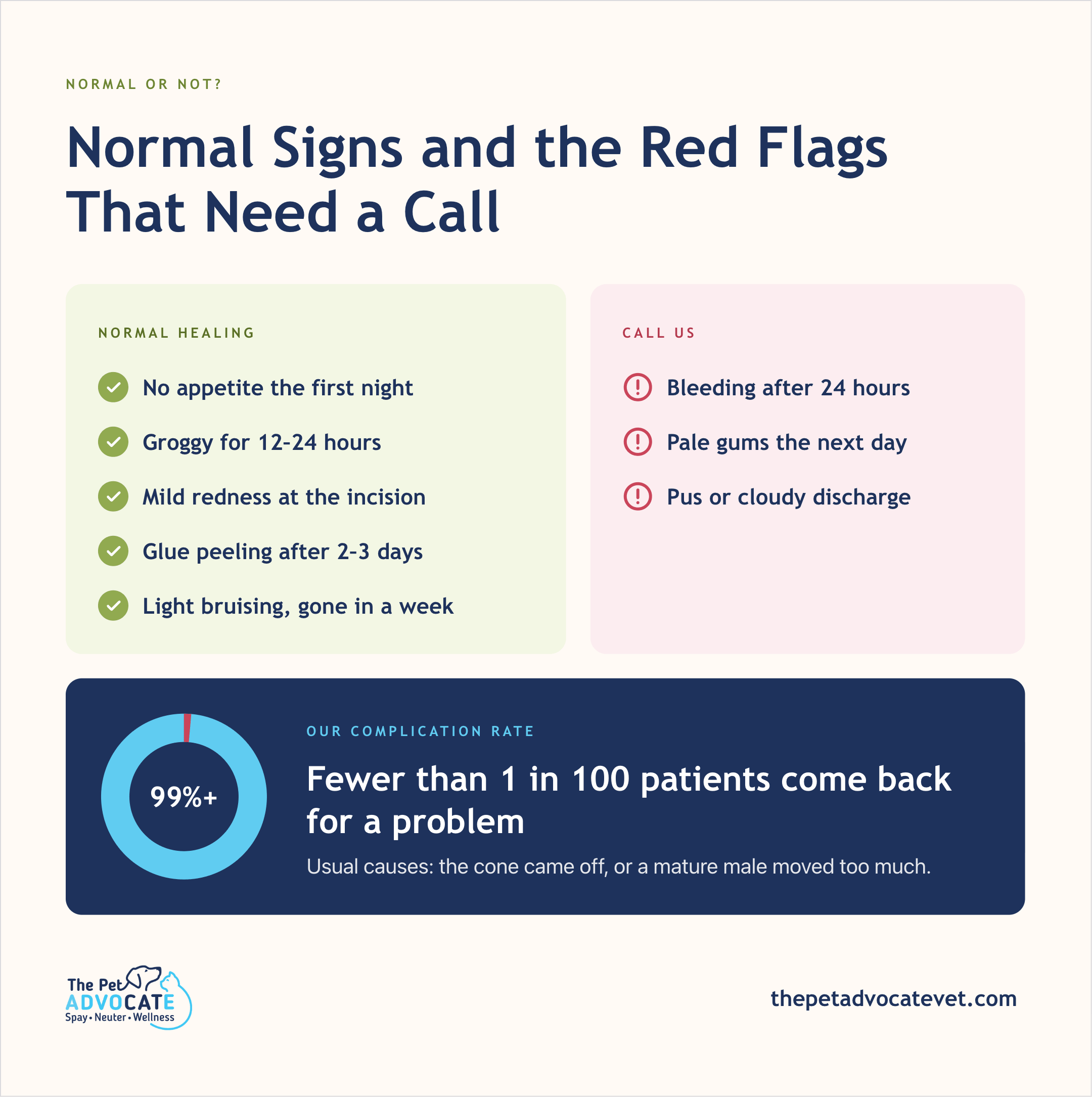
Most calls I get during dog neuter recovery turn out to be about normal healing.
Call us during business hours if you see any of these:
None of these mean you did something wrong. Call us so we can look at him.
After hours, emergency care is referred to Sage Veterinary Centers at 925-574-7243 at the owner’s expense.
Across our surgeries, fewer than one patient in a hundred comes back for a problem.
For dogs, that usually means one of two things happened. The cone came off and he reached the incision, or a mature male moved too much and the scrotum swelled.
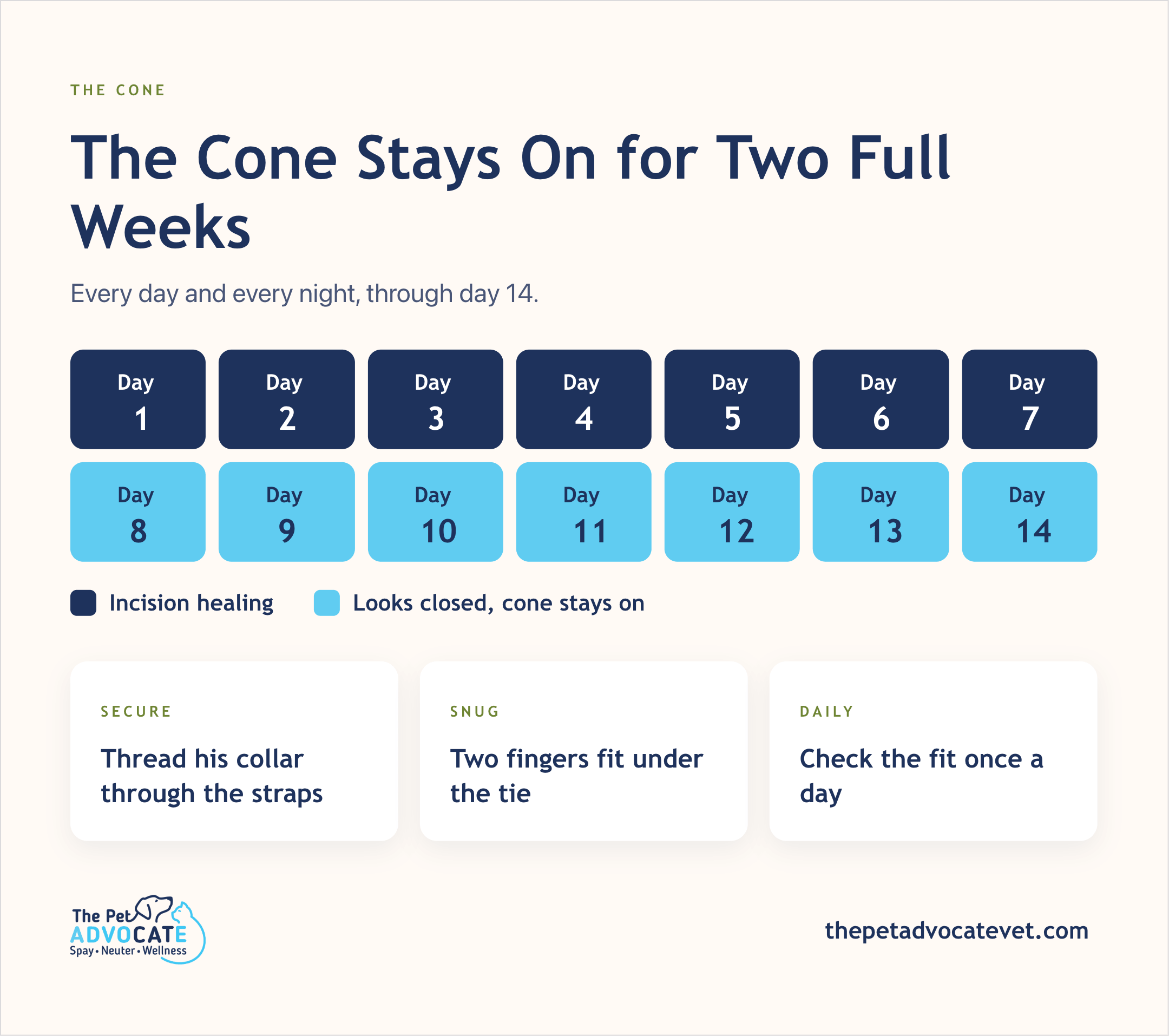
Leave the cone on through day 14 after a dog neuter, including overnight. Thread your dog’s own collar through the straps so it cannot slip. It should sit snug, with room for two fingers under the tie. Check that fit once a day.
Most dogs fight it for a day or two and then treat it as part of their body. If he cannot eat, drink, or lie down with it on, the cone is too long or too tight. Adjust the fit before you take it off.
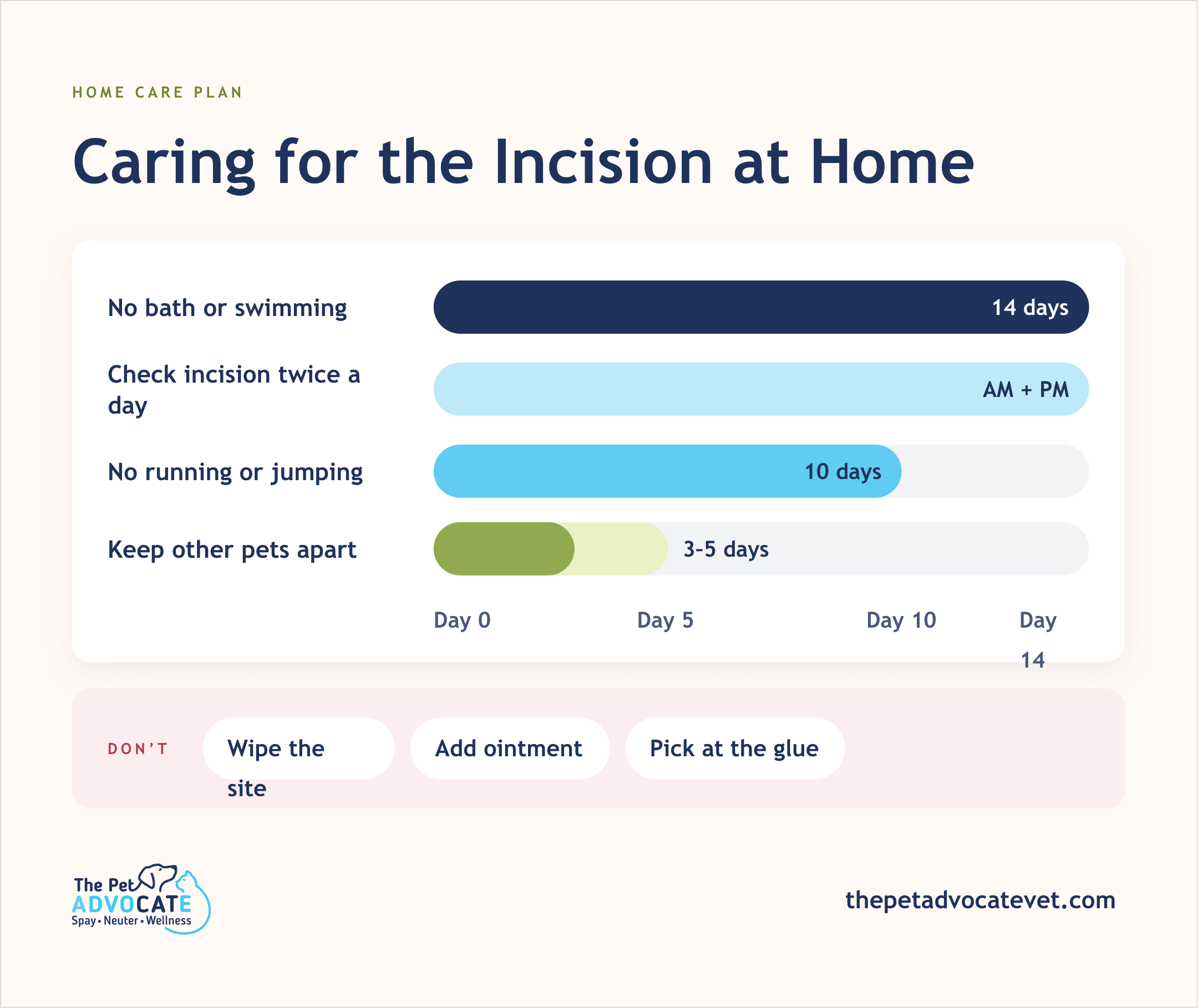
Do not bathe your dog or let him swim for 14 days after a neuter. The ASPCA after-surgery instructions make the same request: keep the incision dry for those two weeks. Water raises the infection risk and can lift the adhesive.
Look at the site each morning and evening. The way it looked at discharge is your baseline for normal.
Compare against that baseline, not against a photo you found online. Do not wipe the site, pack it with ointment, or pick at the adhesive.
No running, jumping, stairs, or rough play for 10 days. Use a leash for bathroom breaks. Use a crate or a small room when you cannot watch. Large mature males need those limits held longer.
Keep your dog away from other household pets for three to five days. A dog coming home from surgery can smell unfamiliar to the others. Another dog licking the incision is a real risk, and so is a scuffle.
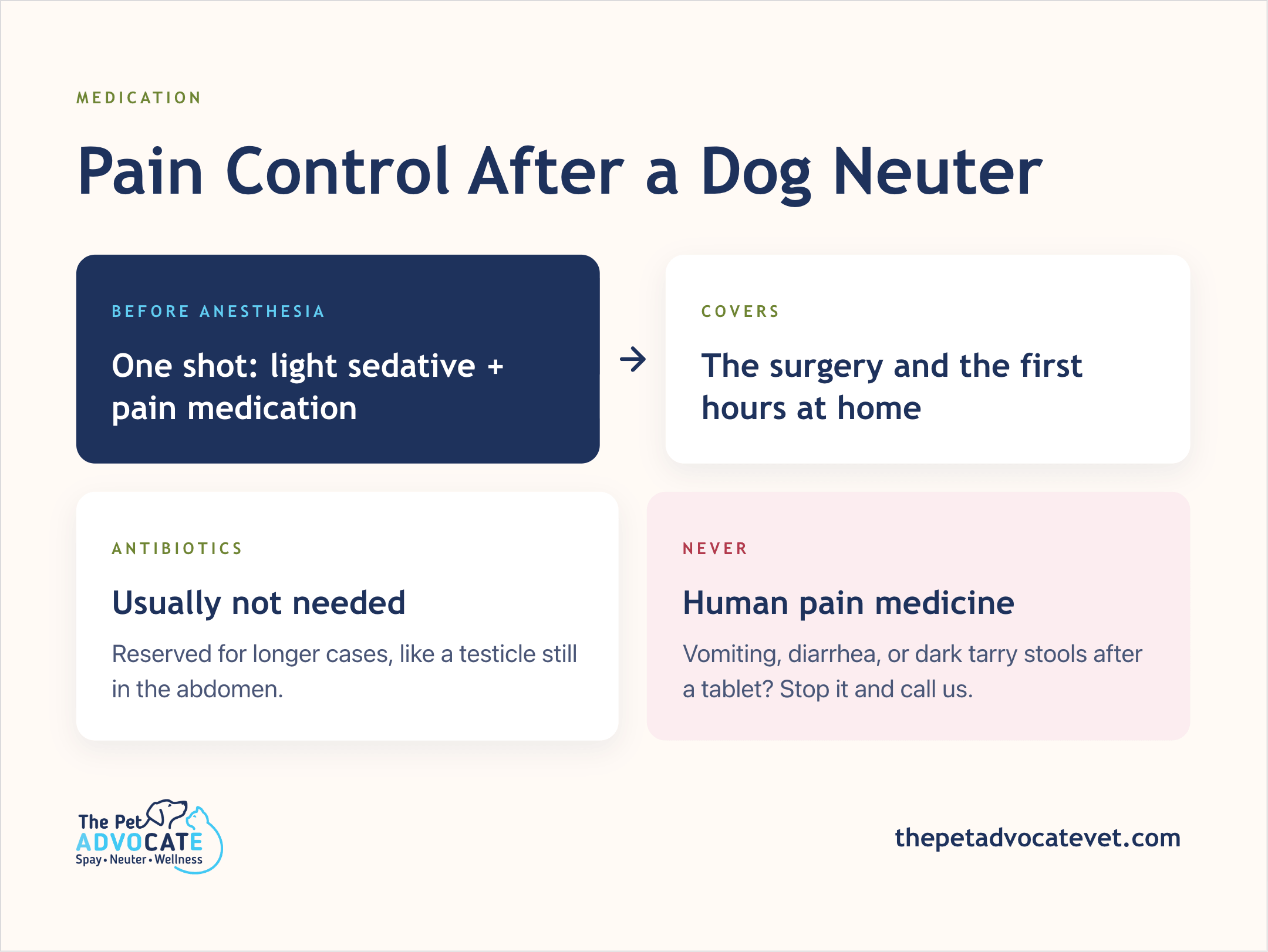
Before anesthesia, every dog gets a shot that combines a light sedative and a pain medication. That covers the surgery and the first hours at home.
Most routine neuters do not go home on antibiotics. We reserve those for longer cases, such as a neuter where a testicle is still in the abdomen.
Do not give human pain medicine. If vomiting, diarrhea, or dark tarry stools start after a pain tablet you took home, stop the medication and call us.
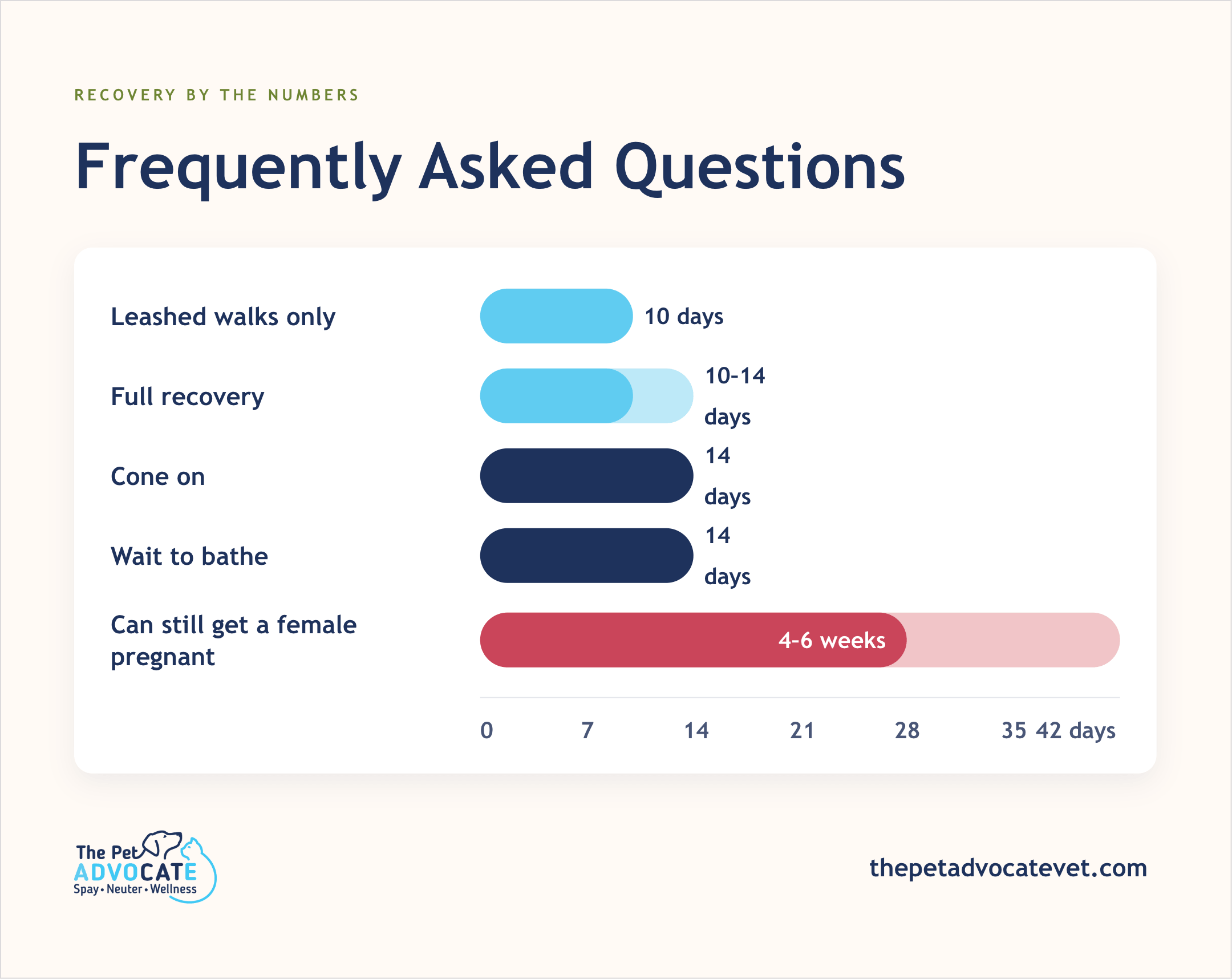
Most dogs need 10 days of restricted activity and a 14-day cone after a neuter. Appetite usually returns the day after surgery, the urge to move comes back by day two or three, and the incision edges close by about day seven.
Leave the cone on for the full 14 days. The incision closes by about day seven, but dogs still lick, and licking is the most common cause of a reopened incision.
A recovery suit or a soft inflatable collar can work for dogs that hate the plastic cone. Use it only if he still cannot reach the incision.
Wait 14 days after a dog neuter. Bathe your dog too early and you raise the infection risk and can lift the tissue adhesive.
A little redness and mild swelling at the incision are normal in the first few days. Call us if the swelling is large or still growing. In mature males that usually means he moved too much.
A neutered dog can still get a female pregnant for 4 to 6 weeks after surgery. Stored sperm can still be present, so keep him away from intact females during that time.
Short, leashed bathroom breaks only for 10 days. No running, off-leash walks, dog parks, or play with other dogs. Walking around the house is fine if he is not jumping or tearing around. Large mature males stay on that limit longer.
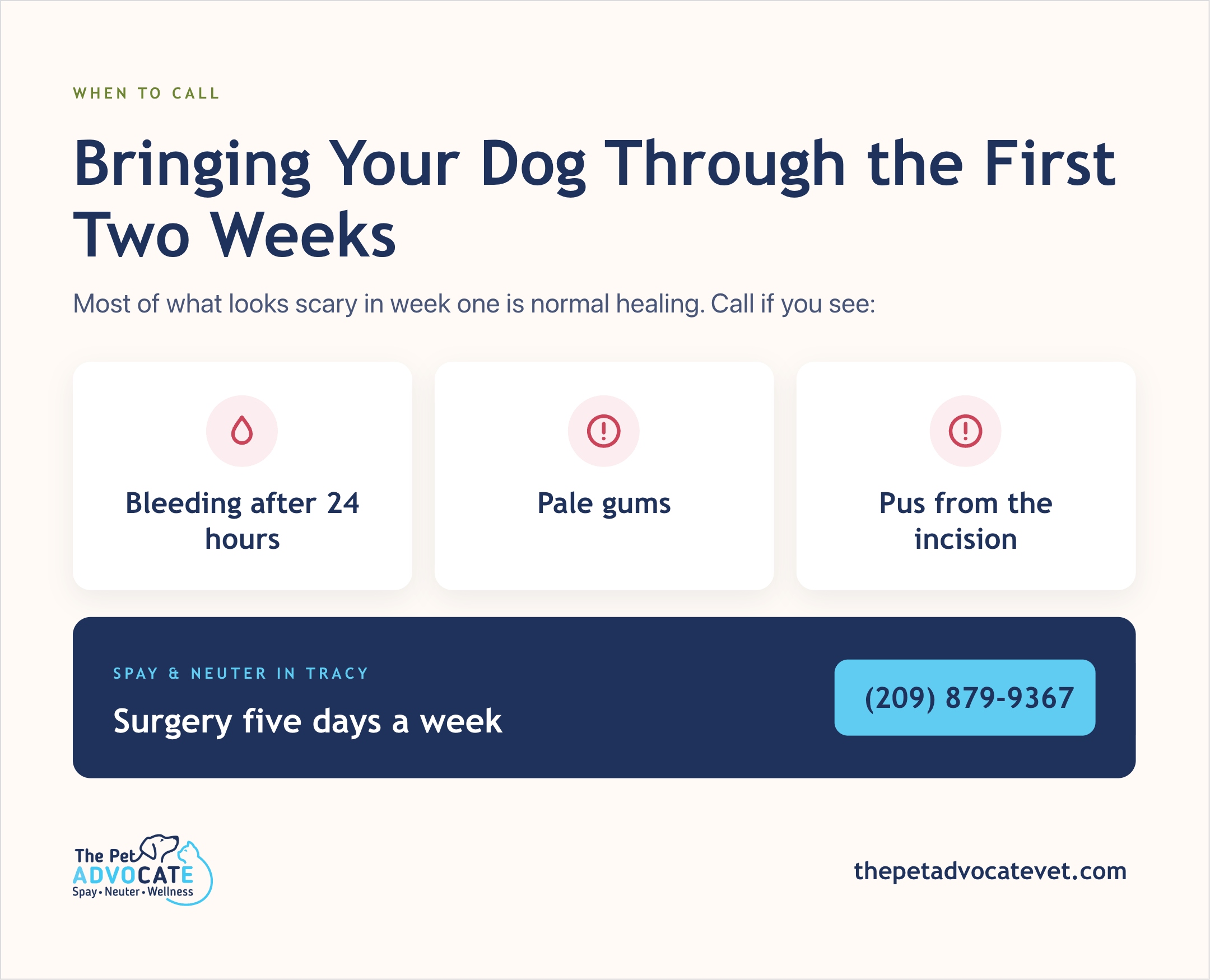
Most of what looks scary in the first week after a dog neuter is normal healing. Call us if you see bleeding after 24 hours, pale gums, or pus from the incision.
If you still need to book the surgery, we perform spays and neuters in Tracy five days a week. Schedule the appointment when you are ready, or call (209) 879-9367.