Or call us at 209-879-9367 — we'll answer Mon–Fri, 8 AM to 4:30 PM.📍 1973 N. Tracy Blvd., Tracy, CA 95376
Schedule OnlineLast reviewed: October 2026. Written by Mike Wesselink, DVM, from surgical work at The Pet Advocate in Tracy, California.
Spaying a female dog removes the ovaries and uterus so she doesn't have unexpected litters. Spaying before her first heat gives the strongest protection against mammary cancer, and spaying also ends heat cycles and prevents accidental litters. We offer planned spays for healthy dogs, and we'd love to help you find the right timing for her.
If she goes through a heat before surgery, her mammary risk rises with each cycle, and every heat brings another stretch of management and another chance of pregnancy. Pyometra, a life-threatening uterine infection, stays possible until the uterus is removed. For male dogs, the matching surgery is called a neuter.
Spaying is an ovariohysterectomy: the ovaries and uterus come out. That single surgery delivers these following benefits for a female pet.
Spaying prevents pregnancy. One intact heat is enough for her to conceive, including on the first cycle.
She doesn't need to have a litter first. There's no medical reason for a pet female to have one before surgery.
Mammary tumors are one of the strongest medical reasons to spay a female dog.
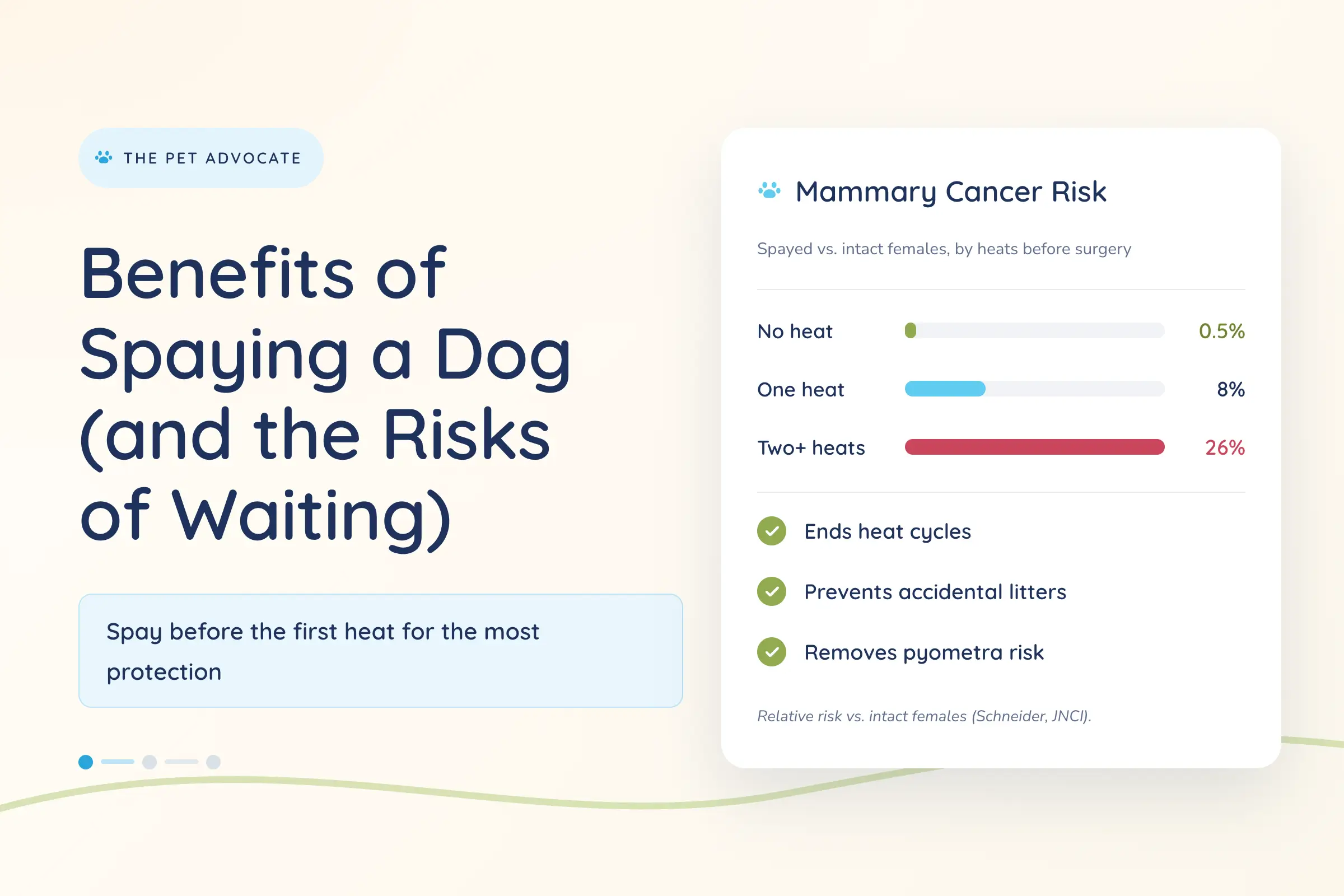
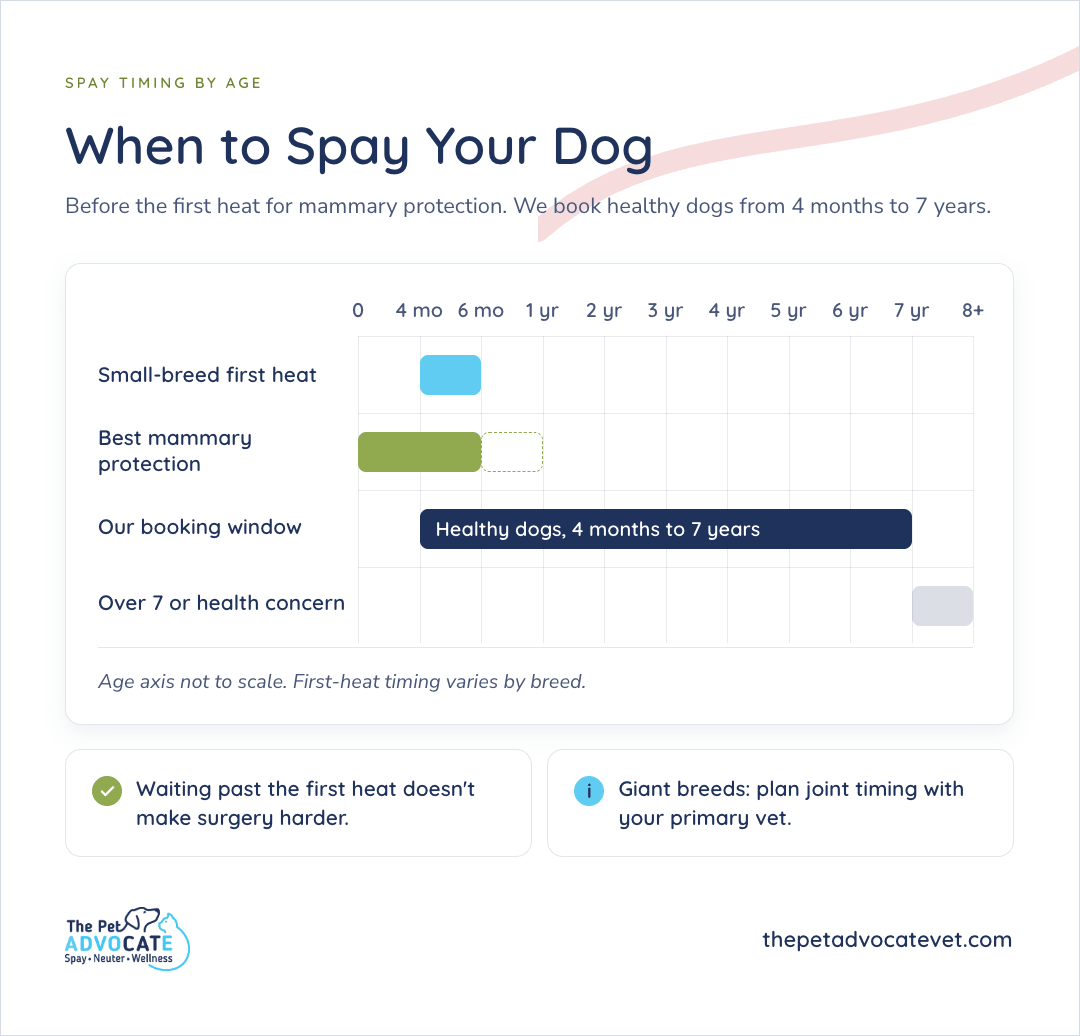
The traditional recommendation is to spay before the first heat. Before that first cycle, mammary cancer risk is virtually zero. After a heat, mammary and uterine cancer risk can rise substantially.
Classic Schneider research published in the Journal of the National Cancer Institute compared spayed females with intact females. Mammary-cancer risk was about 0.5% of the intact-female risk with no heat, about 8% after one heat, and about 26% after two or more heats. Those figures are relative risk compared with females left intact, not a raw percentage of clinic patients who get cancer.
If she already finished a first heat, spaying is still worth it. For the missed-heat decision, see I Missed the First Heat - Is Spaying Still Worth It.
A spayed female doesn't go into heat. That means no bloody discharge, no swollen vulva, and no two-to-three-week stretch of management every cycle. Intact males are also less likely to gather at the fence.
Most intact females cycle about twice a year after the first heat. For age, stages, and length, see When Do Dogs Go Into Heat.
Without heats, she isn't advertising for mates. Intact males are less likely to camp at your door. You skip diapers, crate rotations, and the worry that a quiet first heat (easy to miss) already started.

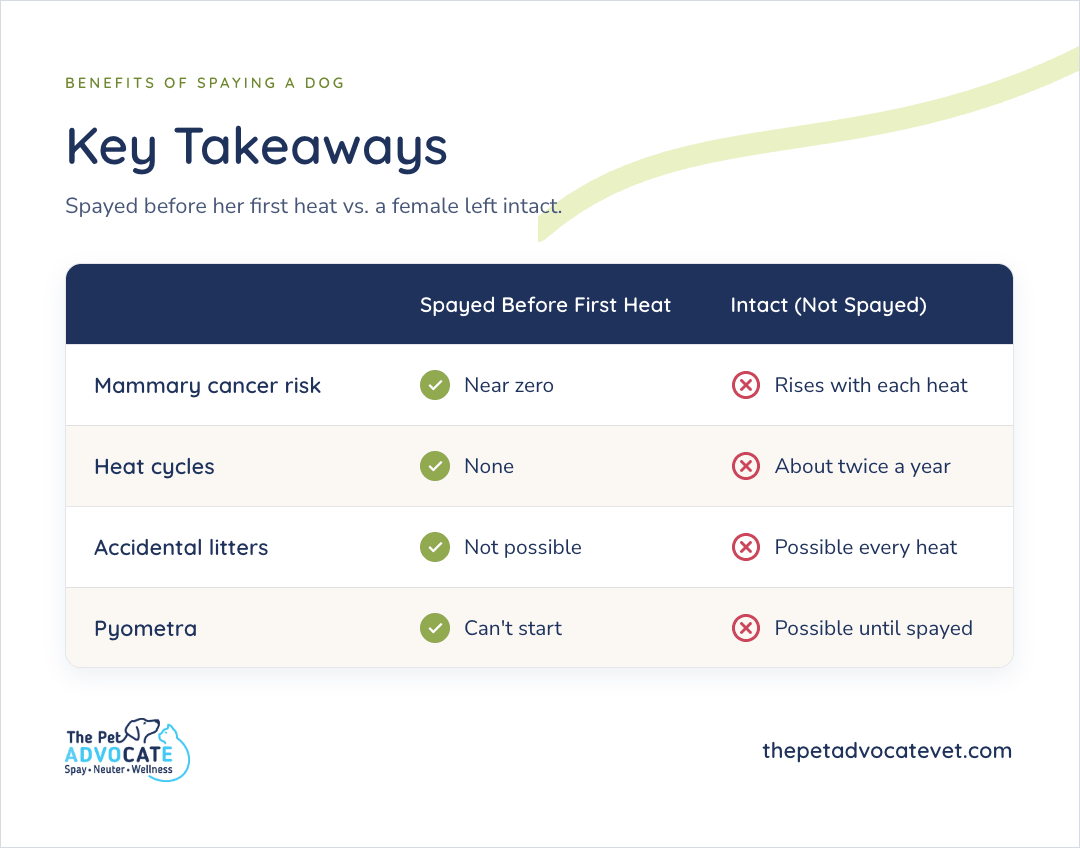
Each heat she has before surgery adds to her mammary risk, and heat cycles, the chance of a litter, and uterine infection remain possible until she's spayed.
Each heat she completes before surgery moves her into a higher mammary-risk group in the Schneider research above. Spaying later is still good surgery and still worth doing, and spaying before the first heat gives her the most protection.
Until she is spayed, every cycle brings discharge, male interest, and a fertile window. Accidental litters happen in yards, on walks, and during quick slips. If she is bleeding today, see Can You Spay a Dog in Heat.
Intact females can develop pyometra, a pus-filled uterine infection that usually shows up weeks after a heat and is treated as an emergency. For disease details, see Pyometra in Dogs. The lasting prevention is a planned spay while she is still healthy.

For mammary protection, the traditional target is before the first heat. Small-breed females often cycle early, sometimes inside a 4 to 6 month window.
We welcome healthy dogs from 4 months to 7 years for planned spays. Each visit starts with an exam and our weight and health checks, so we can make sure a planned surgery is a good fit for her. For dogs over 7, or dogs with a health concern that turns up at the exam, your primary veterinarian or a full-service hospital can plan the surgery that suits her.
If she's unwell right now, please call a full-service hospital right away so she gets care quickly. Pyometra needs emergency surgery, and a full-service hospital is the right place for it.
If she waits past the first heat, the uterus develops and becomes larger. A larger uterus can make surgery easier in some cases, especially in toy breeds with very tiny uterine tracts.
In larger dogs, a developed uterus can also be easier to find. Waiting past a completed heat doesn't make a healthy-pet spay harder. Operating during an active heat is a separate question; see Can You Spay a Dog in Heat.
Large and giant-breed joint timing is a separate decision best made with your primary veterinarian. See When to Spay or Neuter a Large or Giant Breed Dog.
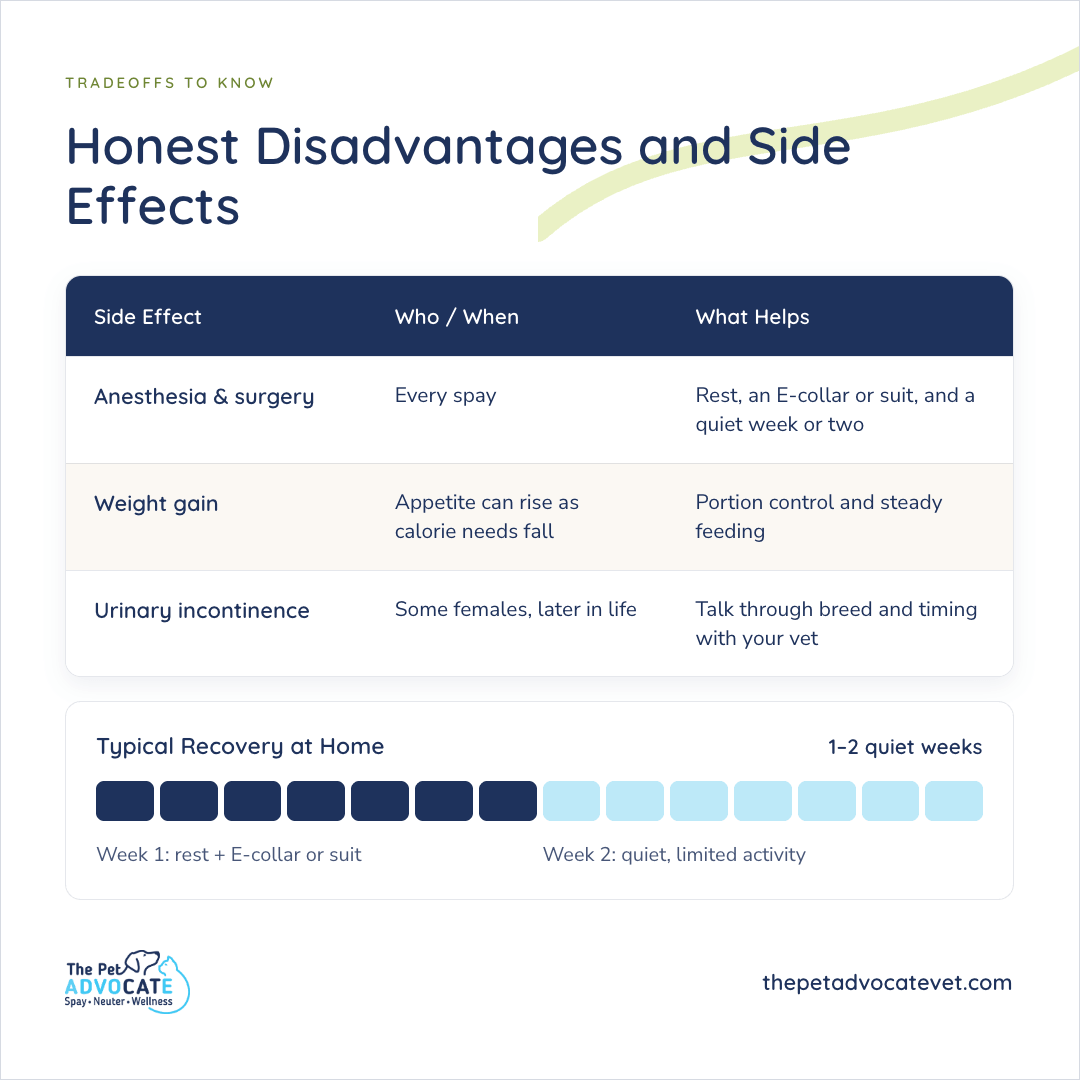
Spaying is still surgery under anesthesia. Recovery needs rest, an Elizabethan collar (E-collar) or suit, and a quiet week or two at home. The day-by-day timeline is on Dog Spay Recovery.
Some owners worry about weight gain after spaying. Appetite can rise and calorie needs can fall, so portion control matters. Urinary incontinence later in life is discussed for some spayed females, so talk through breed and timing with your veterinarian if that is your worry. Your veterinarian can help you weigh those tradeoffs alongside these benefits.
Spaying lowers mammary cancer risk (especially before first heat), ends heat cycles, prevents pregnancy, and removes the uterus so classic pyometra can't start. Lifestyle gains include less male attention and no heat mess to manage.
For most pet females that won't be bred, spaying removes major reproductive disease risks and stops the heat-and-litter cycle. Exact timing still varies by size and breed, and large or giant breeds may need a joint-timing plan with their primary veterinarian.
Disadvantages include anesthesia and surgical recovery, possible weight gain without diet control, and a discussed risk of urinary incontinence in some females later. Good aftercare and steady feeding habits help with all three.
For mammary protection, the traditional timing is before the first heat, which can come as early as 4 to 6 months in small breeds. Large and giant breeds may need an individualized joint-timing plan with their primary veterinarian.
An intact female has rising mammary risk with each heat, recurring heat cycles, the chance of an accidental litter, and the possibility of pyometra until the uterus is removed. For disease details, see Pyometra in Dogs.
Waiting past the first heat doesn't make the surgery harder. The uterus grows larger after a heat, which can make surgery easier in some cases, especially in toy breeds, and can make the uterus easier to find in larger dogs.

We'd be glad to see her. You'll find details on our low-cost spay and neuter page, and you can schedule your appointment online or call us at (209) 879-9367 with any questions.