
Or call us at 209-879-9367 — we'll answer Mon–Fri, 8 AM to 4:30 PM.📍 1973 N. Tracy Blvd., Tracy, CA 95376
Schedule OnlineBy Mike Wesselink, DVM. Owner and veterinarian at The Pet Advocate, a low-cost clinic in Tracy, CA. UC Davis School of Veterinary Medicine, 2015.
Last updated: June 2026
A dog microchip costs $25 to $60 at most private vets, plus a one-time registration fee of about $15 to $30. At my clinic in Tracy, it's $30, with no exam fee, and we register the chip for you before you head home.
I've placed thousands of these chips over the years. The price is the simple part. Registering the chip and keeping your details current is what makes it work, and plenty of owners miss that step.
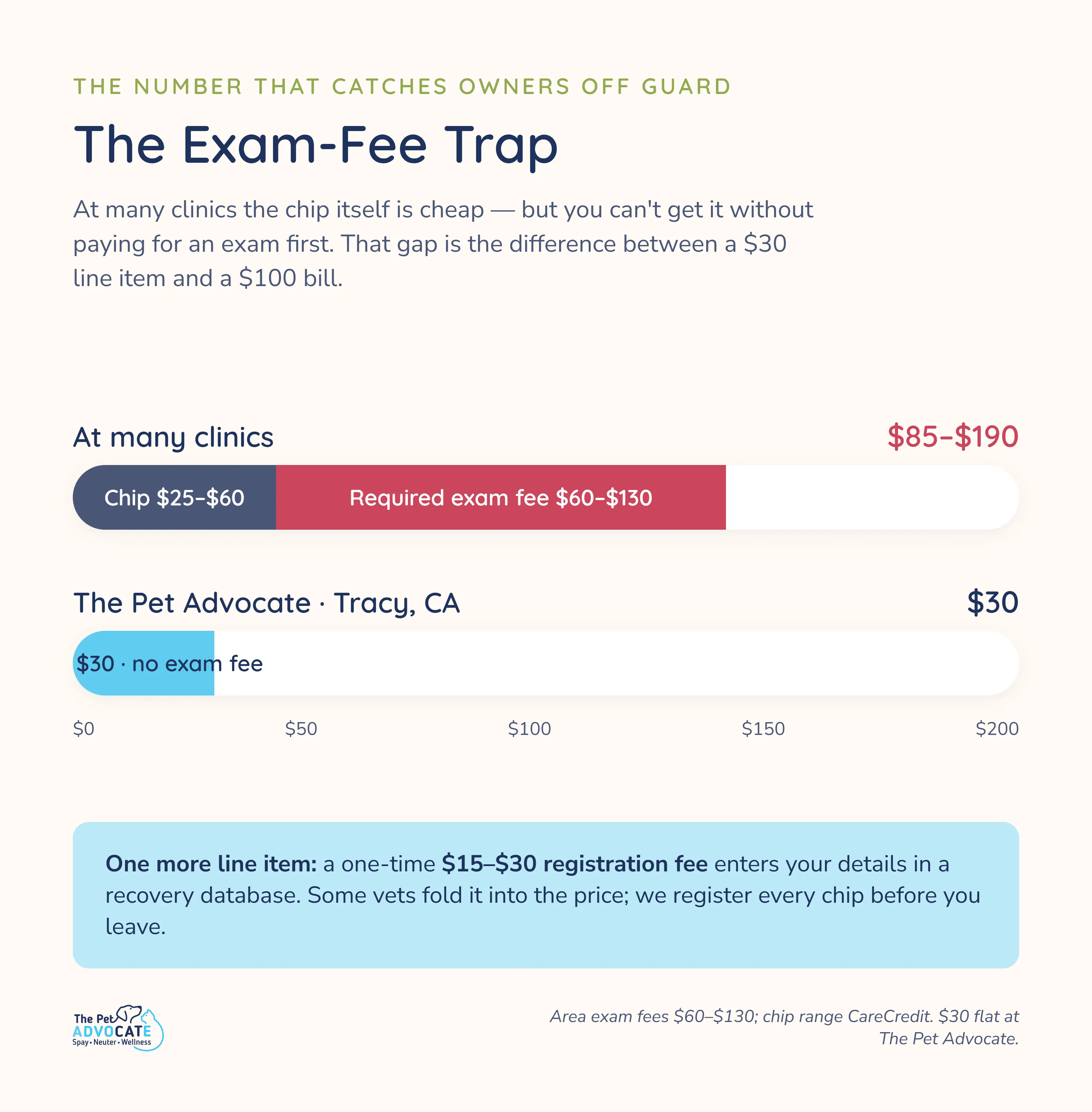
Most owners pay between $25 and $60 for the chip and the implant. The national average is $48, with a range of $38 to $87, per CareCredit's 2025 cost data. Your dog's size and breed don't change the price. The chip and the procedure are the same for a Chihuahua and a Great Dane.
The number that catches people off guard is the office visit. At many clinics the chip itself is cheap, but you can't get it without paying for an exam first. Those exams run $60 to $130 a year around here. That gap is the difference between a $30 line item and a $100 bill.
We keep prices low by staying in our lane. A microchip shouldn't require an exam fee, so we don't charge one for it.
The price you see covers the chip and the moment we inject it. Registration is the piece that comes next, and that's where the confusion starts.
Some providers fold one-time registration into the price. Others add a small separate fee, often $15 to $30, to enter your details in a recovery database. Both are normal.
Watch for the emails that arrive later. After the chip is in, several registry companies pitch a premium or recurring membership. They promise broader alerts or a wider network if your dog goes missing. I've watched many clients buy into these add-ons, and most don't need them. Basic registration, kept current, is what brings a dog home.
A microchip is a passive RFID transponder, about the size of a grain of rice. It holds one unique ID number. It carries no battery and sends no GPS signal.
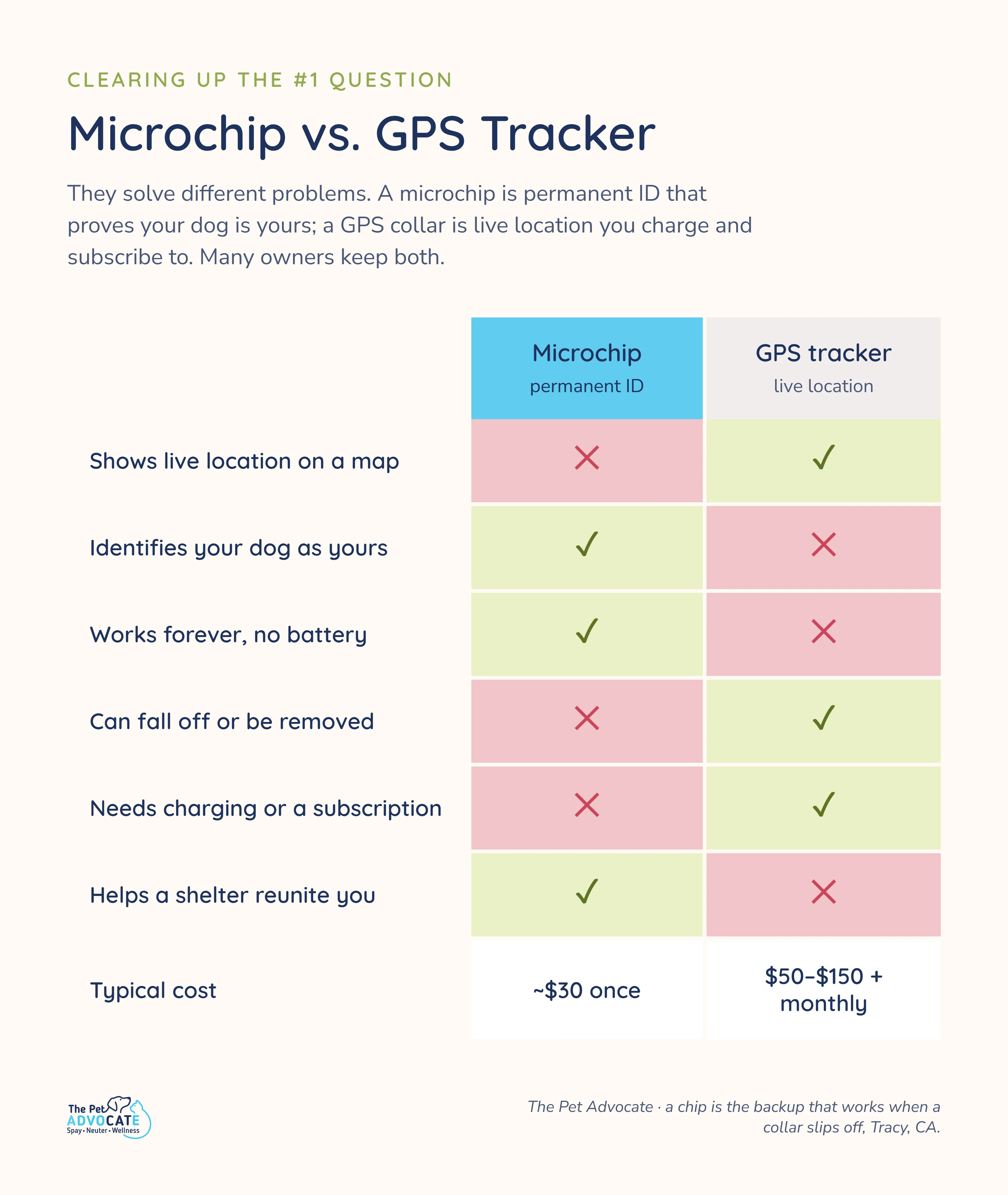
When a shelter or clinic scans a found dog, the scanner powers the chip long enough to read that number. Staff then look the number up in a registry to find your contact details. The chip stores the number, not your information. The number points to a registry record that holds your details.
This is the most common misunderstanding I hear. A microchip will not show your dog's location on a map. It identifies your dog as yours once someone has them in hand.
We inject the chip under the loose skin between the shoulder blades. We use one needle, a bit larger than a vaccine needle, and it takes a few seconds. Most dogs react about the same as they do to any shot.
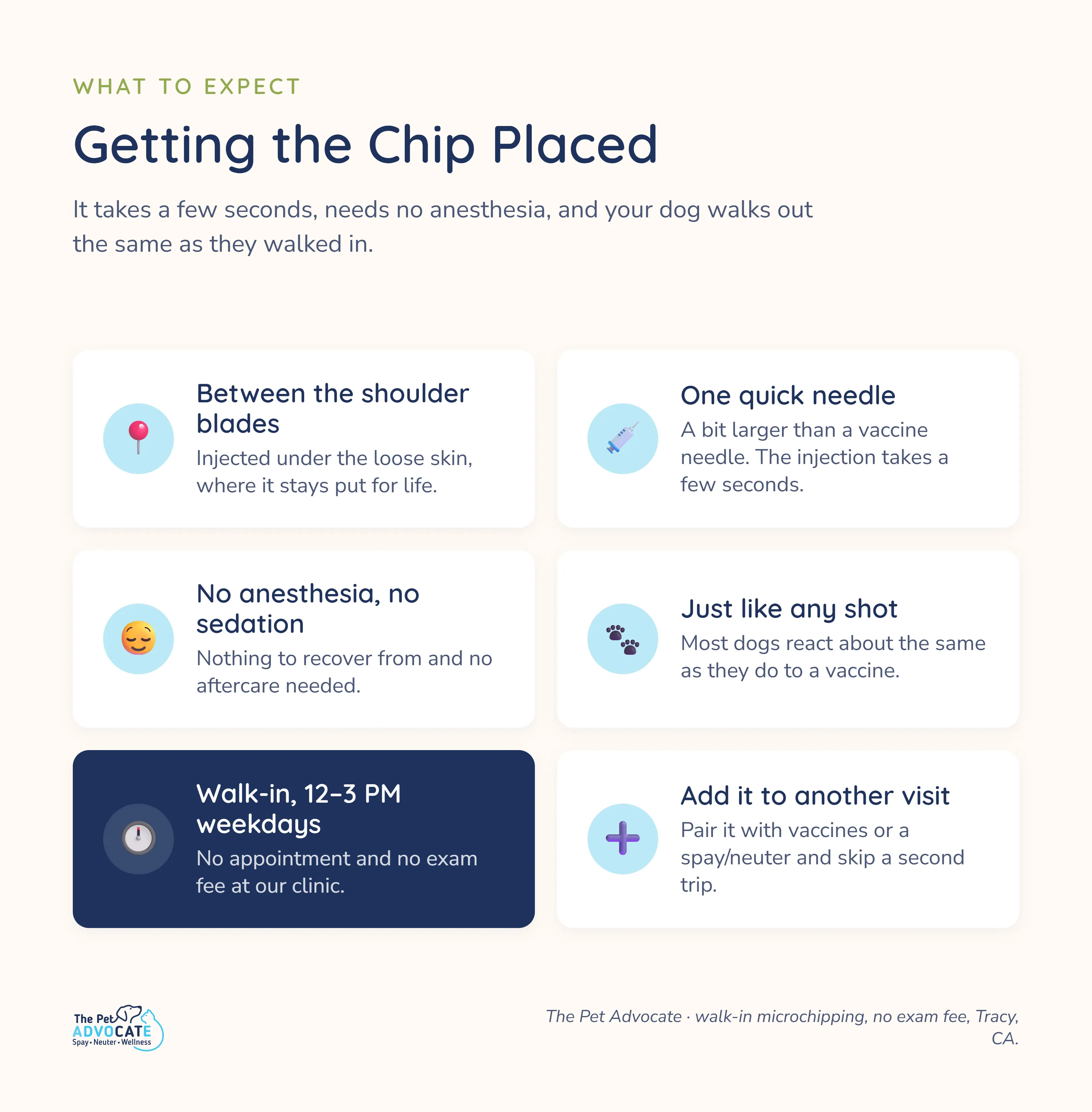
The chip needs no anesthesia and no sedation. There's nothing to recover from, and no aftercare. Your dog walks out the same as they walked in.
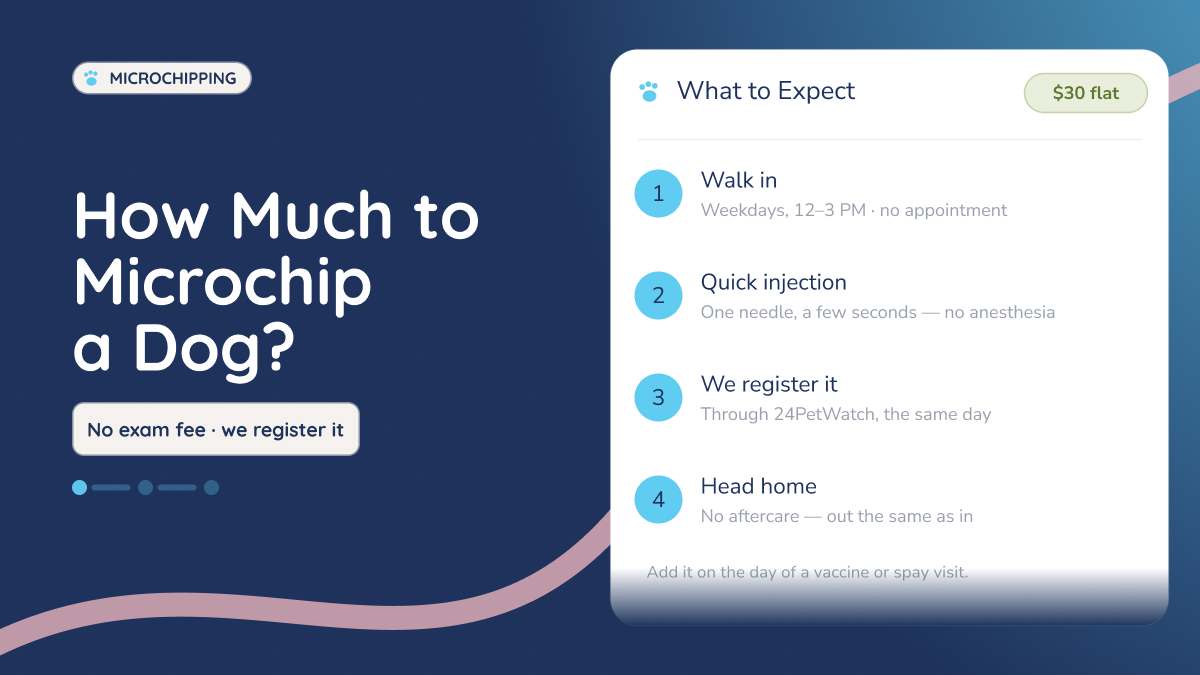
At our clinic this is a walk-in service, weekdays from 12 to 3 PM, with no appointment and no exam fee. Many owners add it on the day of a vaccine visit or a spay or neuter, which saves a second trip.
Yes. Researchers tracked more than 7,700 stray animals for a study cited by the AVMA. Shelters reunited 52.2% of the microchipped dogs with their owners, against 21.9% of the dogs without a chip (Lord et al., JAVMA, 2009).
That's more than double the odds of getting your dog back. Around 10 million pets go missing in the United States each year, by CareCredit's estimate. A $30 chip is cheap insurance against that.
The AVMA looked at why some microchipped animals still didn't make it home. The usual reason was wrong or missing owner information in the registry. The chip read fine. The phone number on file was years out of date.
This is the single biggest mistake I see owners make. A chip that was never registered is a dead end, and so is one tied to an old number or a previous address. You can prevent all of it with two habits:
We register every chip for our clients through 24PetWatch. It connects to our clinic software, so your details go into the database the day of your visit. Keeping them current after that is your job.
If $30 is a stretch, you have options. Many municipal shelters and animal control facilities microchip for $15 or less, and some run free chip clinics during the year. Most dogs adopted from a shelter come already chipped, with the cost built into the adoption fee.
Confirm one thing with a free or adoption chip: whether the registration is in your name. A chip registered to the shelter instead of you won't route a found dog back to your phone.
We built The Pet Advocate around access to basic care, without the exam fee that turns a $30 service into a $100 visit. A microchip is $30. We place it as a walk-in, weekdays from 12 to 3 PM, and register it for you before you leave.
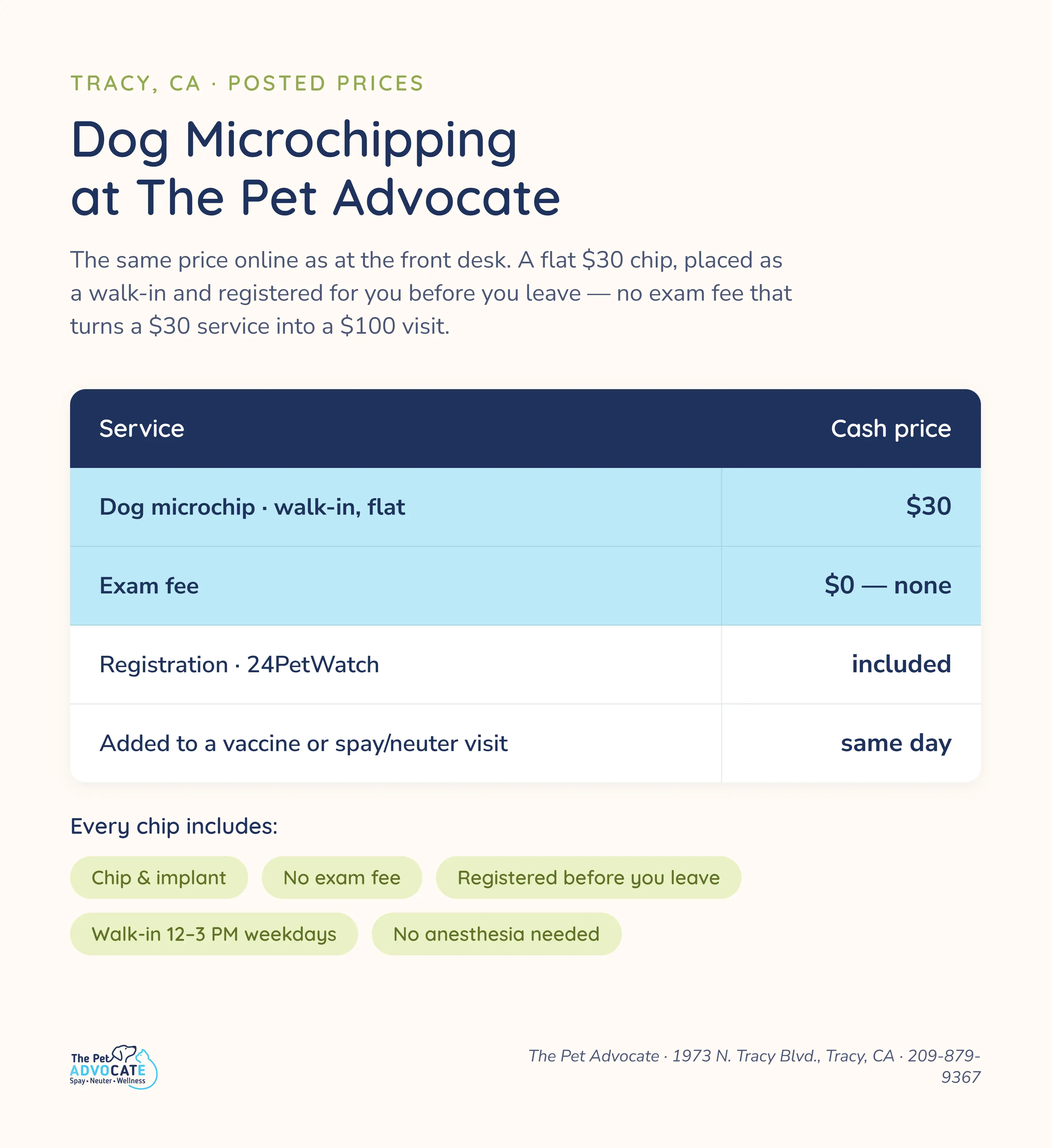
Owners drive to us from Tracy, Manteca, Lathrop, Stockton, and across the East Bay because the savings cover the trip on the first visit. If you want the chip done alongside vaccines or a spay or neuter, we can handle it the same day.
If that's a fit for your dog, you can walk in during wellness hours or see our full price list.
A dog microchip costs $25 to $60 at most vets, plus a one-time registration fee of about $15 to $30. The national average is $48. Shelters and municipal clinics often charge $15 or less, and some offer it free. At The Pet Advocate in Tracy, it's $30 with no exam fee.
Sometimes, but barely. The chip sits under the skin between the shoulder blades and is the size of a grain of rice. You might feel a small firm bump if you press in the right spot. Most owners never notice it, and it doesn't bother the dog.
It feels like a routine shot. We use one needle, a bit larger than a vaccine needle, and the injection takes a few seconds. No anesthesia is needed, and most dogs react the way they do to any vaccine.
For the life of your dog. A microchip has no battery and no moving parts, so it doesn't wear out or need replacing. Your only job is keeping your contact information current in the registry.
Yes. A collar tag is visible ID that lets anyone reunite you with your dog in minutes. The microchip is the backup for when a collar slips off or a tag wears smooth. The two work best together.
No. A microchip has no battery and no GPS. It holds an ID number that a scanner reads once someone finds your dog and brings them in. For live tracking, you'd want a separate GPS collar.
A dog microchip is cheap and quick, and it pays for itself the day your dog gets out. Budget $25 to $60 at most vets, or $30 with no exam fee at our clinic. Then register the chip and keep your number current. That habit is what turns a found dog back into your dog.