
Or call us at 209-879-9367 — we'll answer Mon–Fri, 8 AM to 4:30 PM.📍 1973 N. Tracy Blvd., Tracy, CA 95376
Schedule OnlineLast reviewed: September 2026. Written by Mike Wesselink, DVM, from surgical work at The Pet Advocate in Tracy, California.
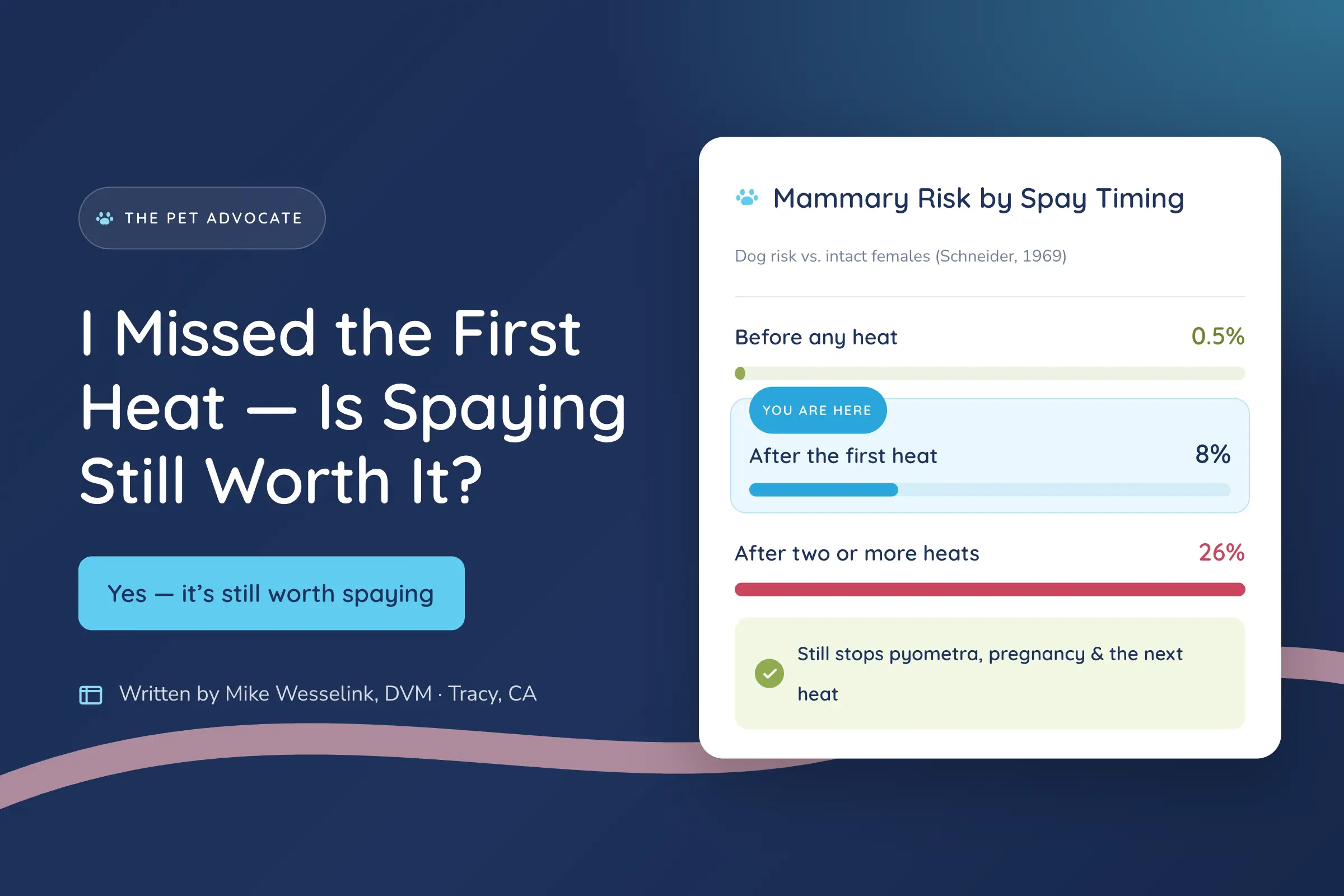
Yes. After the first heat you lose some protection against mammary tumors, but it's still worth spaying.
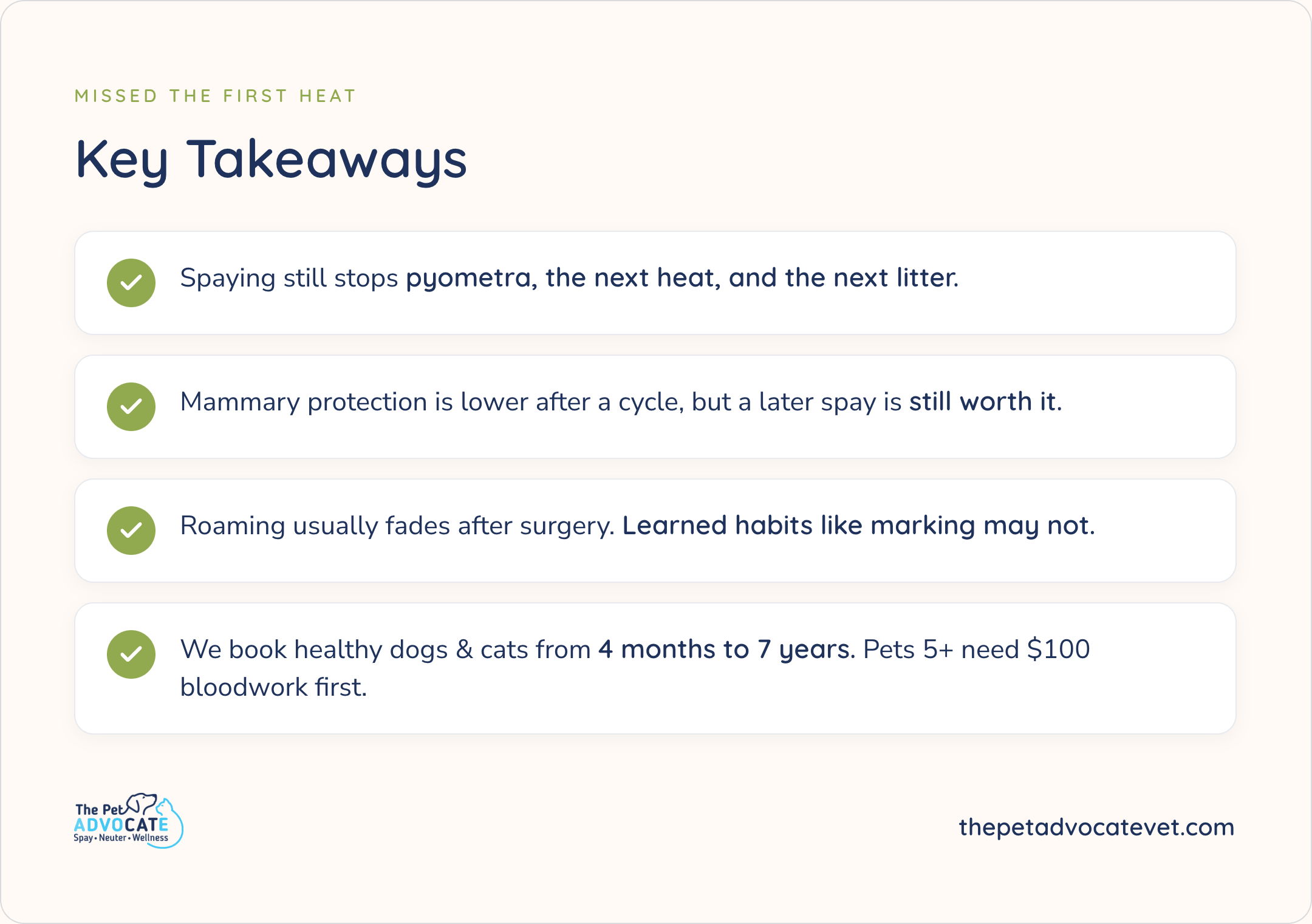
A first heat already exposed a dog or cat’s mammary tissue to ovarian hormones. Those hormones already reached that tissue, and a later spay does not erase that. Removing the ovaries and uterus still keeps the next cycle from starting. It also keeps her from getting pregnant and takes the uterus out before it can infect.
People sometimes wait for one more heat or a litter because they think that is healthier. The Oregon Veterinary Medical Association says a companion animal does not gain health that way.
Joint-timing research in large and giant breeds is a separate debate. Waiting longer for growth plates does not undo a heat that already happened.
If a dog is bleeding today, start on Can You Spay a Dog in Heat. This article is for the owner who missed the first cycle.
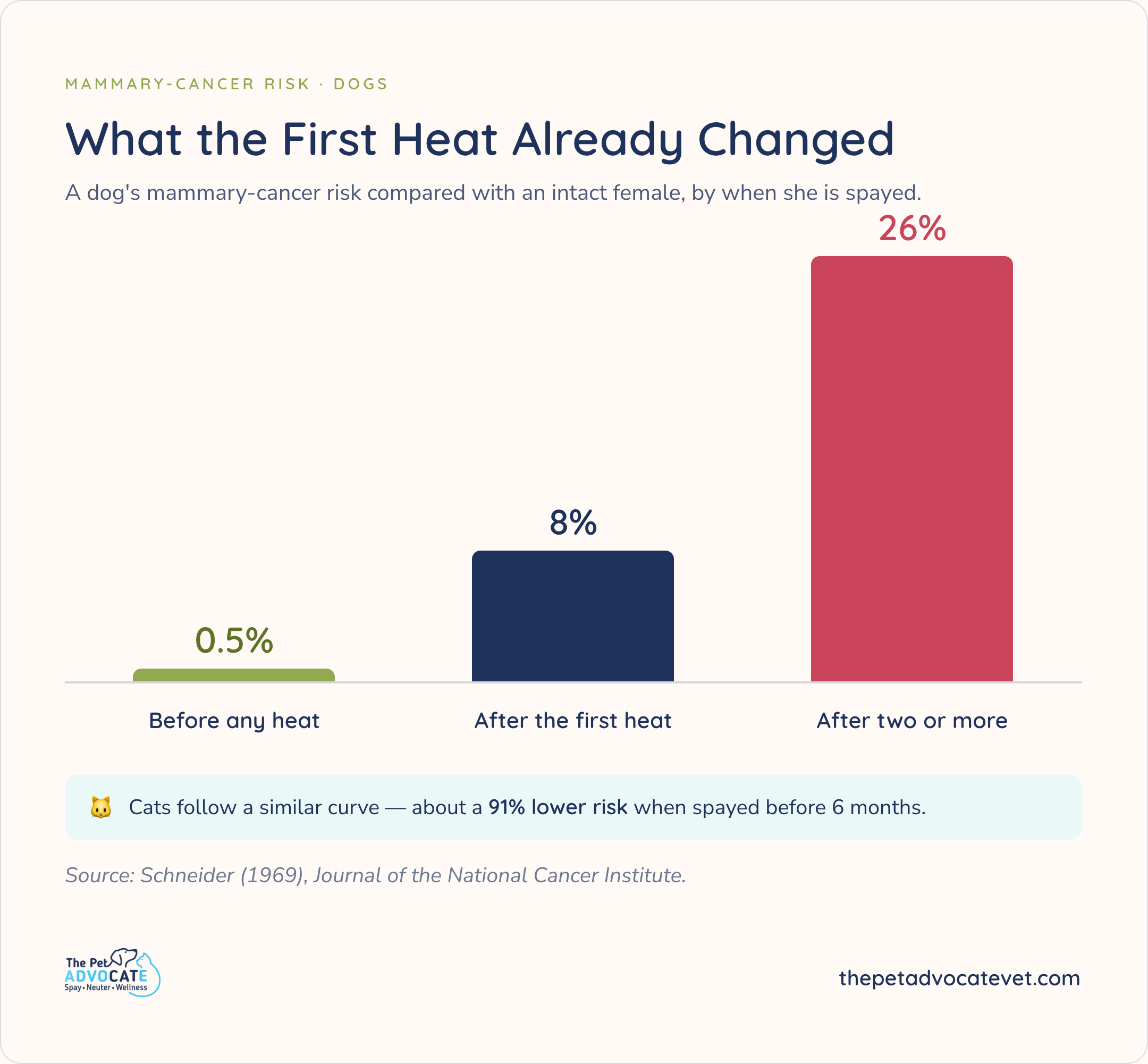
Mammary protection after a first heat is weaker than protection before any cycle. Schneider’s 1969 study in the Journal of the National Cancer Institute is the source most clinics still cite for dogs. It compared spayed females with intact females:
| Timing of the spay | Mammary-cancer risk vs intact females |
|---|---|
| Before any heat | About 0.5% of that risk |
| After the first heat | About 8% of that risk |
| After two or more heats | About 26% of that risk |
One cycle already moved a dog off the smallest of those three figures. Waiting through a second season gives up more of the protection she still has.
Cats follow a similar curve with different numbers. The Merck Veterinary Manual reports a 91% drop in mammary-tumor risk when a cat is spayed before 6 months, and an 86% drop when she is spayed before 12 months. After about 2 years, timing adds little extra protection. Most feline mammary tumors are malignant, so the remaining drop still matters.
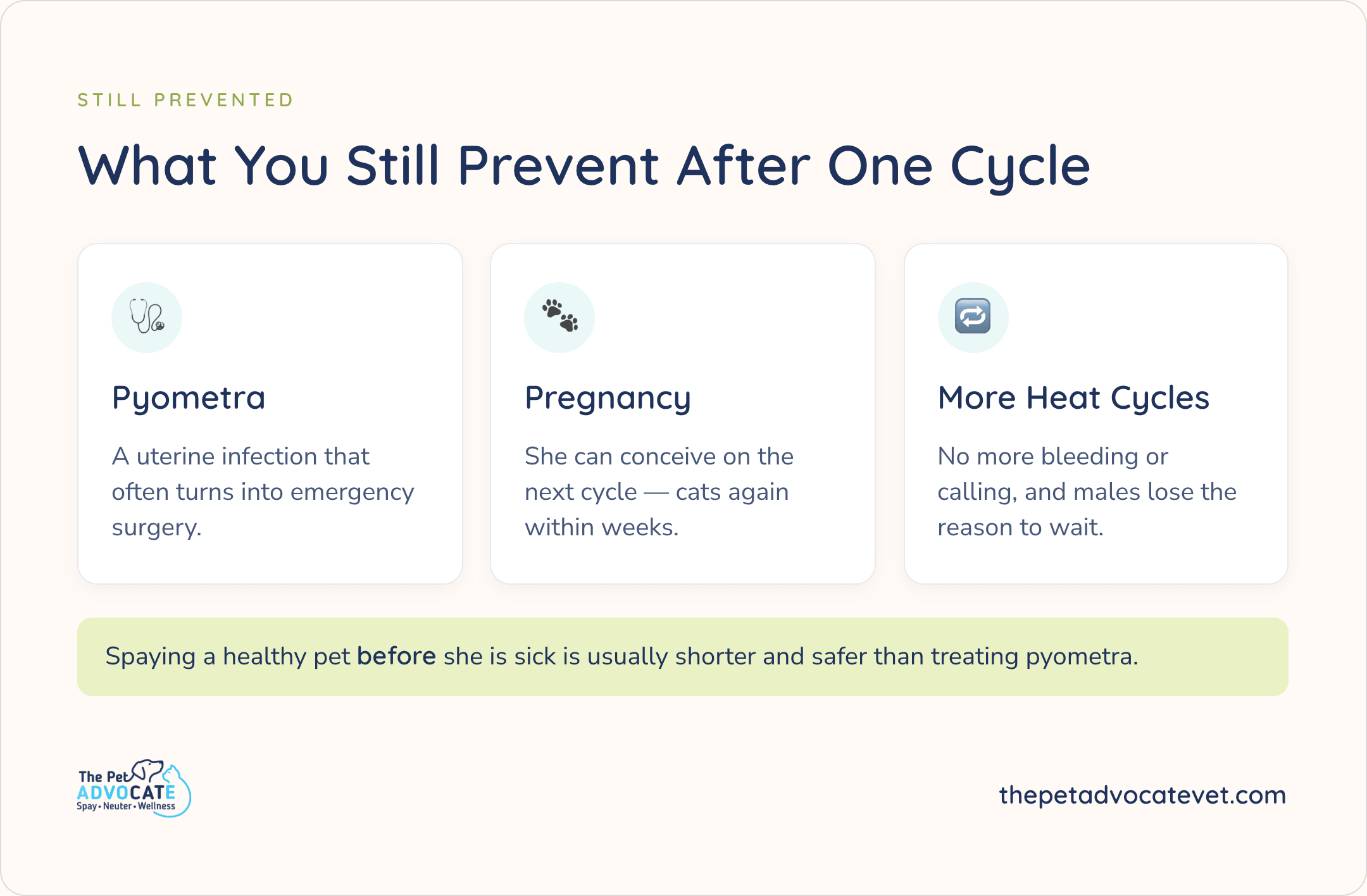
Pyometra can follow a heat cycle. The uterus fills with infection, and the pet often needs emergency surgery. The Merck Veterinary Manual treats removal of the uterus and ovaries as the treatment once that infection is present. Doing that surgery on a healthy dog or cat, before she is sick, is usually shorter and safer than treating pyometra.
A female can still get pregnant after one heat. A dog can conceive on the next cycle. A cat can cycle again within weeks.
Heats stop when the ovaries come out. She will not bleed or call, and intact males lose the reason to wait at the fence.
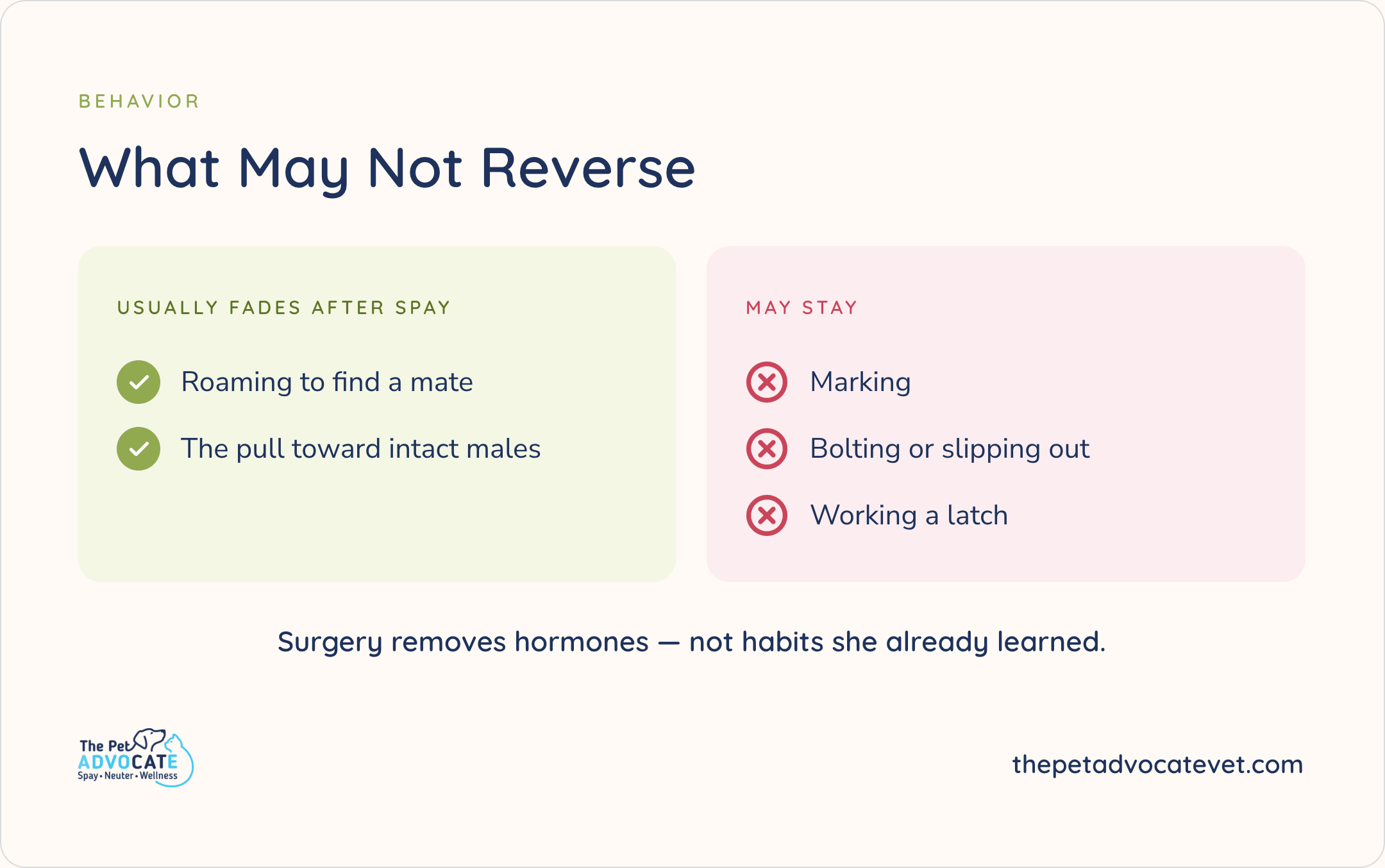
Roaming and the pull toward intact males usually fade after a spay. Habits a female already practiced during her first heat often stay.
A female that learned to mark, bolt, or work a latch during her first season can keep doing that after hormones drop. A later surgery often changes that pattern only a little.
Book the spay if you want to stop the next heat and the next litter. A late spay will not reliably undo habits she already learned.
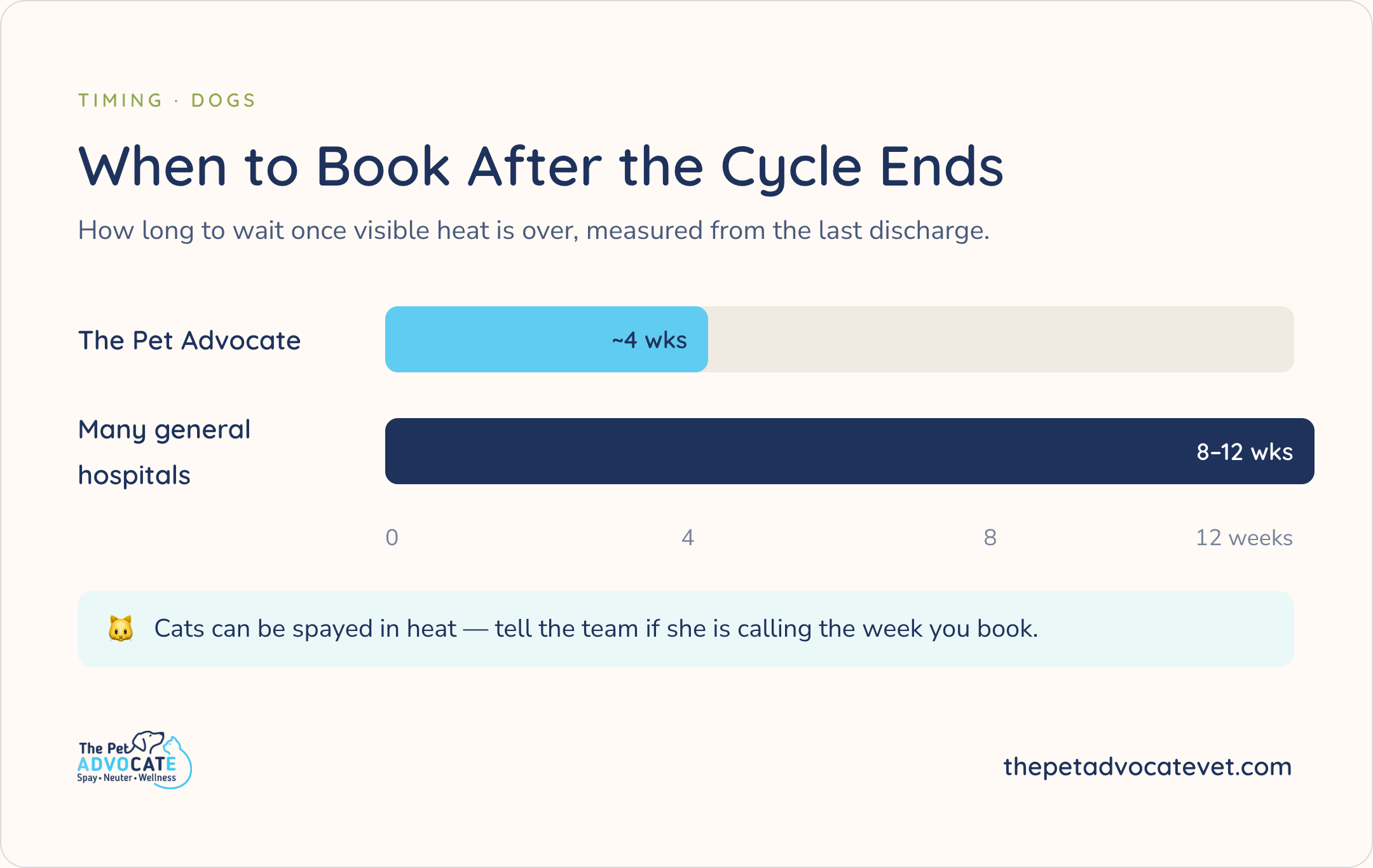
For an owned dog you can keep away from intact males, wait until visible heat has been over for about a month. Blood vessels around the uterus shrink, the surgery is simpler, and the extra in-heat charge usually does not apply.
Many general-practice hospitals wait eight to twelve weeks. For owned dogs, we usually book about four weeks after the last discharge and swelling are gone.
Cats can be spayed in heat. Tell the team if she is calling or rolling the week you book. An extra charge can still apply when the uterus has extra blood supply.
If she already delivered or is nursing, we will not schedule her. We also wait if she gave birth in the past four months or if she still has milk on surgery day. That rule is on surgery requirements. Waiting for a litter does not open an earlier date.
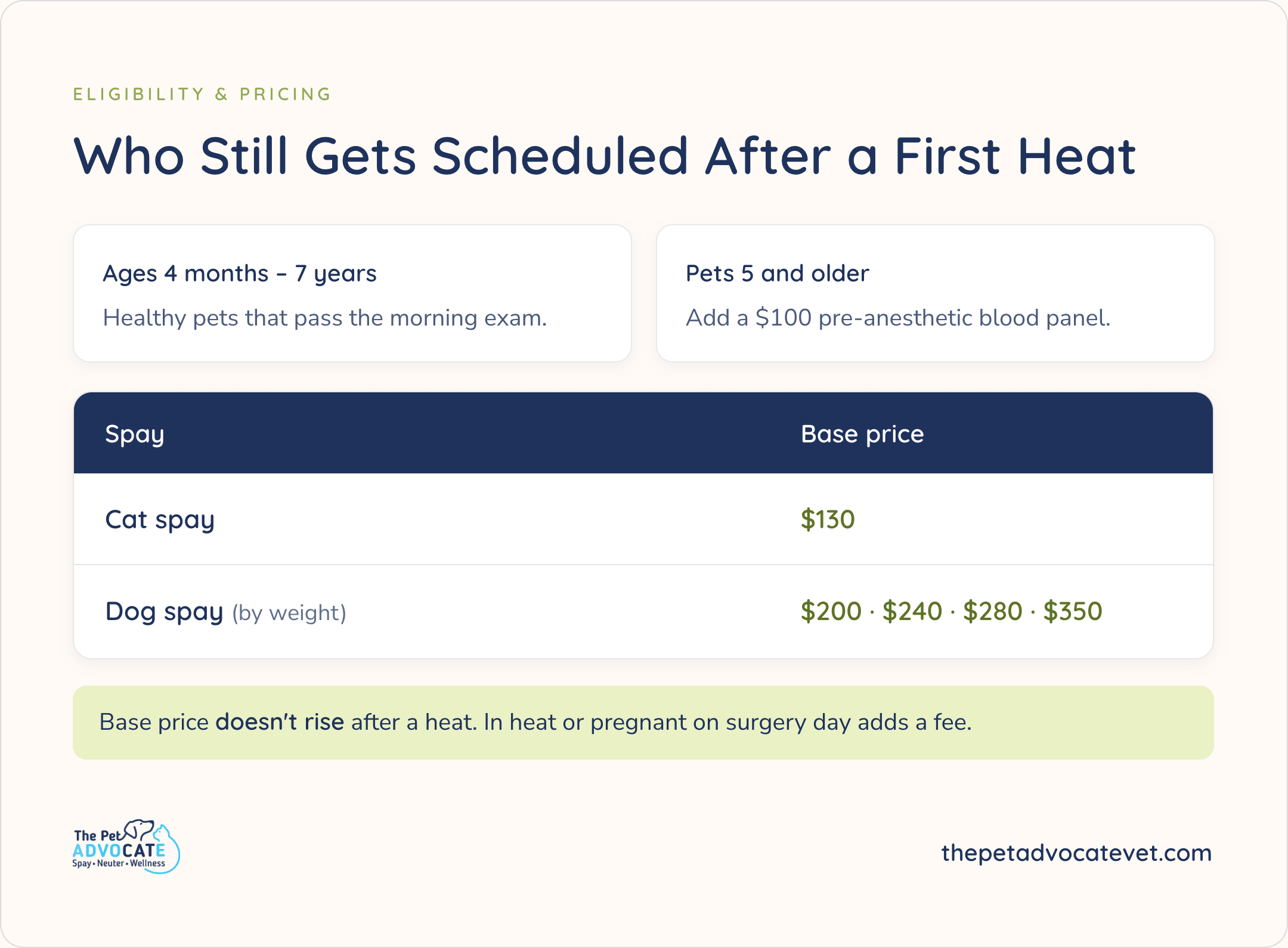
We book healthy dogs and cats from 4 months to 7 years after a first heat when they pass the exam that morning. Pets 5 years and older get a $100 pre-anesthetic panel first.
Base prices do not jump just because she already had a heat. A cat spay is $130. A dog spay is $200, $240, $280, or $350 by weight. An extra fee applies if she is in heat or pregnant on the day. Current numbers stay on prices and rates.
It is not too late to spay after the first heat. Mammary protection is lower than it would have been before any cycle. The same surgery still prevents pyometra, pregnancy, and the next heat.
About one month after visible heat has ended, if you can keep her away from males. Some hospitals wait two to three months. Do not wait for a second season just to feel safer.
Another heat or a litter does not make a female healthier. A litter also means a four-month wait after birth before a spay can be scheduled.
She can still get mammary cancer after a late spay. The risk is lower than leaving her intact through more cycles.
The base price does not go up just because she already had a first heat. Weight sets the dog fee. Heat or pregnancy on surgery day can add a fee confirmed at exam.
A cat that already had a heat can still be spayed, in heat or between cycles. Mammary protection is strongest before 6 months and still substantial before 12 months. After that, timing adds less, and the surgery still removes the uterus.
If the first heat is over and she is healthy and 7 or under, book the spay. If she is still in heat, say so when you call.
Schedule the appointment or call (209) 879-9367. Drop-off is by appointment, Monday through Friday.