
Or call us at 209-879-9367 — we'll answer Mon–Fri, 8 AM to 4:30 PM.📍 1973 N. Tracy Blvd., Tracy, CA 95376
Schedule OnlineLast reviewed: September 2026. Written by Mike Wesselink, DVM, at The Pet Advocate in Tracy, California.
Pyometra in dogs is a life-threatening infection of the uterus. The uterus fills with bacteria and pus, most often E. coli. It almost always hits intact females, usually two to eight weeks after a heat.
The treatment of choice is surgery to remove the uterus and ovaries after the dog is stabilized. A planned spay on a healthy dog prevents it. We schedule those surgeries for healthy pets.
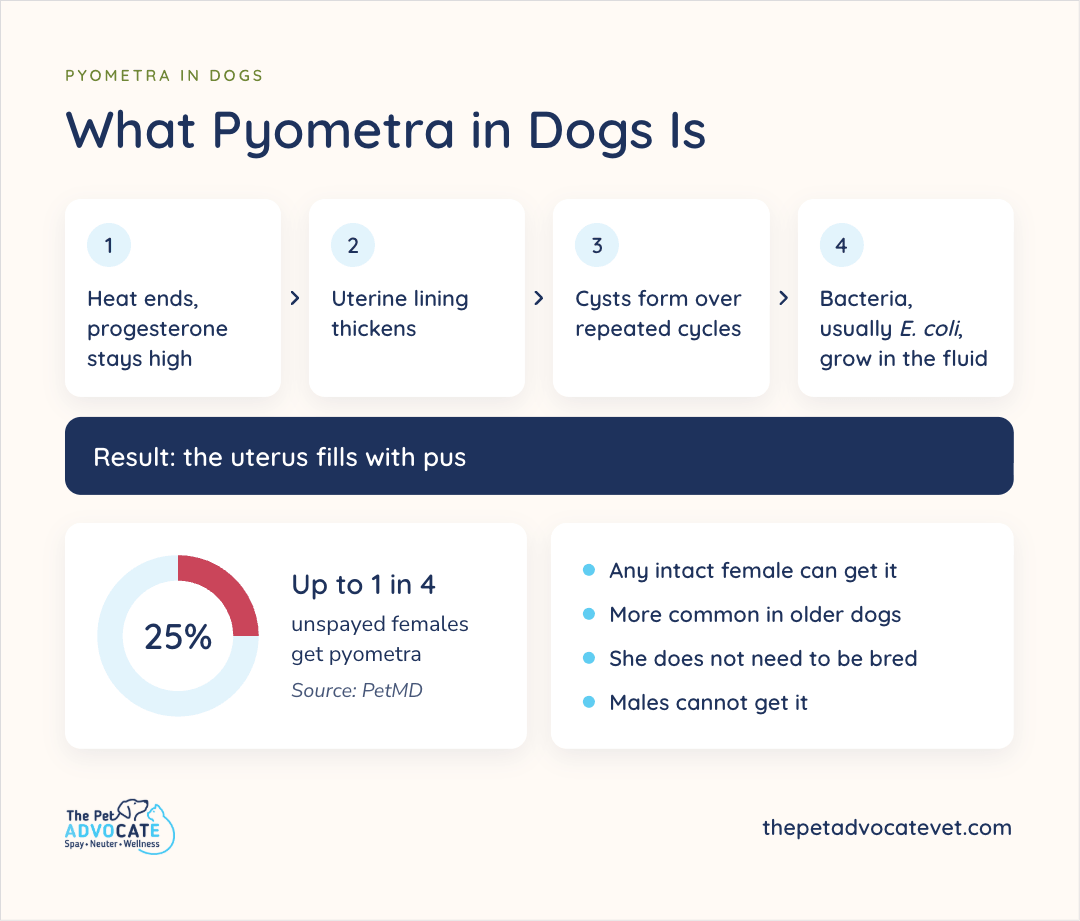
After a heat, progesterone stays high and the lining of the uterus thickens to prepare for a pregnancy that may never happen.
Over repeated cycles that lining can form cysts, a change called cystic endometrial hyperplasia. Bacteria that already live in the vagina, usually E. coli, then grow in that fluid. The Merck Veterinary Manual describes this as one process: the lining change first, the infection on top of it.
Any intact female can get pyometra after she starts cycling. It is more common in middle-aged and older dogs. PetMD reports it in up to 25% of unspayed females.
A male cannot get pyometra. A dog does not have to have been bred for the infection to start.
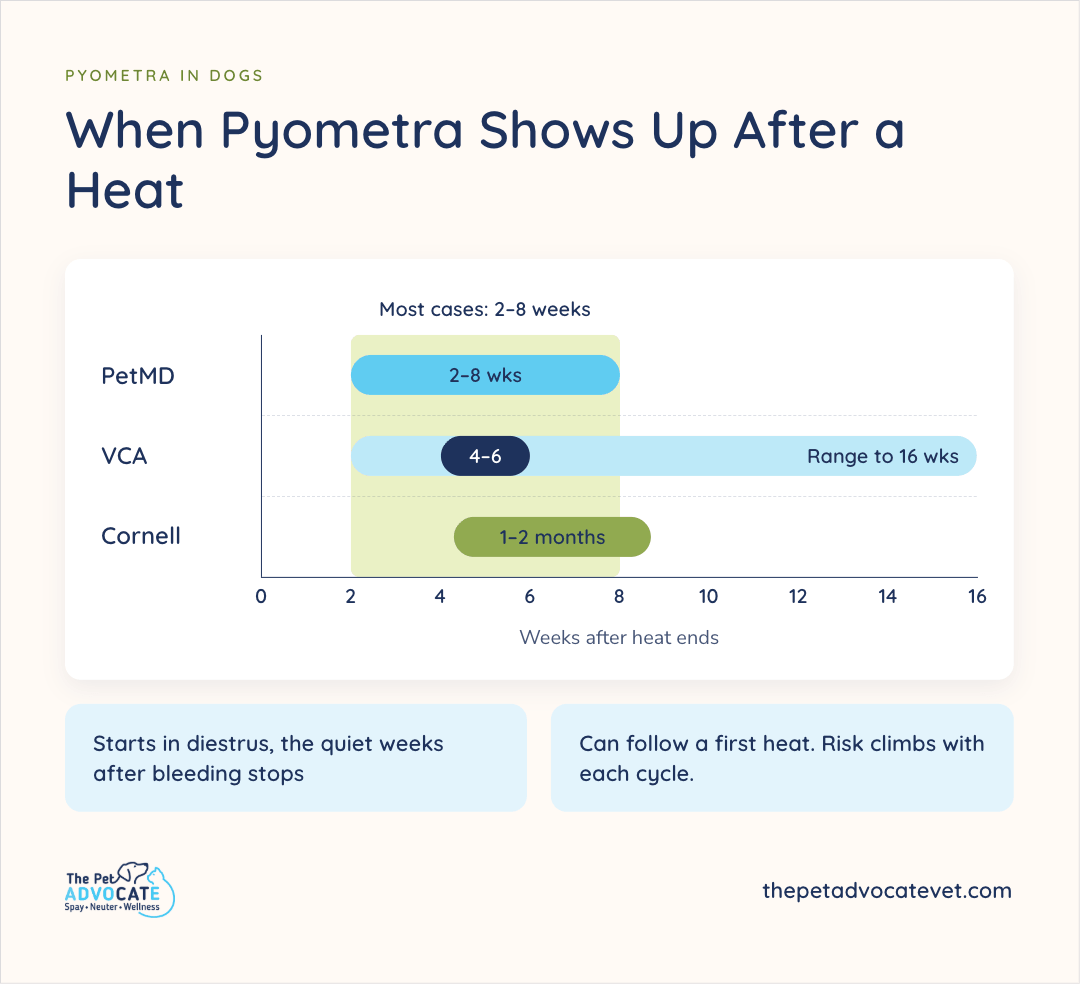
Most dogs with pyometra were in heat two to eight weeks earlier. PetMD uses that window. VCA places most cases at four to six weeks and allows a range of two to sixteen weeks. Cornell says one to two months after the last cycle.
The heat itself can look finished. Pyometra starts in diestrus, the quiet weeks after bleeding stops. A young dog can get pyometra after her first season. Risk climbs as she cycles year after year.
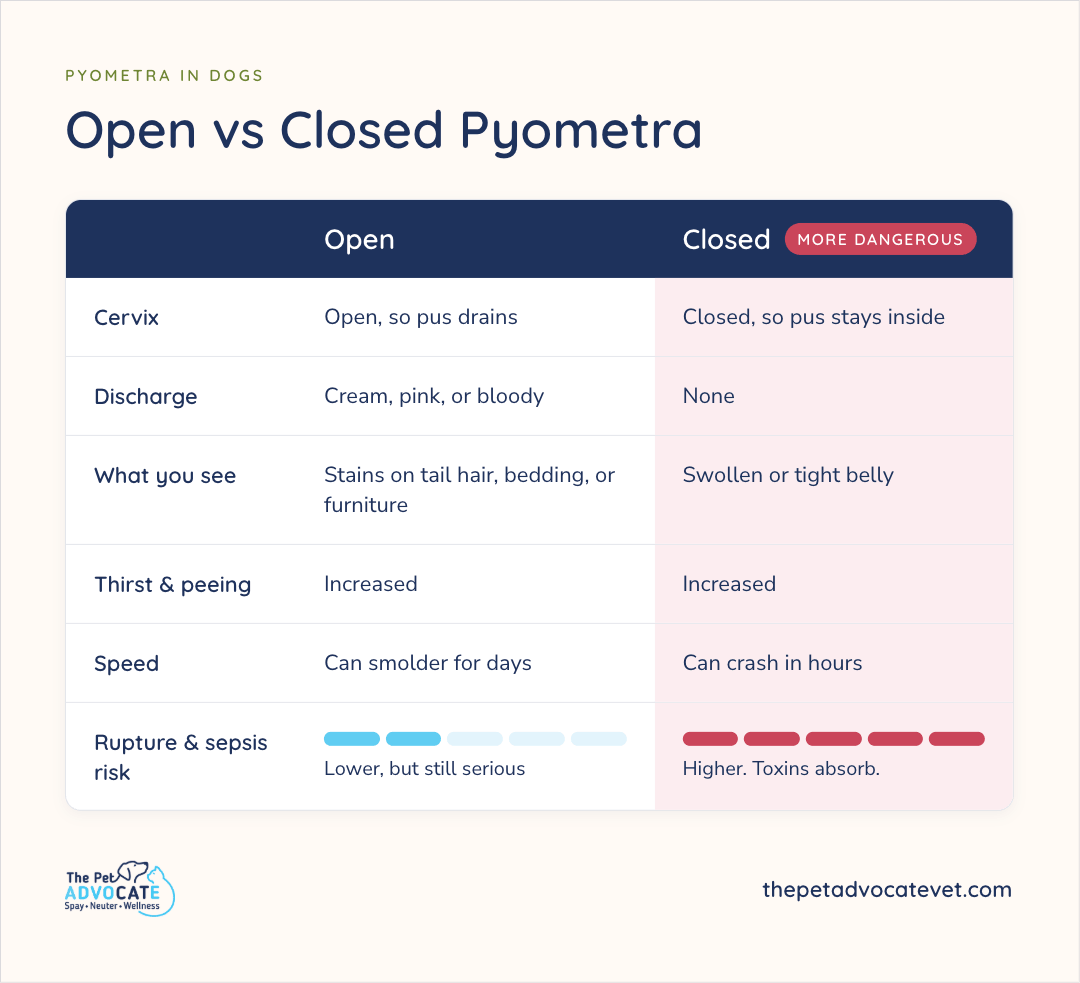
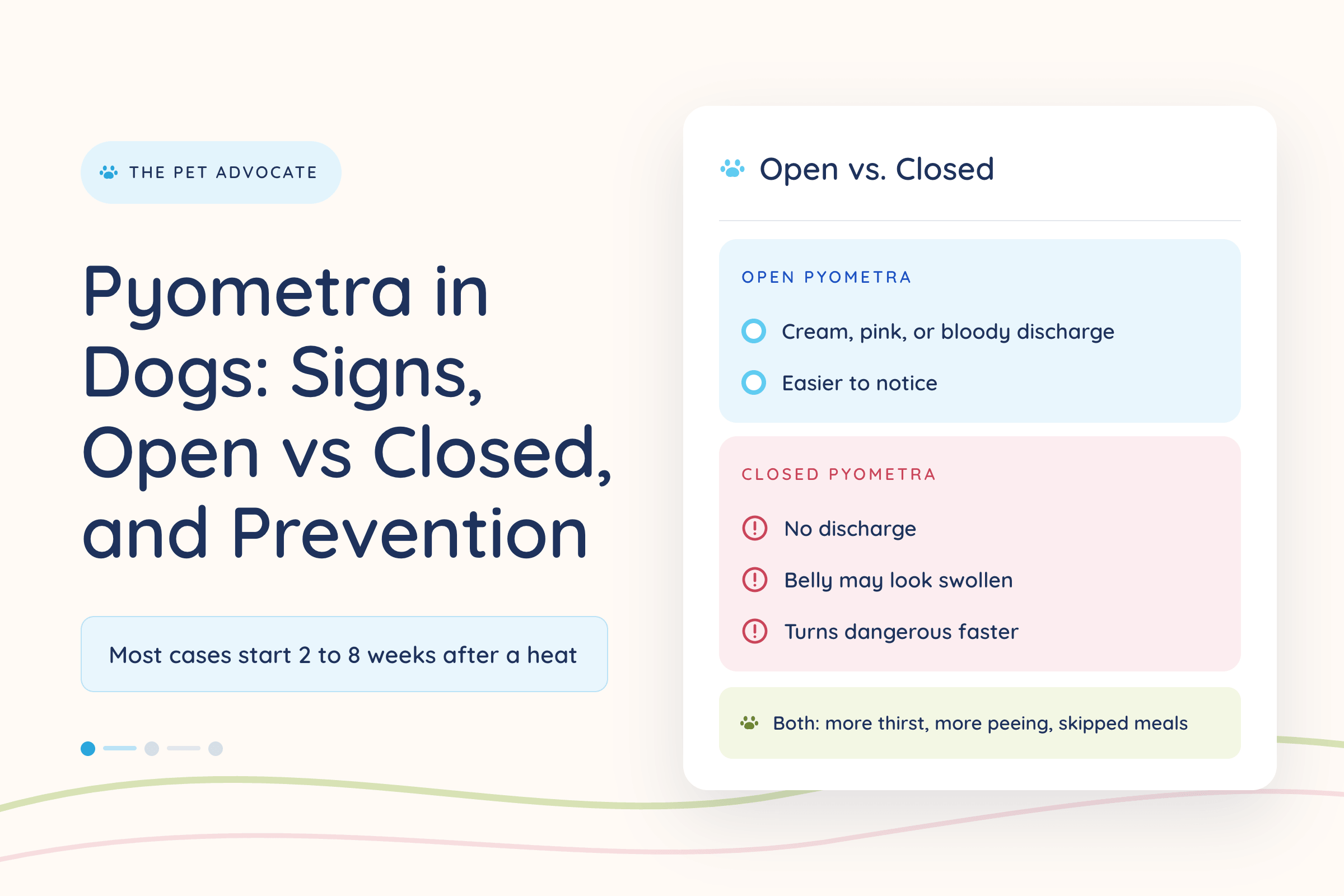
Open and closed pyometra differ by whether the cervix is open enough for pus to drain.
| Type | What you see at home | Why it matters |
|---|---|---|
| Open | Cream-colored, pink, or bloody discharge on the vulva, tail hair, bedding, or furniture | Easier to notice. She can still be very sick. |
| Closed | No discharge. Belly may look swollen or feel tight. She often crashes faster. | Pus stays inside. Toxins absorb. Higher risk of rupture and sepsis. |
Closed pyometra is the form people treat as "she is just getting old" or "she is thirsty from the heat." It is the more dangerous form.
Both types can make her drink more and pee more. Bacterial toxins interfere with the kidneys' ability to hold water. VCA lists that extra thirst and urination in both open and closed cases.
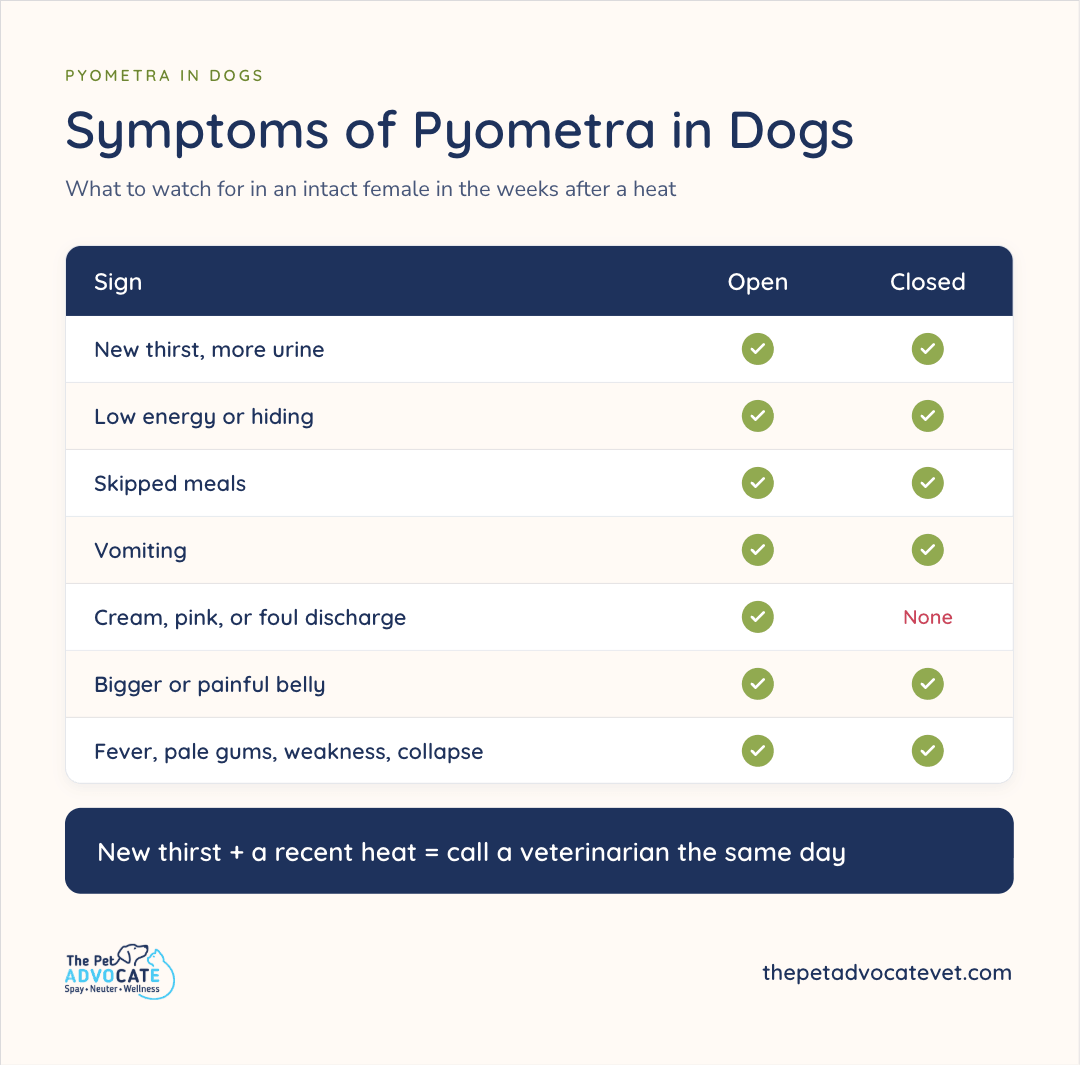
Watch an intact female in the weeks after a heat for:
Discharge is not required. Closed pyometra has none. Fever is inconsistent. A normal temperature does not rule this out.
Do not wait for the full list. New thirst plus a recent heat is enough to call a veterinarian the same day. Cornell publishes the same sign list.
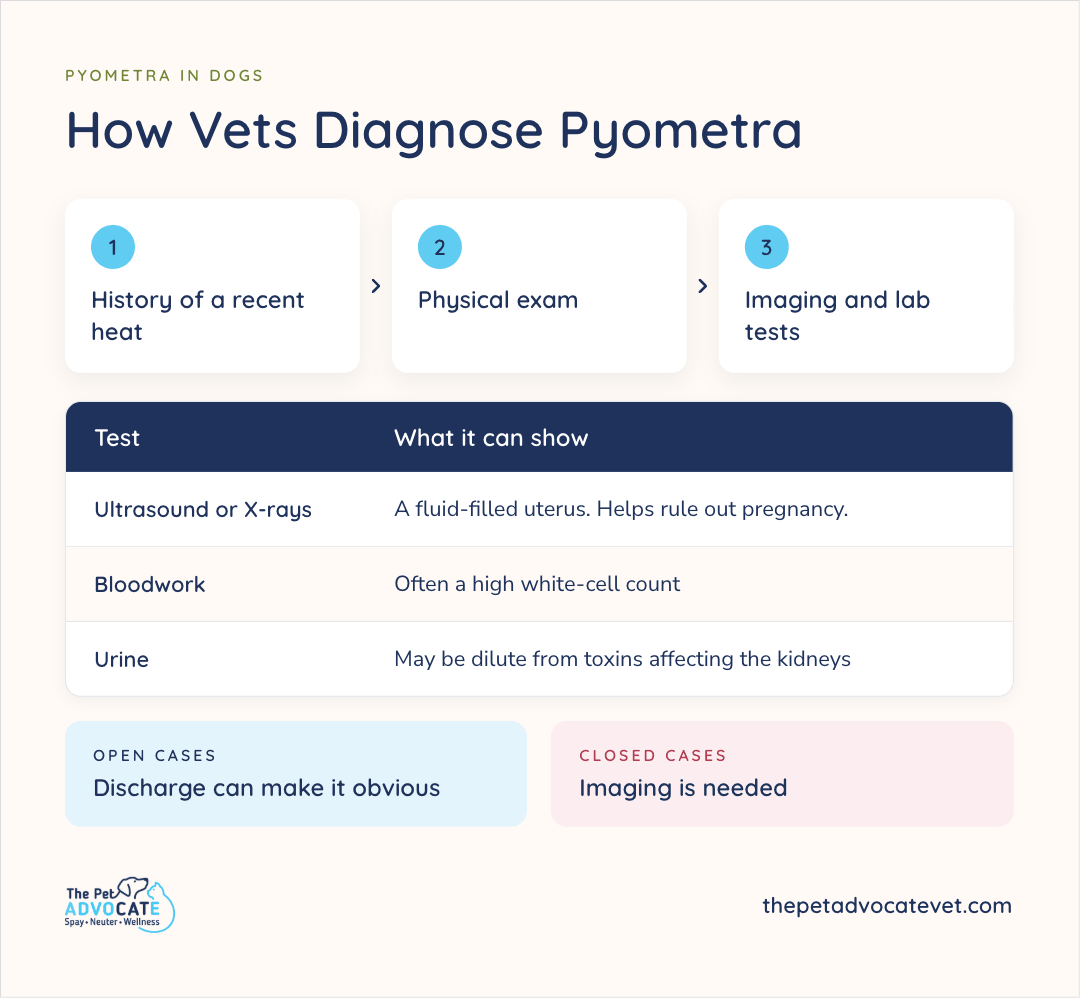
A veterinarian diagnoses pyometra with the history of a recent heat, a physical exam, and imaging.
Ultrasound or X-rays look for a fluid-filled uterus and help separate the infection from pregnancy. Bloodwork often shows a high white-cell count. Urine may be dilute because of the toxin effect on the kidneys.
Open cases can be obvious from the discharge. Closed cases need the imaging.
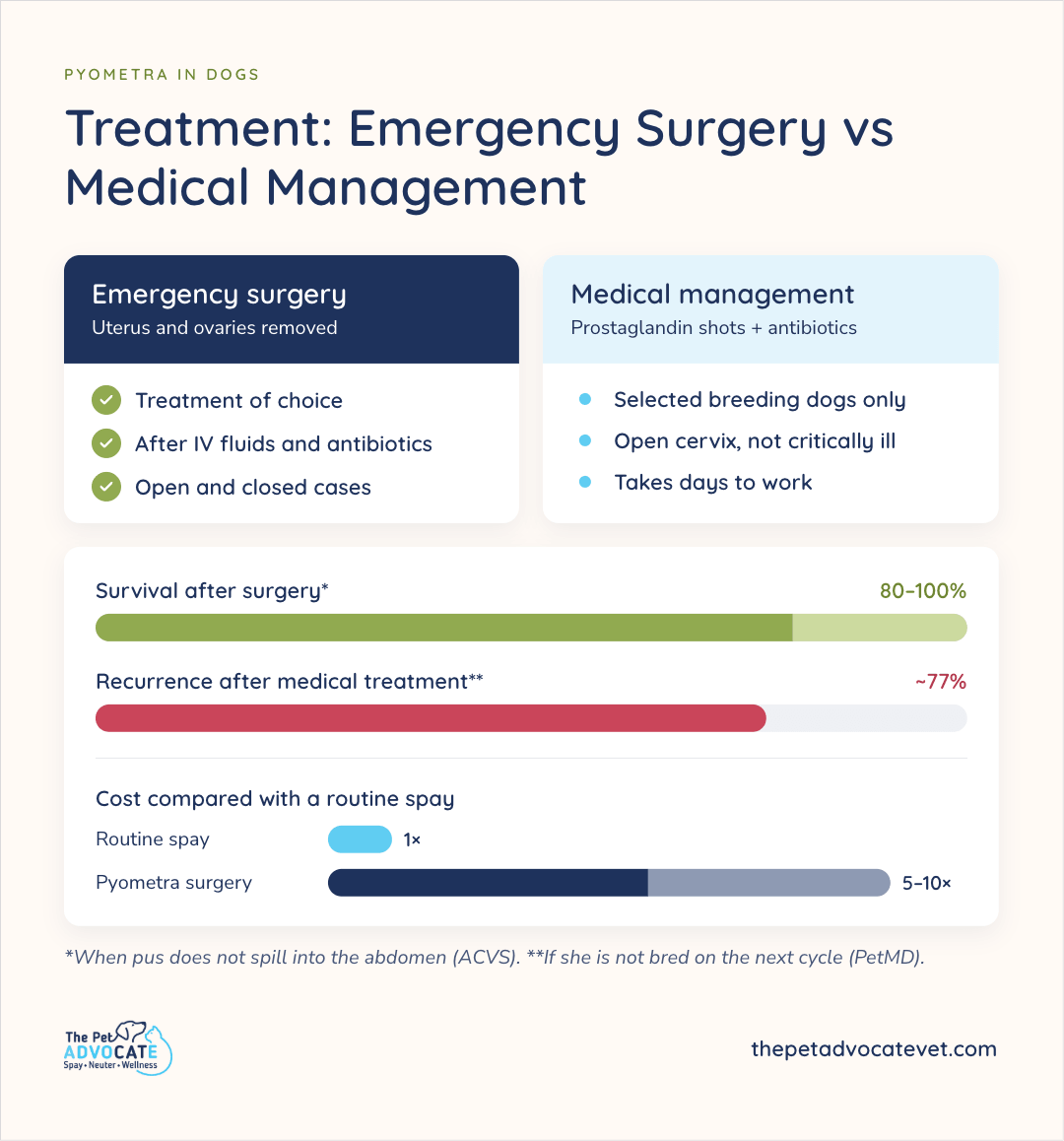
The surgery that ends pyometra is an ovariohysterectomy, which means the uterus and ovaries come out, after IV fluids and antibiotics start. The American College of Veterinary Surgeons calls for operating once she is stable.
This is harder than a spay on a healthy dog. The uterus is large and fragile. Spill of pus into the abdomen raises the risk. PetMD notes that this operation often costs five to ten times a routine spay because of that extra work and the hospital stay.
ACVS puts survival after surgery at 80 to 100% when pus does not spill into the abdomen and the infection responds to treatment. Sepsis or a ruptured uterus drops that number.
Some breeding programs try hormone shots (prostaglandins) plus antibiotics to empty the uterus instead. That path is only for selected breeding dogs whose cervix is open, so pus can drain, and who are not critically ill. It takes days to work. Closed cases and sick dogs are not candidates, because the uterus can rupture as it contracts.
PetMD estimates about 77% recurrence if she is not bred on the next cycle. After breeding is finished, those dogs still need a spay.
A dog that is vomiting, lethargic, or discharging fails the health rules we use for surgery on a healthy pet. Those rules are on surgery requirements. Take her to her regular veterinarian or an emergency hospital.
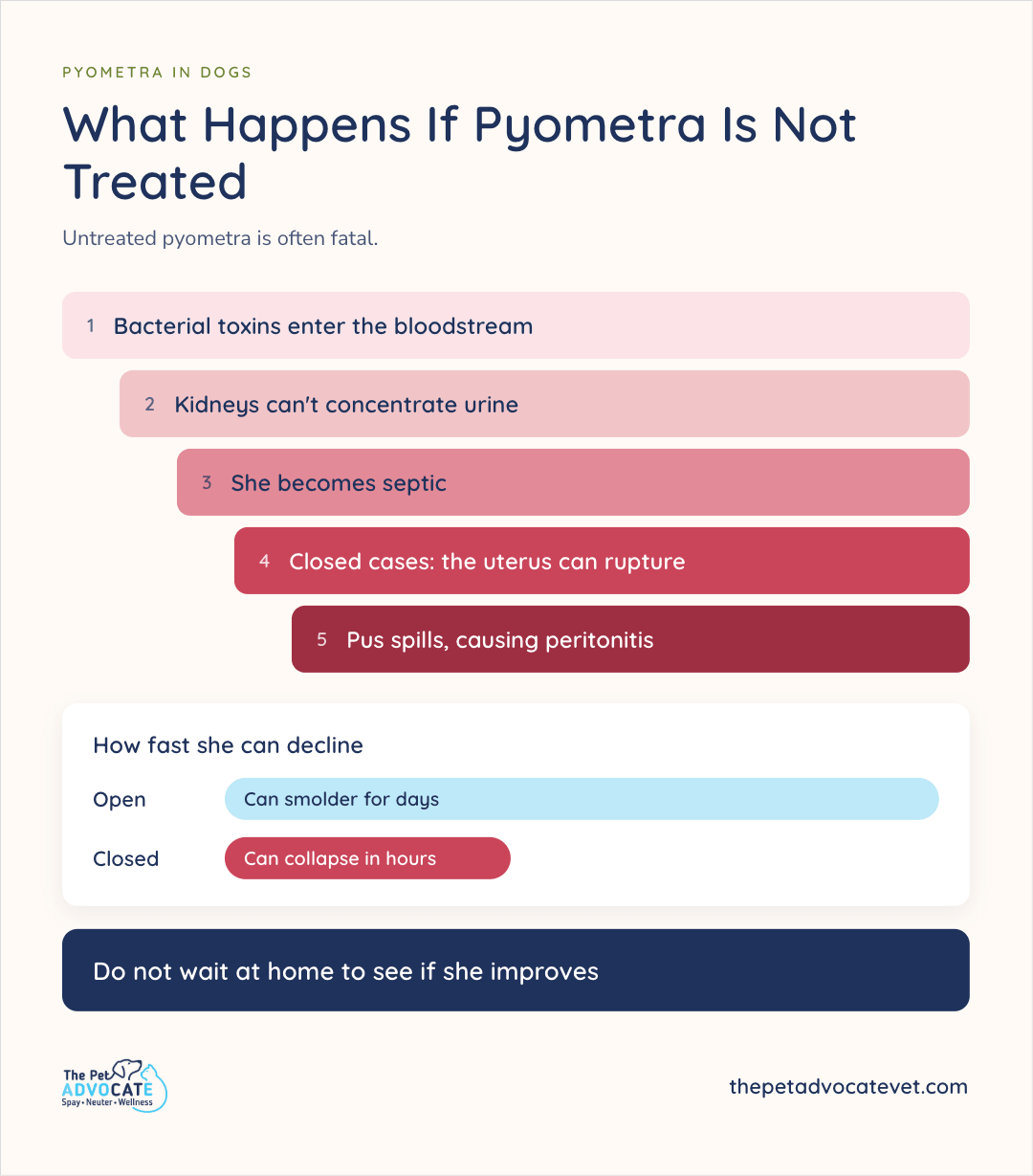
Untreated pyometra is often fatal.
Toxins from the bacteria enter the bloodstream. Kidneys fail to concentrate urine. The dog becomes septic. In a closed case the uterus can rupture, spill pus into the abdomen, and cause peritonitis.
Some open cases smolder for days. Closed cases can collapse in hours. Do not wait at home to see if she improves. Cornell is direct: most dogs do well when surgery happens early, and untreated infection can kill them.
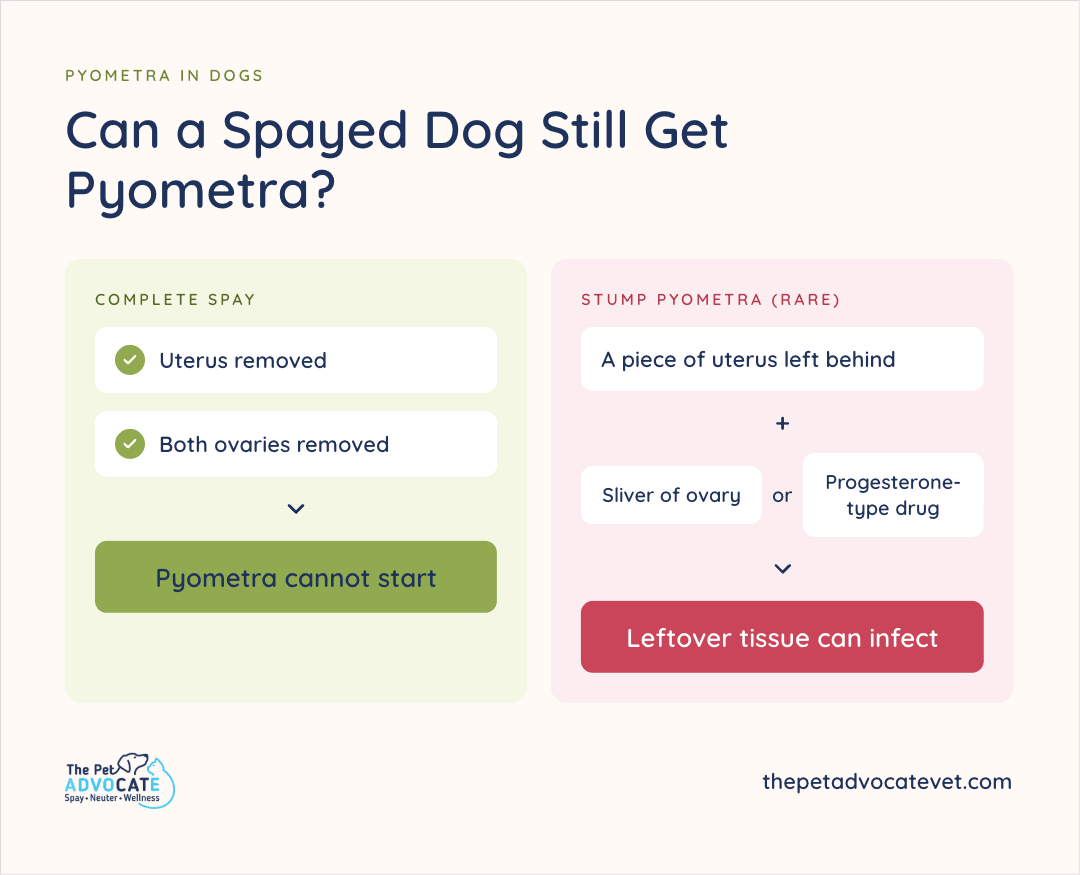
A complete spay removes the uterus and both ovaries, so pyometra of the whole uterus cannot start.
Stump pyometra is the rare exception. A piece of uterus was left behind, and either a sliver of ovary remains or the dog was given a progesterone-type drug. ACVS and Cornell both describe that leftover tissue becoming infected.
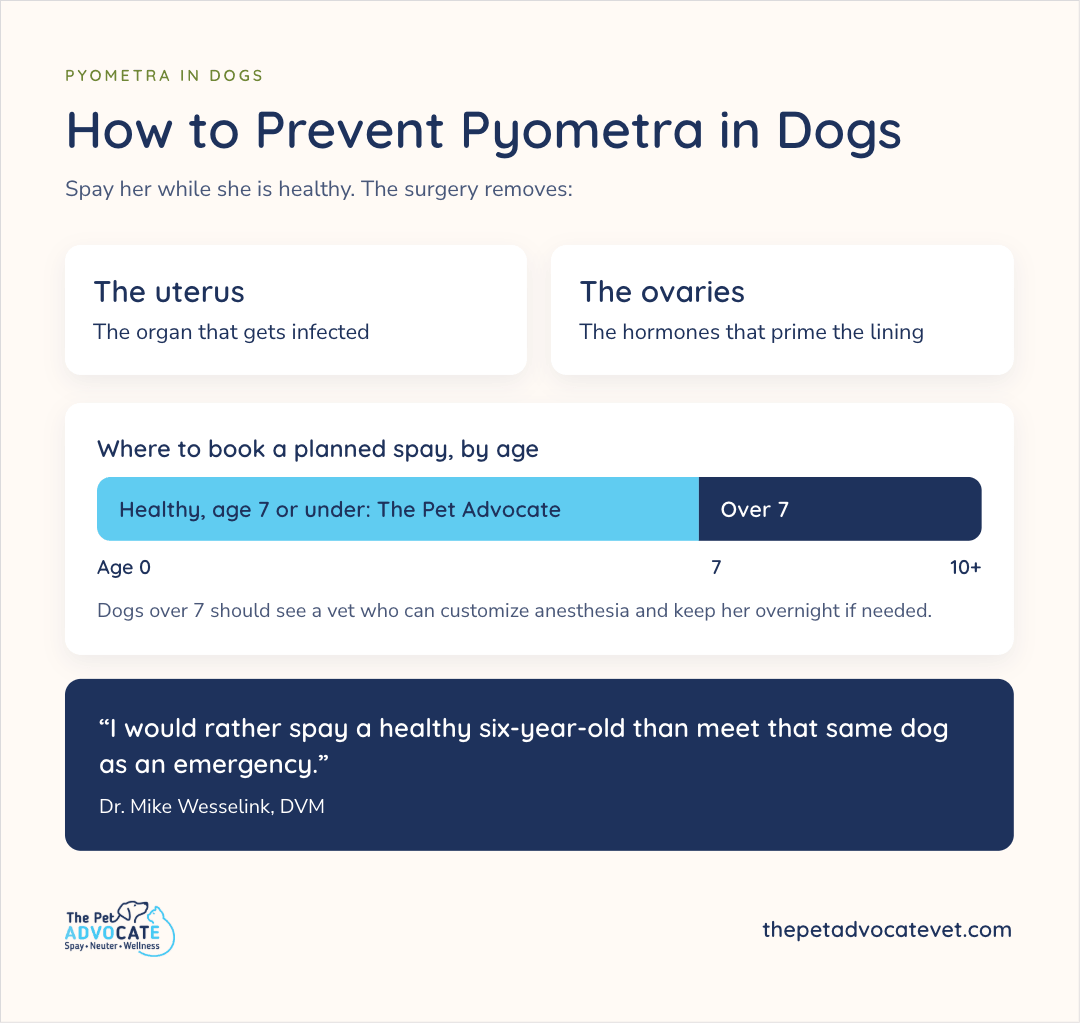
Remove the uterus and ovaries while the female is healthy. That takes out the organ that gets infected and the hormones that set the lining up for it.
I would rather spay a healthy six-year-old than meet that same dog as an emergency. If she already had a heat, the surgery is still worth doing.
We book that surgery for healthy dogs through age 7. Dogs over 7 should see a veterinarian who can customize anesthesia and stay overnight if needed. That cutoff is on Is my pet too old to spay or neuter.

Do not book a surgery appointment if the dog may have pyometra.
Call her regular veterinarian or go to an emergency hospital. After hours in this area, owners already use Sage Veterinary Centers at 925-574-7243, at their own expense.
Bring the heat dates if you have them. Mention discharge, thirst, vomiting, and whether she has ever been spayed. Closed cases look like "no discharge," so say that out loud.
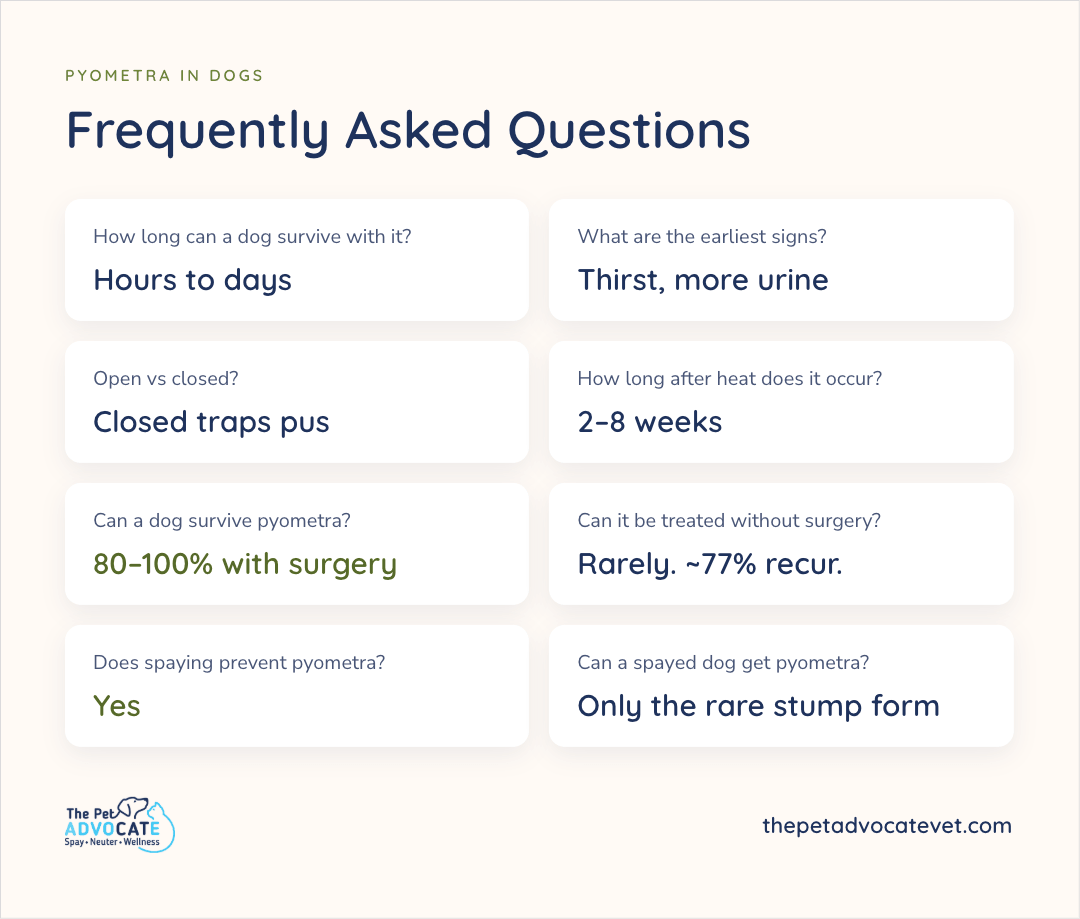
A dog with open pyometra may look stable for a few days. Closed pyometra can crash in hours. There is no safe home timeline, so she needs a veterinarian the same day.
New thirst, more urine, low energy, and a skipped meal in an intact female two to eight weeks after heat are the earliest pattern. Discharge shows up only if the cervix is open.
Open pyometra drains pus through the vagina. Closed pyometra traps the pus inside. Closed is more dangerous because toxins absorb faster and the uterus can rupture.
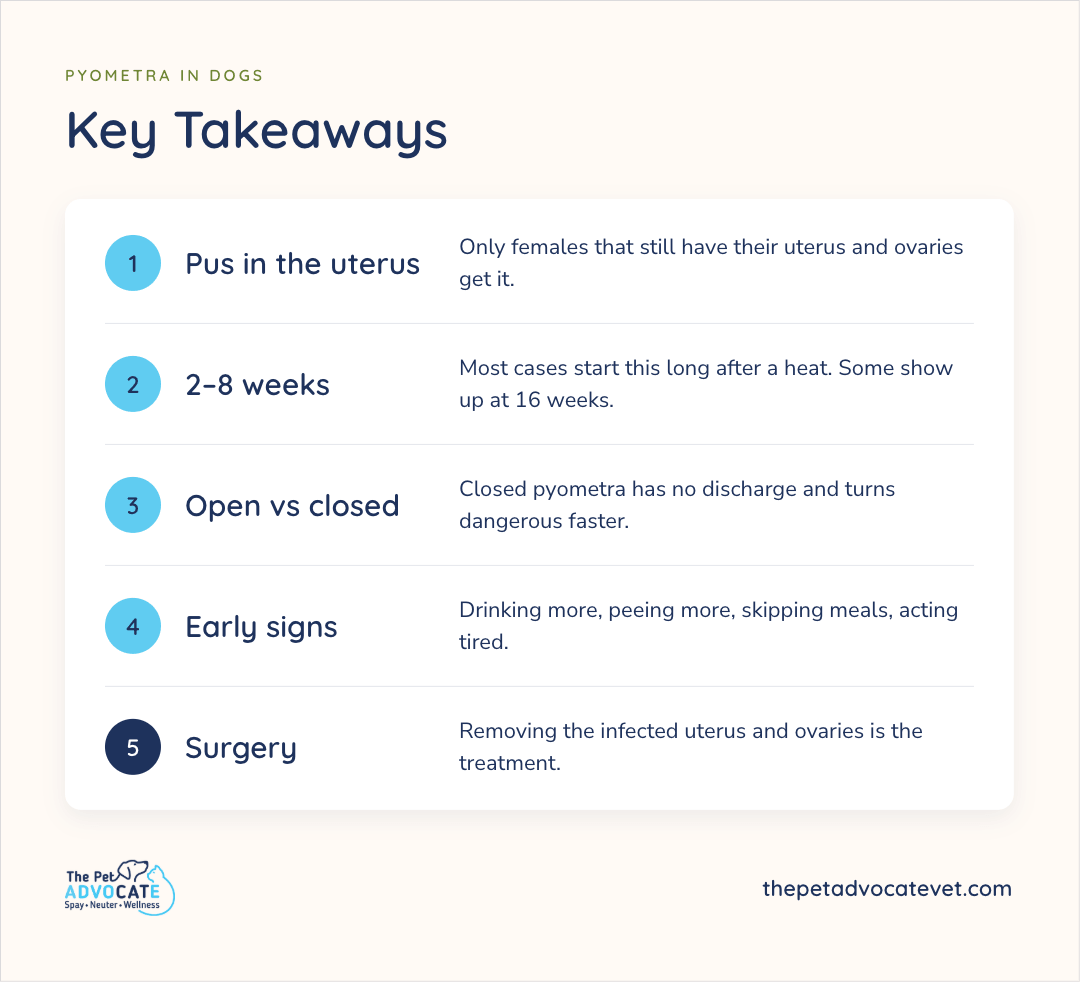
Most pyometra cases start 2 to 8 weeks after heat. Some appear as late as 16 weeks.
Yes. A dog can survive pyometra if she is treated promptly with surgery. ACVS reports 80 to 100% survival when the abdomen stays clean and the infection responds. Delay, rupture, or sepsis lowers that chance.
Pyometra can be treated without surgery only in selected breeding dogs whose cervix is open and who are not critically ill. Recurrence is common, about 77% if she is not bred next cycle. Closed pyometra and sick dogs need surgery.
Yes. Removing the uterus and ovaries while a female is healthy stops pyometra.
A spayed dog can get only the rare stump form, when leftover uterus and leftover ovary or a progesterone drug are still present. Treat that as an emergency and go to a hospital that can operate the same day.
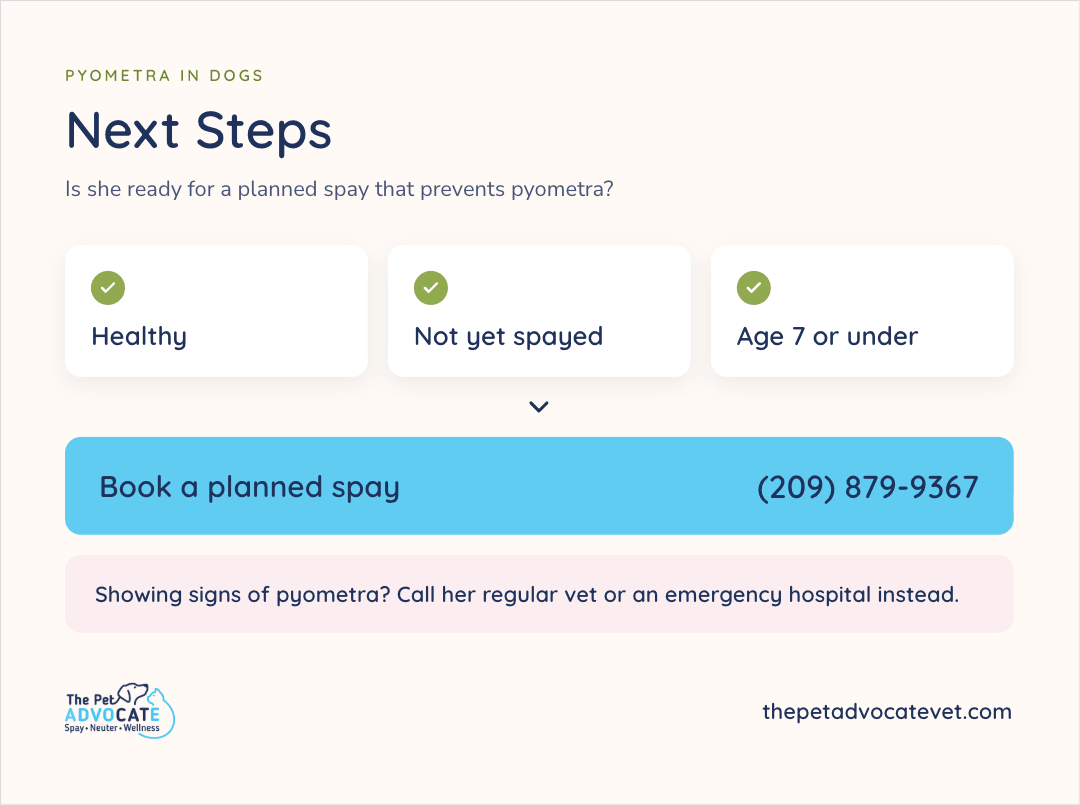
If the dog is healthy, intact, and 7 or under, you can book a planned spay that prevents pyometra. Schedule the appointment or start from the low-cost spay and neuter page. Or call (209) 879-9367.