
Or call us at 209-879-9367 — we'll answer Mon–Fri, 8 AM to 4:30 PM.📍 1973 N. Tracy Blvd., Tracy, CA 95376
Schedule OnlineHave you been feeding a colony or watching neighborhood cats multiply? The kittens keep coming. You want to stop the cycle without trapping and removing the cats that already live there.
Trap-Neuter-Return (TNR) is the practical answer. At The Pet Advocate we perform high-volume spay and neuter every day, including for community and feral cats brought by individual caregivers and rescue partners. This guide walks through what TNR is, how to trap safely the first time, exactly how the process works at our Tracy clinic, the recovery holds we recommend, and the transparent pricing so you can plan.
Written from the daily practice of Dr. Michael Wesselink, DVM, and the team at The Pet Advocate in Tracy, California.
Last updated: July 2026
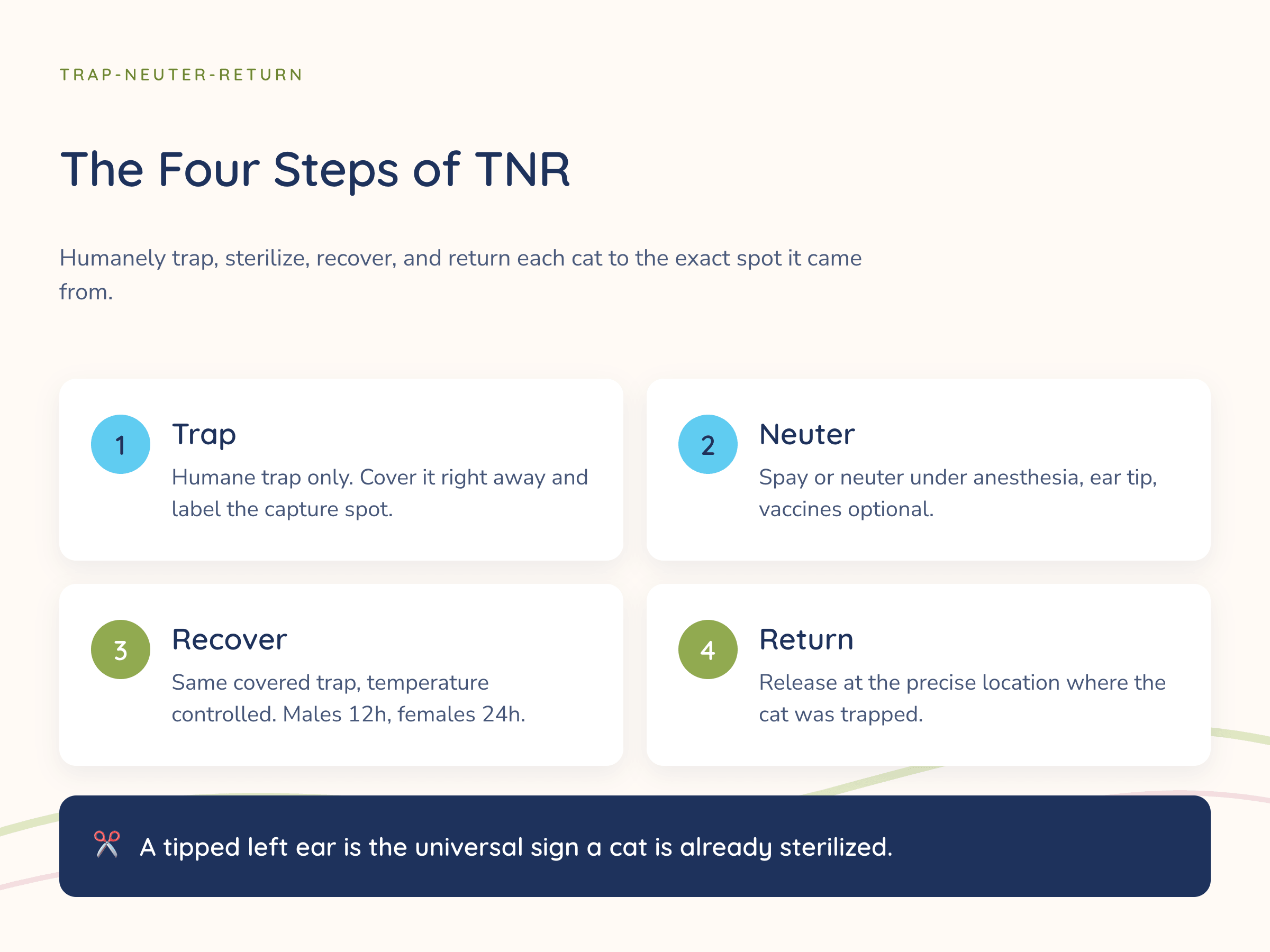
Trap-Neuter-Return means humanely trapping free-roaming cats, having them spayed or neutered (and usually vaccinated and ear-tipped), then returning them to the exact location where they were trapped so they can live out their lives without producing more litters.
The goal is population control and better welfare for the cats already living there. Spayed and neutered cats stop adding kittens. Males fight and roam less. Females stop cycling through heat. Colonies stabilize once most of the cats are altered and new arrivals get addressed too.
National animal welfare organizations, including the ASPCA and Alley Cat Allies, support TNR as the primary strategy for community cats. Ear tipping (removing a small portion of the left ear tip while the cat is under anesthesia) is the universal visual marker that a free-roaming cat has already been sterilized so it is not trapped again unnecessarily.
In our high-volume work we see the difference it makes every week. When a colony reaches high sterilization coverage, the constant stream of new kittens slows dramatically. The cats themselves become quieter, with fewer fight wounds and less roaming. That real-world change is why we prioritize accessible TNR for both individual caregivers and rescue partners.
We accept TNR appointments from anybody. Individual caregivers, first-time colony helpers, and established rescue organizations can all book. Some clinics restrict service to specific groups. We do not.
Standard low-cost pricing applies to basic individual TNR. Special pricing is available only for rescue organizations with which we already have an existing relationship. That distinction keeps the service accessible while supporting high-volume partners who bring larger numbers.
Booking is still required, either online or by phone. Never set a trap until you have a confirmed appointment and a plan for recovery. This protects the cats and keeps the surgical day running smoothly.
If you are driving from Stockton, Antioch, Manteca, Tracy, or farther out in the Central Valley or Bay Area, the same rules apply. We see community cats from across the region every week.
The cat must arrive in a humane trap. We do not accept carriers or other containers for community cats. This protects staff, the handler, and the cat.
If you are new to trapping, use this preparation method:
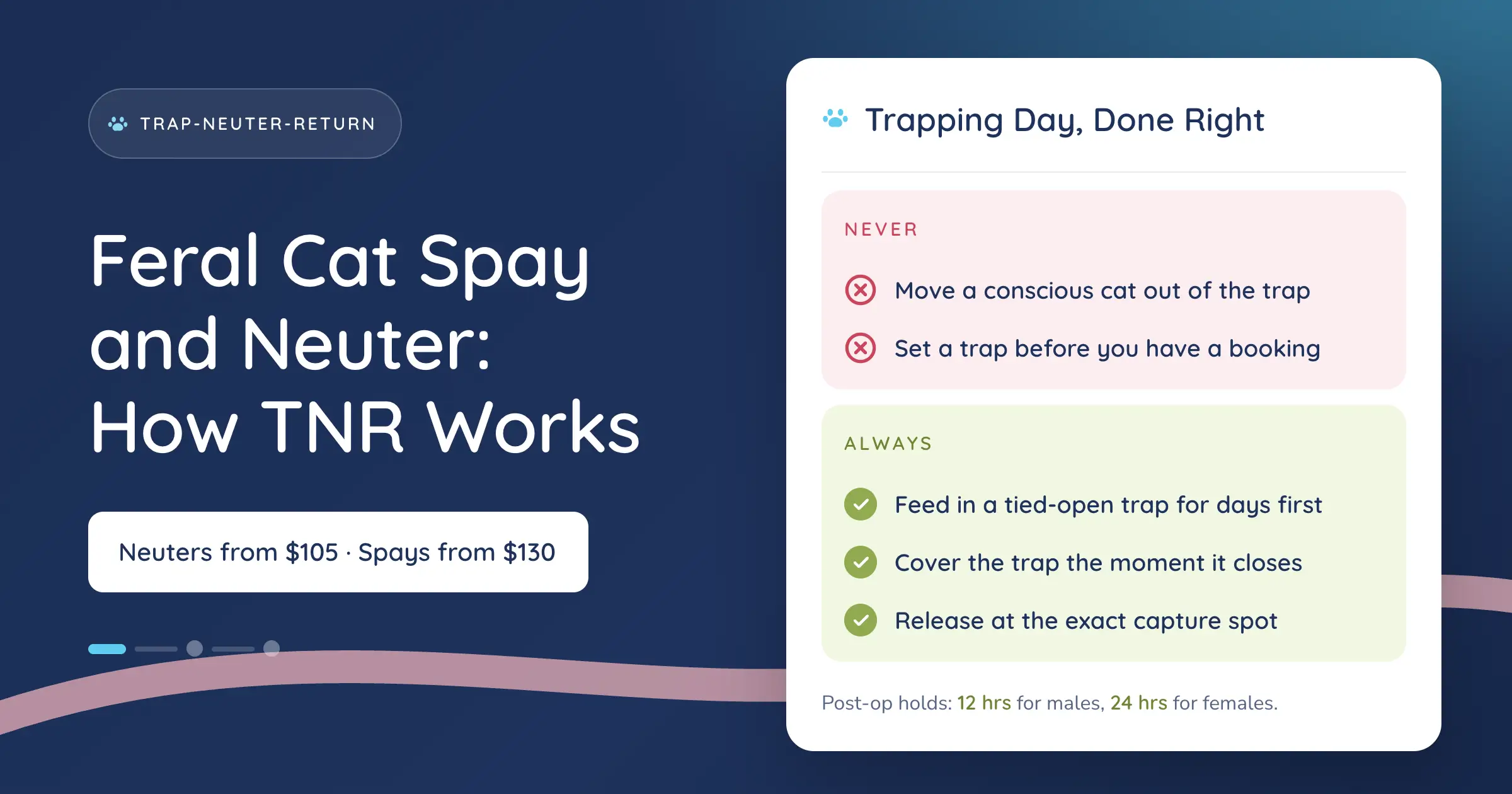
Withhold food for about 24 hours before trapping (always provide water). Bait with strong-smelling food such as tuna or sardines in oil at the back of the trap so the cat must step on the trigger plate. Cover the trap immediately after it closes to calm the cat. Label every trap with the exact capture location so return is accurate.
Never leave a set trap unattended. Never attempt to transfer a conscious feral cat out of the trap. Cover, transport, and keep the cat in the same trap through recovery. Feral cats stress easily, and keeping them in the familiar trap reduces that stress from the moment they are caught until they return home. In our experience, this approach produces calmer cats on surgery day and fewer complications during recovery.
Appointments are required. Book online or by phone. Cats arrive between 8:00 and 8:30. Drop-off is car-side or at the door; staff handle the rest.
The cat stays in its trap for the entire visit. Food and water have already been withheld overnight for anesthesia. After the procedure the cat recovers in the same covered trap in a temperature-controlled space.
Pickup is the same day once the cat is clear-eyed and stable. Exact timing depends on the surgical schedule that day. You will receive a call when your cat is ready. Most community cats go home the same afternoon.
We treat these appointments with the same care we give owned pets. The logistics are simply adapted for cats that cannot be handled outside a trap. You can also review our full low-cost spay and neuter options before booking.
Cat neuters start at $105. Cat spays start at $130. These base prices cover anesthesia, the surgery, monitoring, and same-day recovery. You can review the full current rates on our prices and rates page.
Pain medication and an E-collar are optional add-ons. Many TNR caregivers decline them to stretch limited budgets across more cats. We educate and recommend, then respect the client’s decision. That same philosophy applies to vaccines.
Pregnant cats, cats in heat, or cryptorchid males may carry additional tissue or surgical-site fees after the procedure, just as with any spay or neuter. Vaccines (FVRCP $30, rabies $25, FeLV $35) are available but not required for the surgery itself. See our kitten vaccine schedule for timing details if you are also vaccinating. Free-roaming cats are typically identified with an ear tip, the universal marker that the cat has already been sterilized.
We perform the same high-quality, high-volume protocol used for owned pets. The difference is logistics: trap-only intake, short post-op holds, and return to the original colony site. Our primary goal remains preventing pet overpopulation one colony at a time. For a deeper look at the procedures themselves, see our spay vs neuter guide.
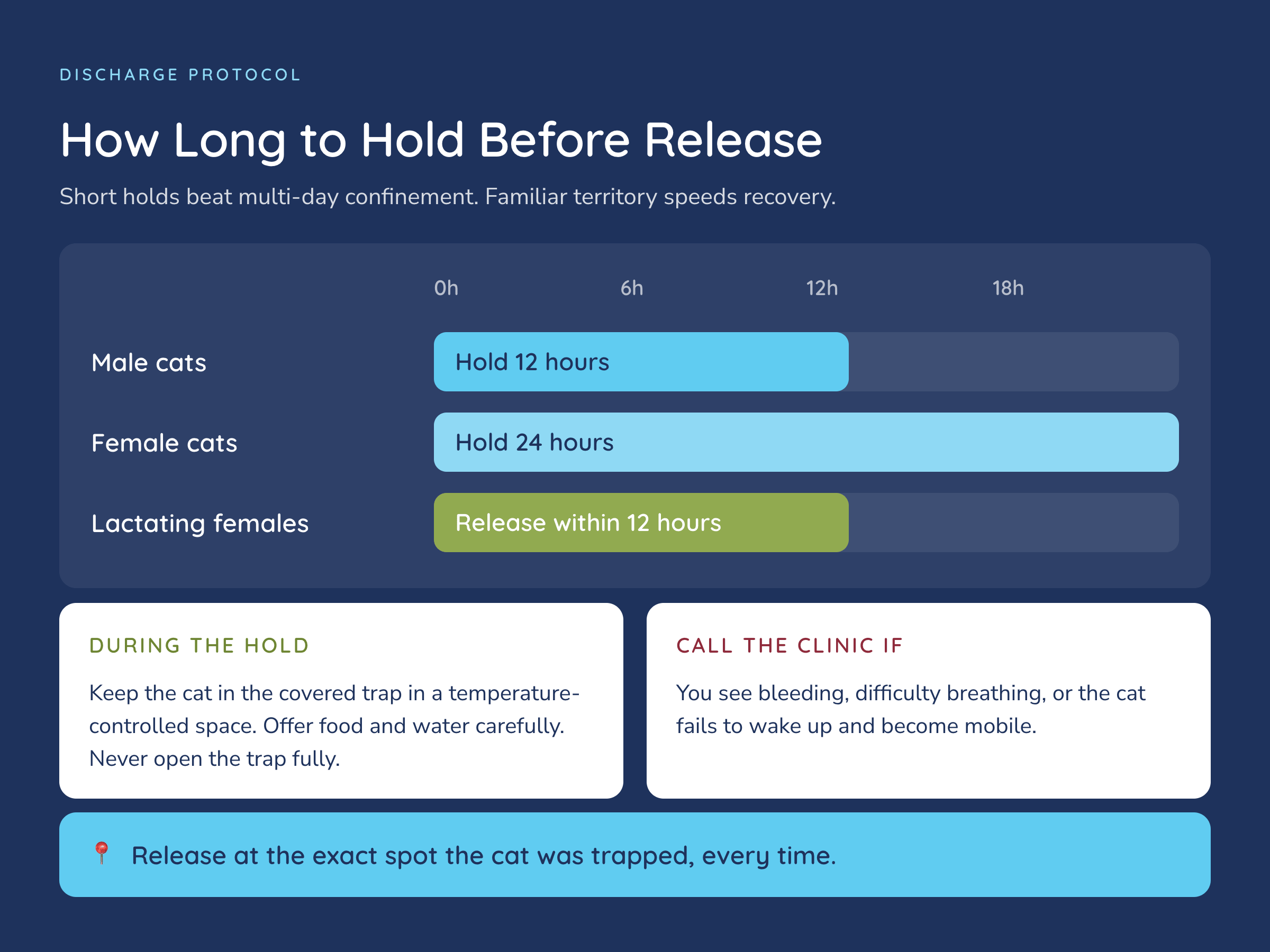
Feral and community cats recover best when stress is minimized. Our published discharge protocol is:
Keep the cat in the covered trap the entire time. Maintain a temperature-controlled environment. Offer food and water carefully after you arrive home; do not open the trap fully or attempt a transfer. Release the cat at the exact location where it was trapped.
These short holds align with best-practice recommendations from organizations such as Alley Cat Allies that prioritize reducing stress over multi-day confinement. Most cats are ready to return once they are fully awake and mobile. Monitor for bleeding, difficulty breathing, or failure to recover; contact the clinic if anything looks abnormal. Full details live on our post-surgery discharge instructions page under the feral cats section.
In practice we find that returning cats to their familiar territory as soon as they are stable produces better overall recovery than prolonged holding. That is why we keep the holds short and return them to the precise spot they know.
Pregnant cats can and should still be spayed. The procedure ends the pregnancy and prevents future litters. Lactating mothers are returned quickly so kittens are not left alone longer than necessary. Young kittens that can be socialized may be better candidates for foster and adoption rather than immediate return; true adult ferals stay outdoors.
Multiple cats from the same colony can be scheduled together when space allows. Call ahead so we can plan the surgical day. Bringing several at once is often the most efficient way to make progress on a colony. Our low-cost spay and neuter service is set up to handle this volume.
If a cat appears sick or injured beyond a routine spay or neuter, we will discuss options. Our focus is high-volume sterilization, so complex medical cases may need referral to a full-service practice.
Standard pricing is $105 for a male neuter and $130 for a female spay. Special pricing applies only to established rescue partners. Optional vaccines and pain medication are extra and can be declined. Check the current rates for the most up-to-date numbers.
A humane trap is required. We do not accept carriers for community or feral cats. This keeps everyone safe and reduces stress on the cat.
Males 12 hours, females 24 hours, lactating females within 12 hours. Keep the cat in the covered trap until release at the original trap site. Full recovery guidance is on our discharge instructions.
Free-roaming cats are typically ear-tipped as the universal visual marker that the cat has already been sterilized and should not be trapped again.
Yes. We accept appointments from any caregiver. Special pricing is reserved for organizations with an existing relationship. Individual caregivers pay the standard low-cost rates.
Pregnant cats are still spayed. Lactating mothers are returned on a shorter timeline so they can nurse. Coordinate kitten care if the mother will be held overnight. Early sterilization stops the next generation before it starts.
The fastest way to stop a colony from growing is to alter the cats already living there. We make the process straightforward: book the appointment, trap humanely, drop off between 8:00 and 8:30 in the trap, and return the cat the same day once it has recovered.
Schedule online or call us at 209-879-9367. If you represent an established rescue and need special pricing, contact us to set up the relationship. Full pricing lives on our prices and rates page, and the detailed feral discharge instructions are available after the procedure.
Stopping the next litter starts with one successful trap and one appointment. We are here five days a week to help you get it done.