Or call us at 209-879-9367 — we'll answer Mon–Fri, 8 AM to 4:30 PM.📍 1973 N. Tracy Blvd., Tracy, CA 95376
Schedule OnlineLast reviewed: October 2026. Written by Mike Wesselink, DVM, from vaccine work at The Pet Advocate in Tracy, California.
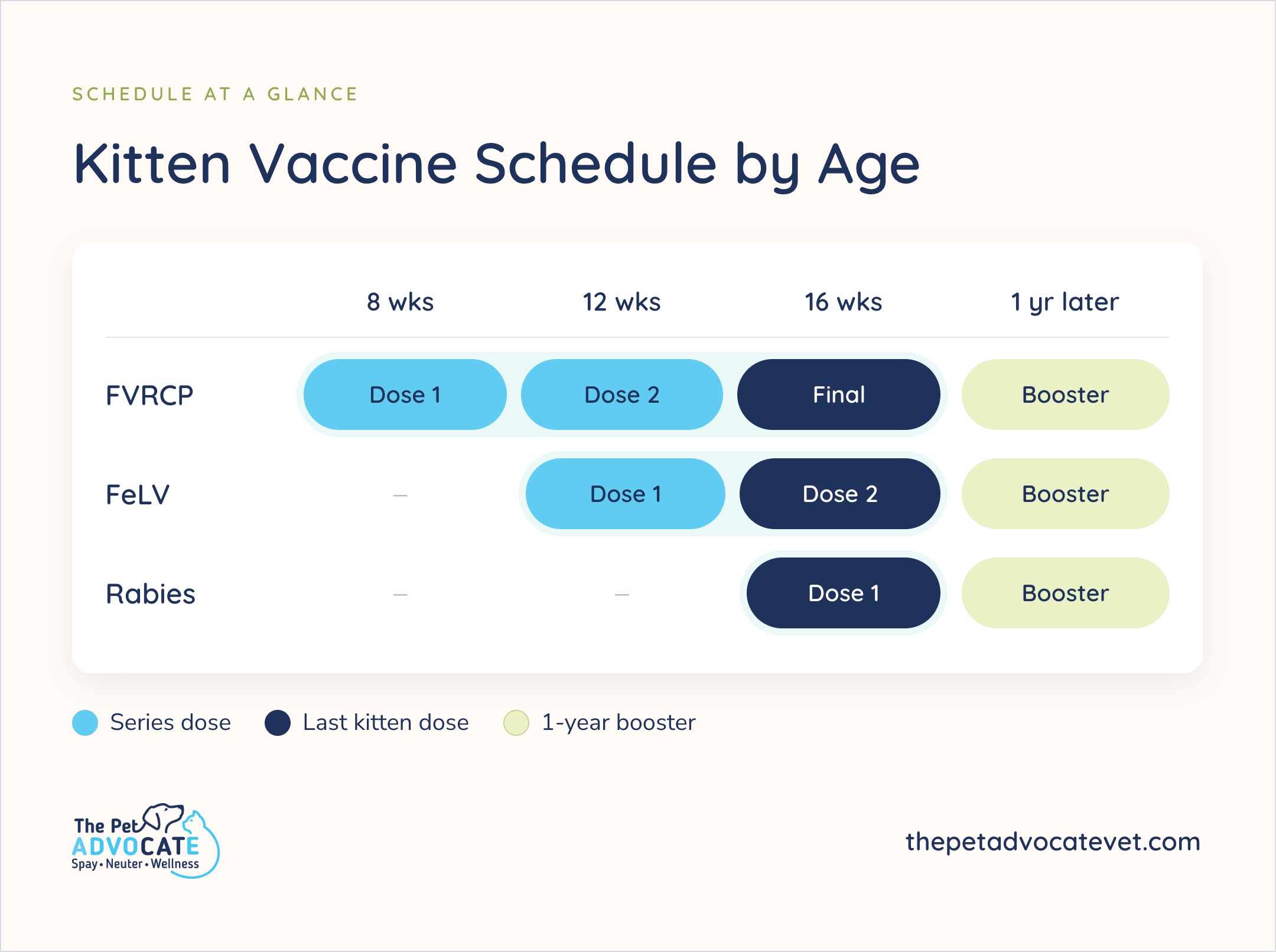
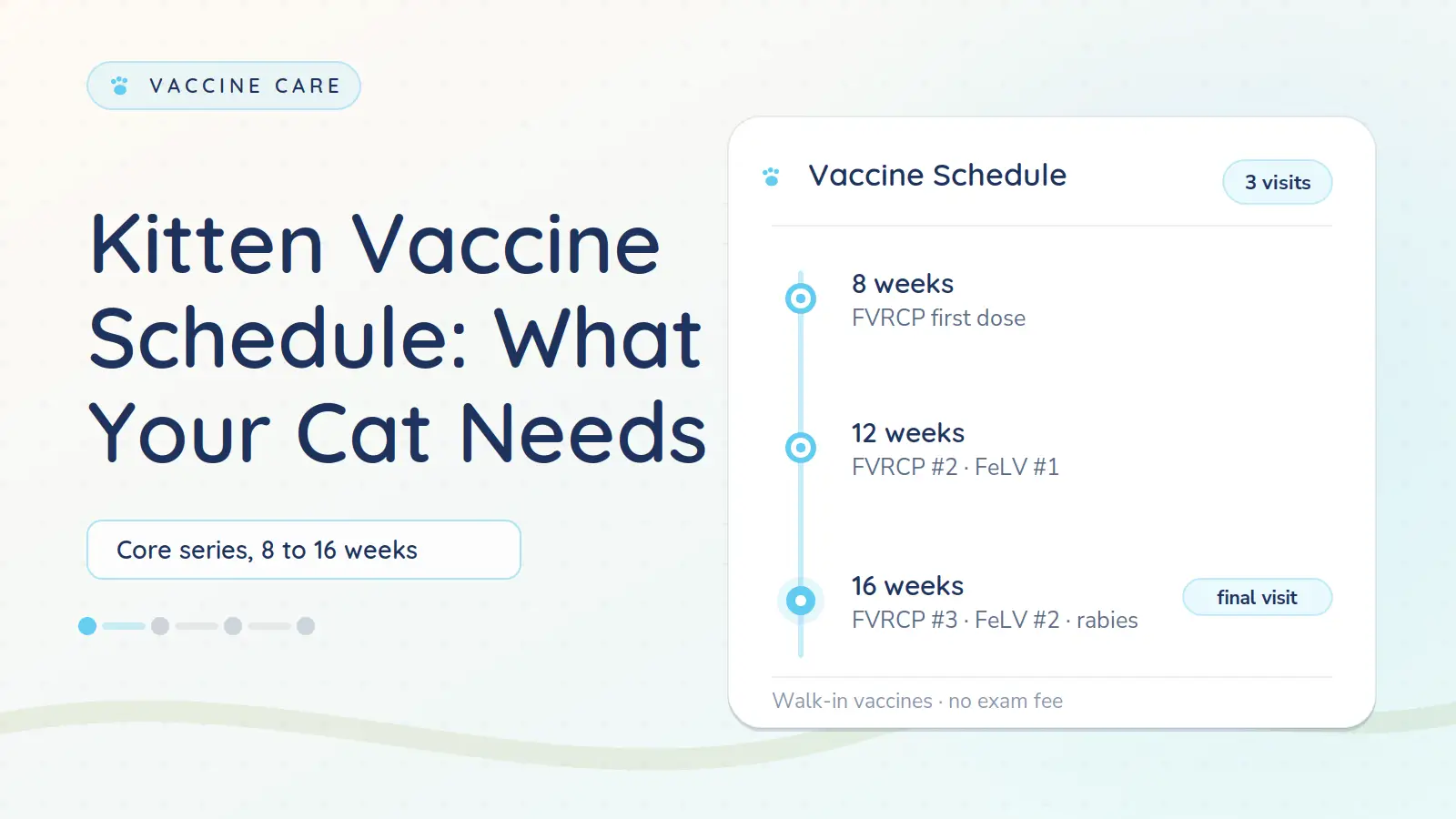
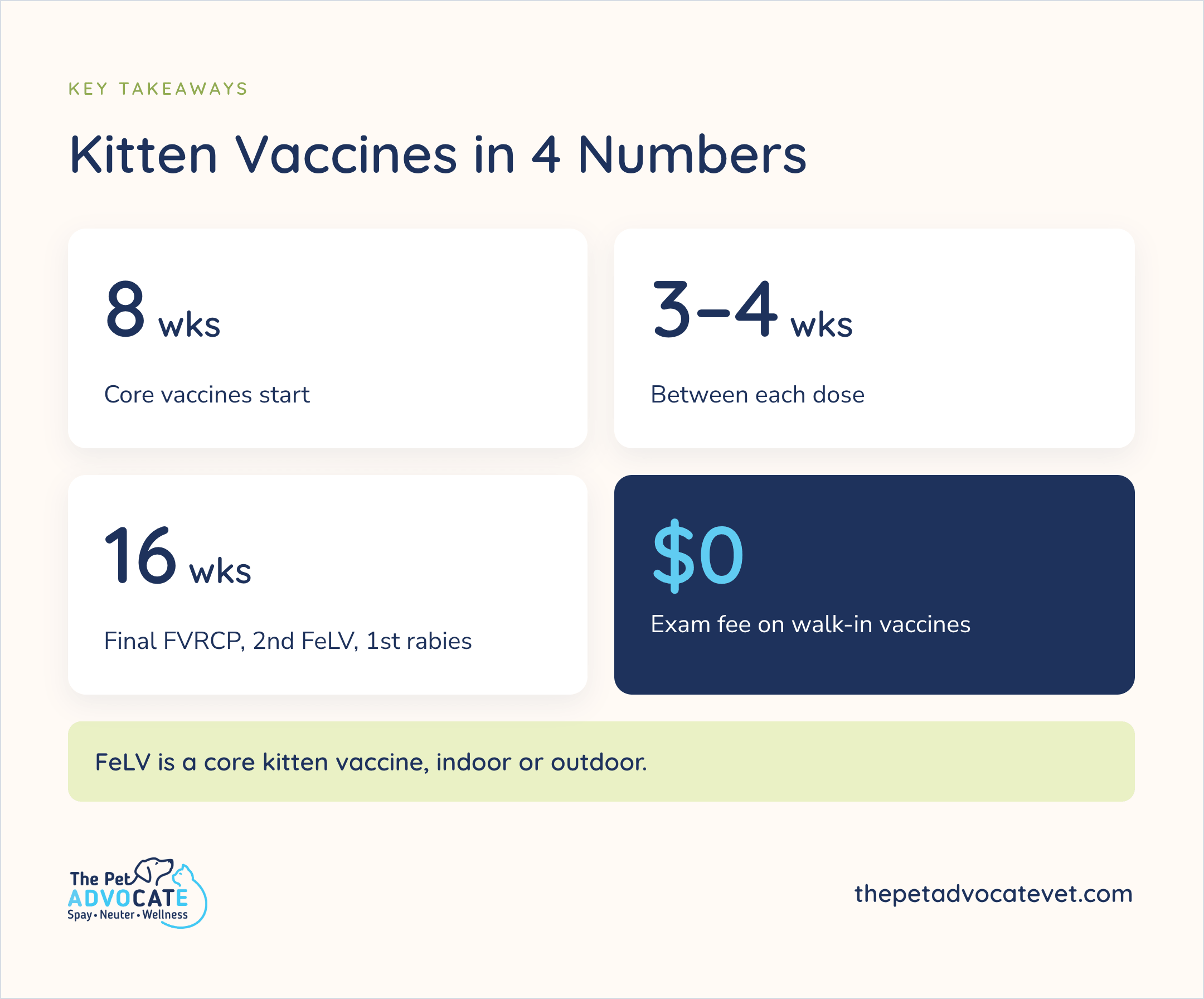
Your kitten needs core vaccines starting at 8 weeks old. Boosters follow every three to four weeks until the final doses after 4 months of age. Rabies is given once the kitten is at least 3 months old, usually at the 16-week visit.
I see new kittens for shots every week.
| Age | Core vaccines given |
|---|---|
| 8 weeks | FVRCP (first dose) |
| 12 weeks | FVRCP (second dose), FeLV (first dose) |
| 16 weeks | FVRCP (final dose), FeLV (second dose), rabies |
Your kitten’s exact dates might shift a little depending on when you bring them in and their individual health.
One year after that last kitten visit, FVRCP, FeLV, and rabies are due again.
Every kitten needs three core vaccines: FVRCP, feline leukemia (FeLV), and rabies. You can see the cat vaccines we carry on our site.
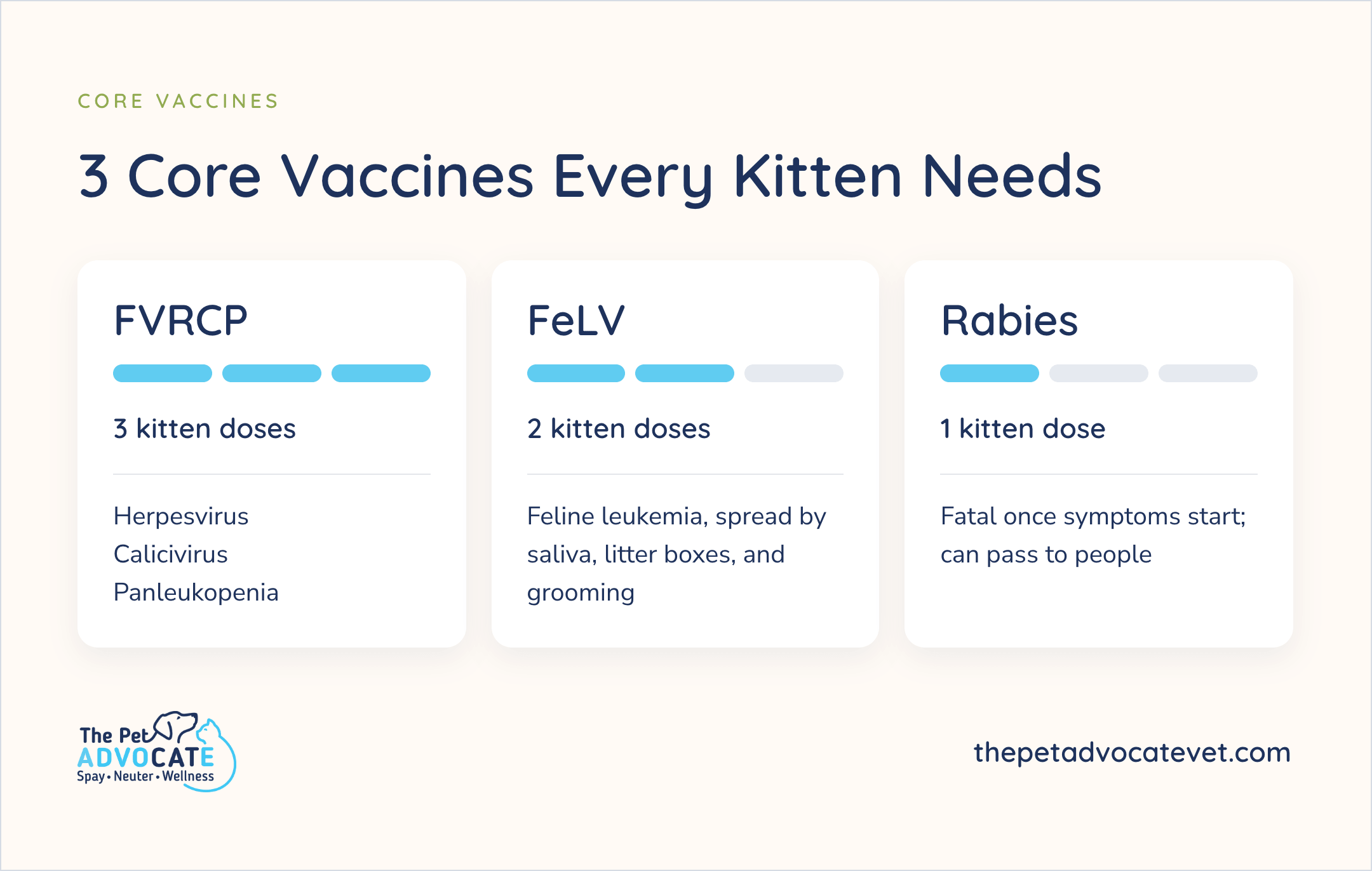
FVRCP covers feline herpesvirus, calicivirus, and panleukopenia in one injection.
Herpesvirus causes the upper respiratory infections that linger in young cats (feline viral rhinotracheitis). Calicivirus can cause mouth ulcers and breathing trouble. Panleukopenia attacks a kitten’s bone marrow and gut and can kill quickly.
Rabies is fatal once symptoms start. It attacks the nervous system and can pass to people. I recommend it for all cats because even indoor cats can meet infected wildlife through an open window or something carried in from outside.
We give the first rabies vaccine once a kitten is at least 3 months old, usually at the 16-week visit. That first dose lasts one year. Later boosters last three years if the previous one stayed current.
The 2020 AAHA/AAFP Feline Vaccination Guidelines list FeLV as core for every cat under one year of age.
I treat it as core for all kittens, indoor or not. The virus spreads through saliva, shared litter boxes, and grooming, and kittens pick it up more easily than adult cats.
We give the first FeLV dose at 12 weeks and the second at 16 weeks. If a kitten could already have been exposed, we test for FeLV before that first dose.
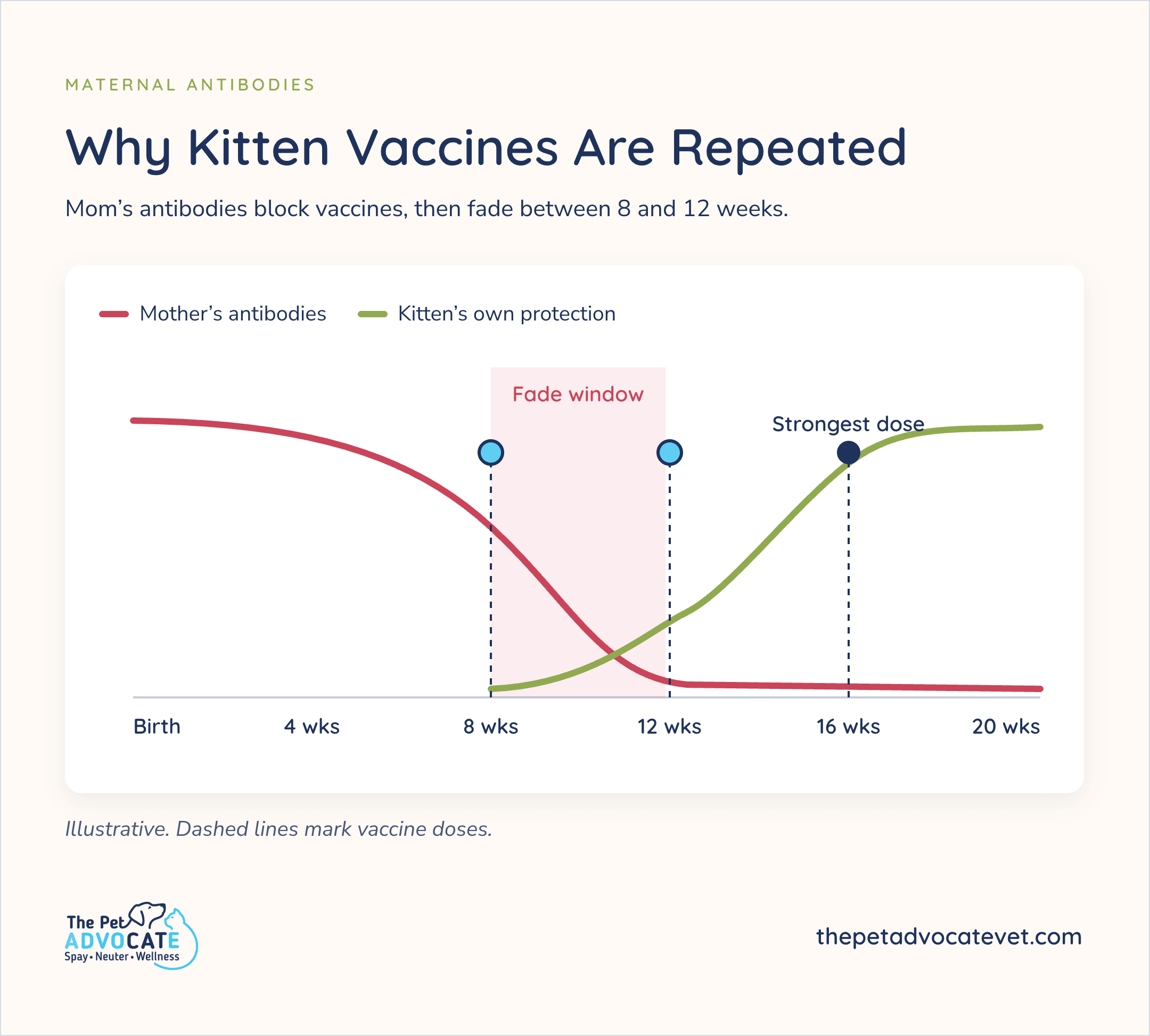
Newborn kittens pick up protective antibodies from their mother’s first milk, called colostrum, in the first day or two after birth. Those antibodies help early on. They also attach to vaccine particles and keep the kitten from making its own protection.
The maternal antibodies fade somewhere between 8 and 12 weeks. No one can predict the exact day for one kitten. It depends on how much colostrum the kitten got, the quality of that milk, and whether it absorbed well in that short window after birth.
That is why we start at 8 weeks and repeat the doses. Each dose is given at a different age while those antibodies wear off. The dose given after 4 months of age is usually the one that builds the strongest response.
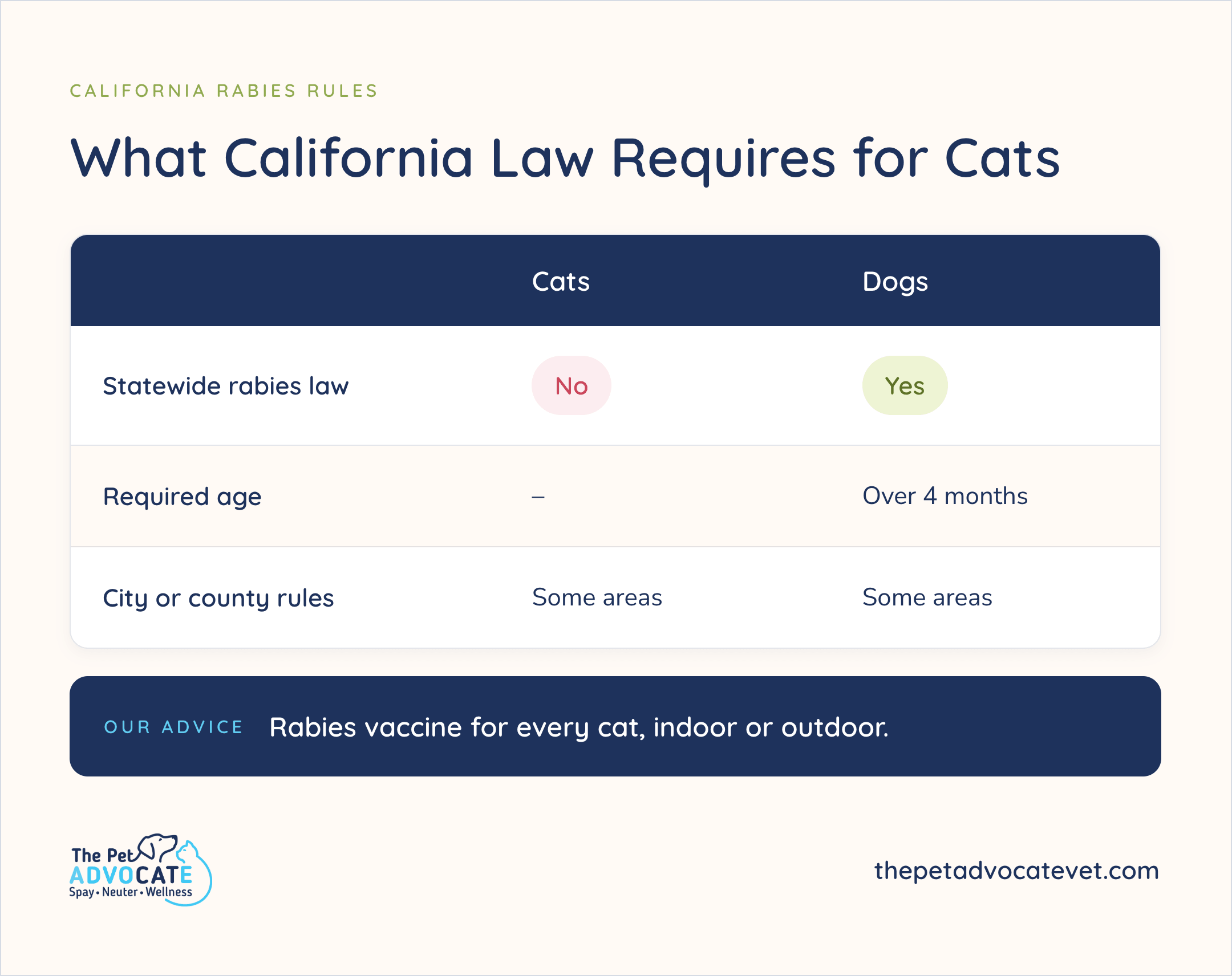
California has no statewide rabies requirement for cats. The state does require rabies vaccination for dogs over 4 months of age. Some cities and counties add their own rules for cat vaccination or licensing, so check local ordinances if you live outside Tracy.
I still recommend the rabies vaccine for every cat we see. The disease is almost always fatal once signs appear, and a cat can meet an infected bat or other wildlife even without a statewide mandate.
California posts the public rules on the CDPH rabies page.
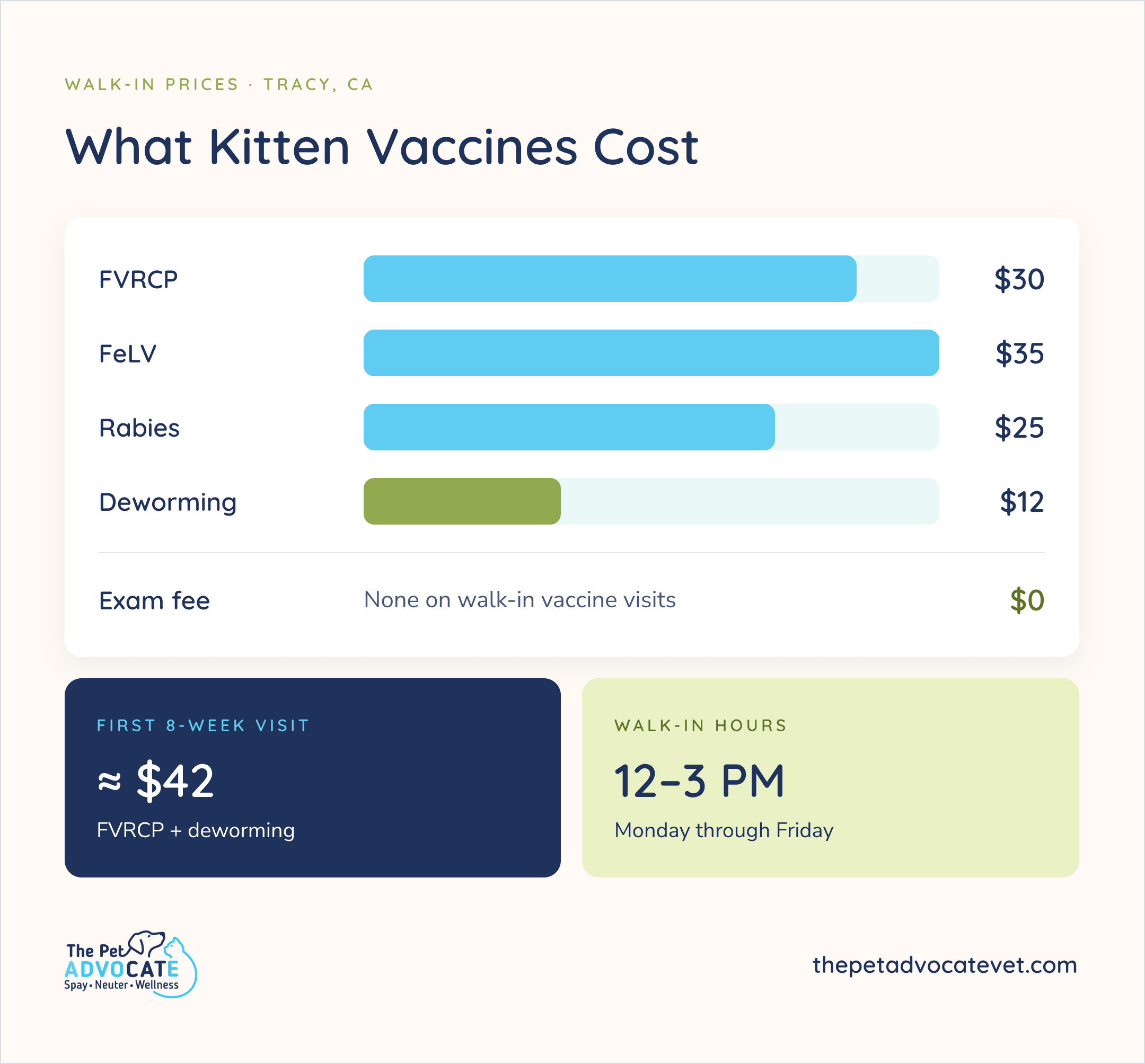
Walk-in vaccine visits have no exam fee.
Kitten vaccines in Tracy cost:
A first visit for an 8-week kitten is about $42 for FVRCP and deworming. Walk-in hours run Monday through Friday, 12 to 3 PM; see the walk-in page and the full price list.
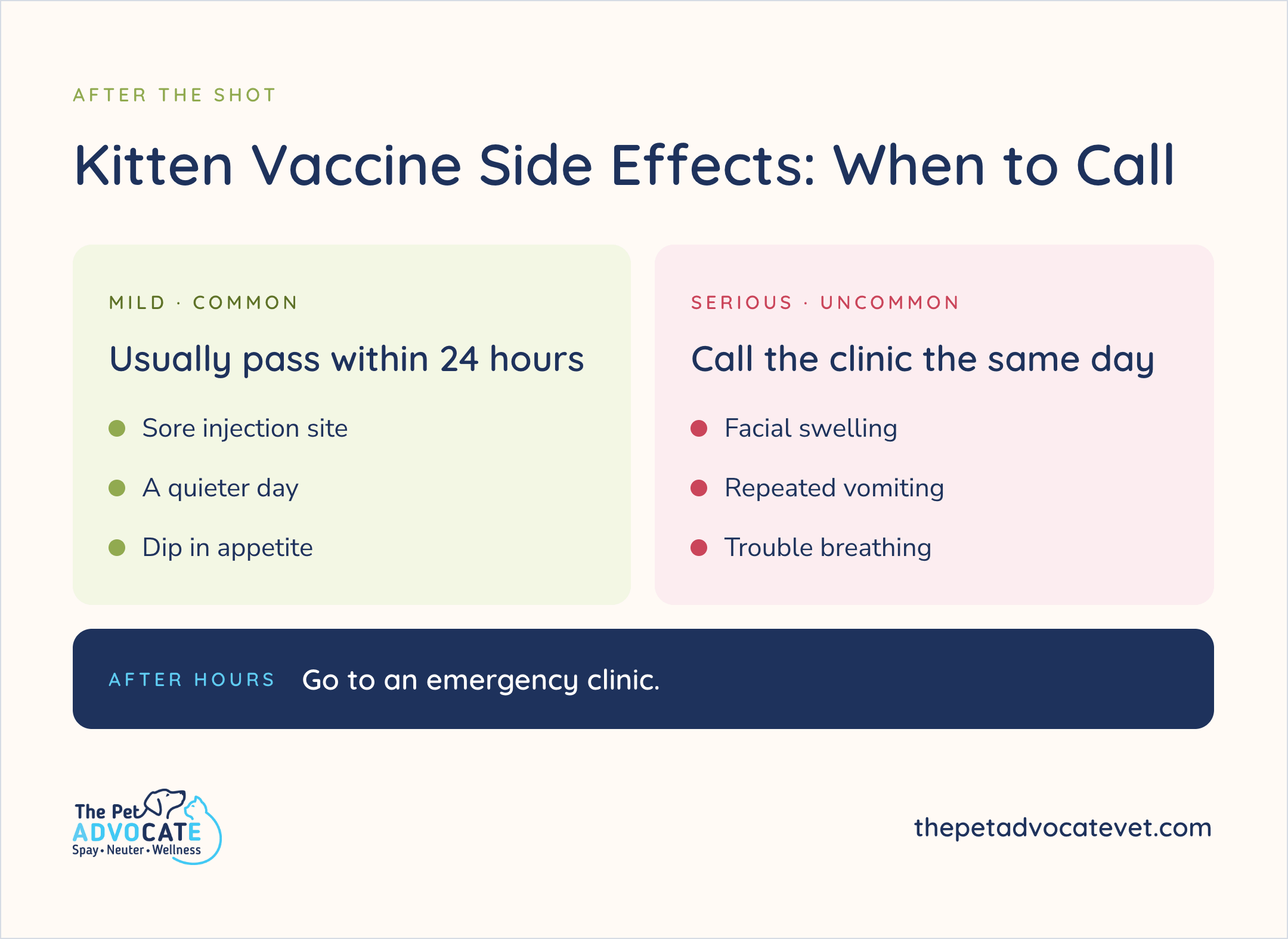
Most kittens handle their shots with no trouble. When a reaction happens, it is usually mild and short. You might see soreness at the injection site, a quieter day, or a dip in appetite. Those signs usually pass within 24 hours.
Serious reactions are uncommon. Call the clinic that gave the shot the same day if your kitten has facial swelling, repeated vomiting, or trouble breathing. If it is after hours, go to an emergency clinic.
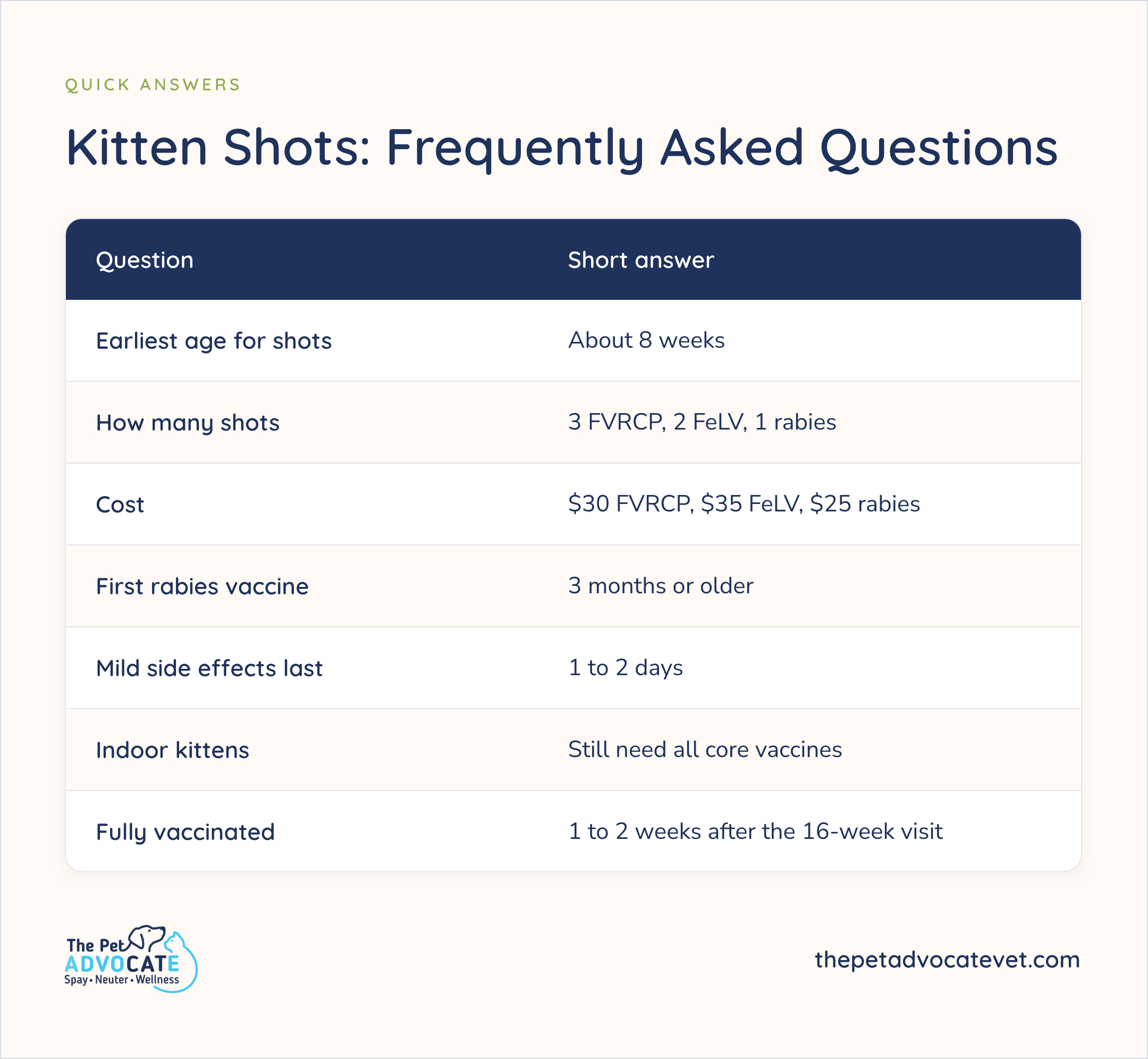
Kittens can begin their core vaccine series at about 8 weeks of age. Starting earlier is usually not effective because antibodies from nursing are still strong enough to block the vaccine.
Most kittens receive three FVRCP doses, two FeLV doses, and one rabies vaccine, spaced 3 to 4 weeks apart and finishing after 4 months of age. The exact number can vary if a kitten starts later than 8 weeks.
Kitten shots cost $30 for FVRCP, $35 for FeLV, and $25 for rabies, with no exam fee on walk-in visits. A first 8-week visit with deworming runs about $42.
A kitten can get the first rabies vaccine at 3 months of age. We usually time it for the final kitten visit around 4 months so FVRCP, FeLV, and rabies are given at the same appointment.
Mild side effects, when they occur, typically resolve within one to two days. Serious reactions are rare, but facial swelling, persistent vomiting, or breathing changes should prompt an immediate call to a vet or the nearest emergency clinic.
Yes. Indoor kittens still need core vaccines. FVRCP viruses can ride in on clothing or shoes, FeLV spreads through shared resources in multi-cat homes, and rabies remains a risk from wildlife that might enter the house or yard.
A kitten is fully vaccinated about one to two weeks after the last core doses at 16 weeks of age. That last visit is the third FVRCP, the second FeLV, and the first rabies vaccine.
2020 AAHA/AAFP Feline Vaccination Guidelines. California rabies rules at CDPH.
Mike Wesselink, DVM, UC Davis 2015. Owner of The Pet Advocate in Tracy.