Or call us at 209-879-9367 — we'll answer Mon–Fri, 8 AM to 4:30 PM.📍 1973 N. Tracy Blvd., Tracy, CA 95376
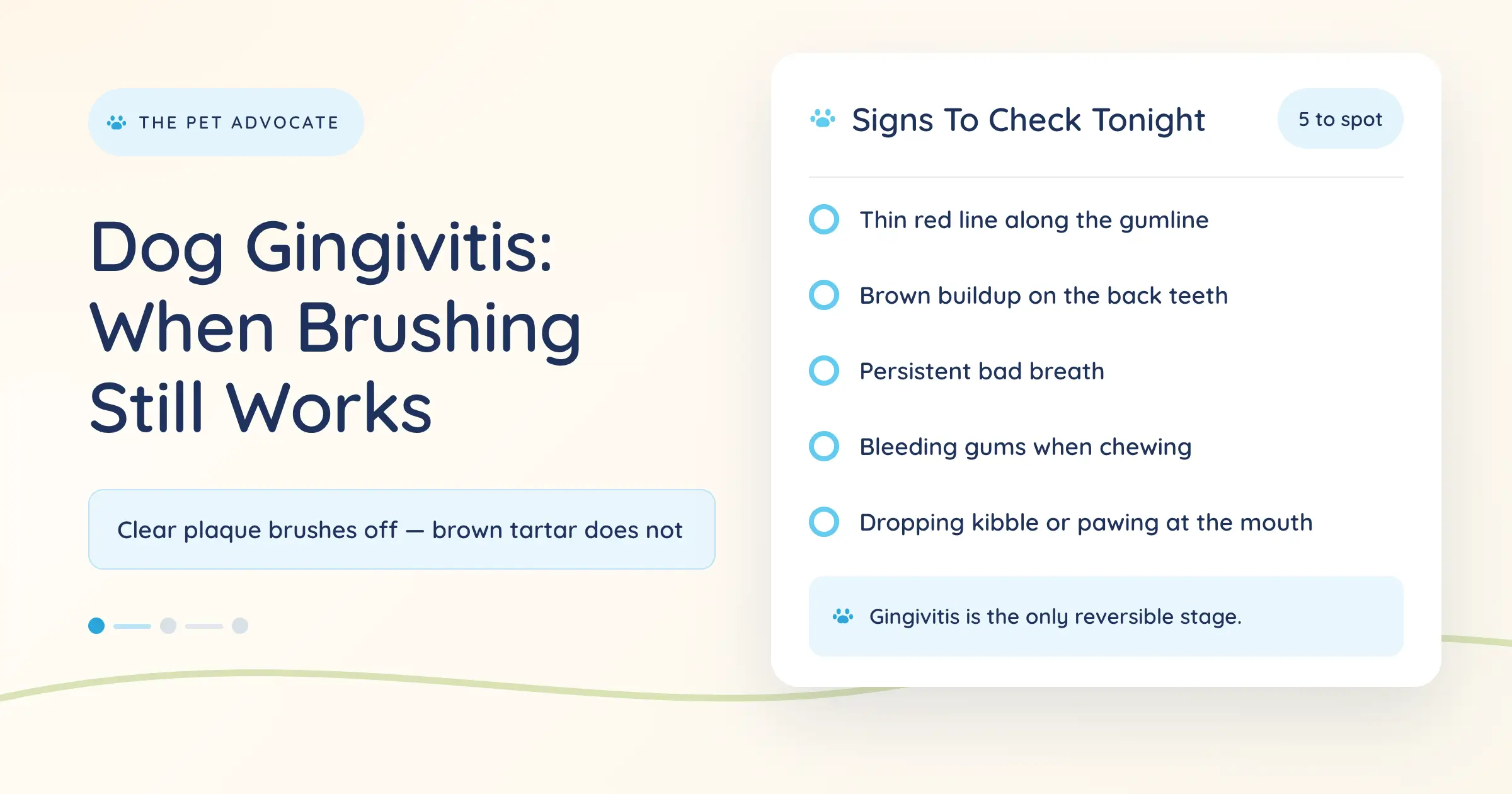
Schedule OnlineYou lift your dog’s lip and notice a thin red line along the gums or a bit of brown buildup on the back teeth. Is it gingivitis, and can you still reverse it at home?
At The Pet Advocate we see this every week. Gingivitis is the earliest and only reversible stage of periodontal disease in dogs. Caught while the problem is still soft plaque, daily brushing can turn it around. Once that plaque mineralizes into brown tartar, the window narrows and most dogs need a professional dog dental cleaning under anesthesia.
In our experience the single most useful thing an owner can learn is the difference between clear plaque and brown tartar. That visual cue tells you whether brushing is still enough or whether it is time to book a cleaning. Here is exactly what to watch for, how to reverse early gingivitis, and what a professional dental actually includes at our Tracy clinic.
Gingivitis is inflammation of the gingiva—the gums that surround the teeth. It starts when plaque bacteria trigger an immune response along the gumline.
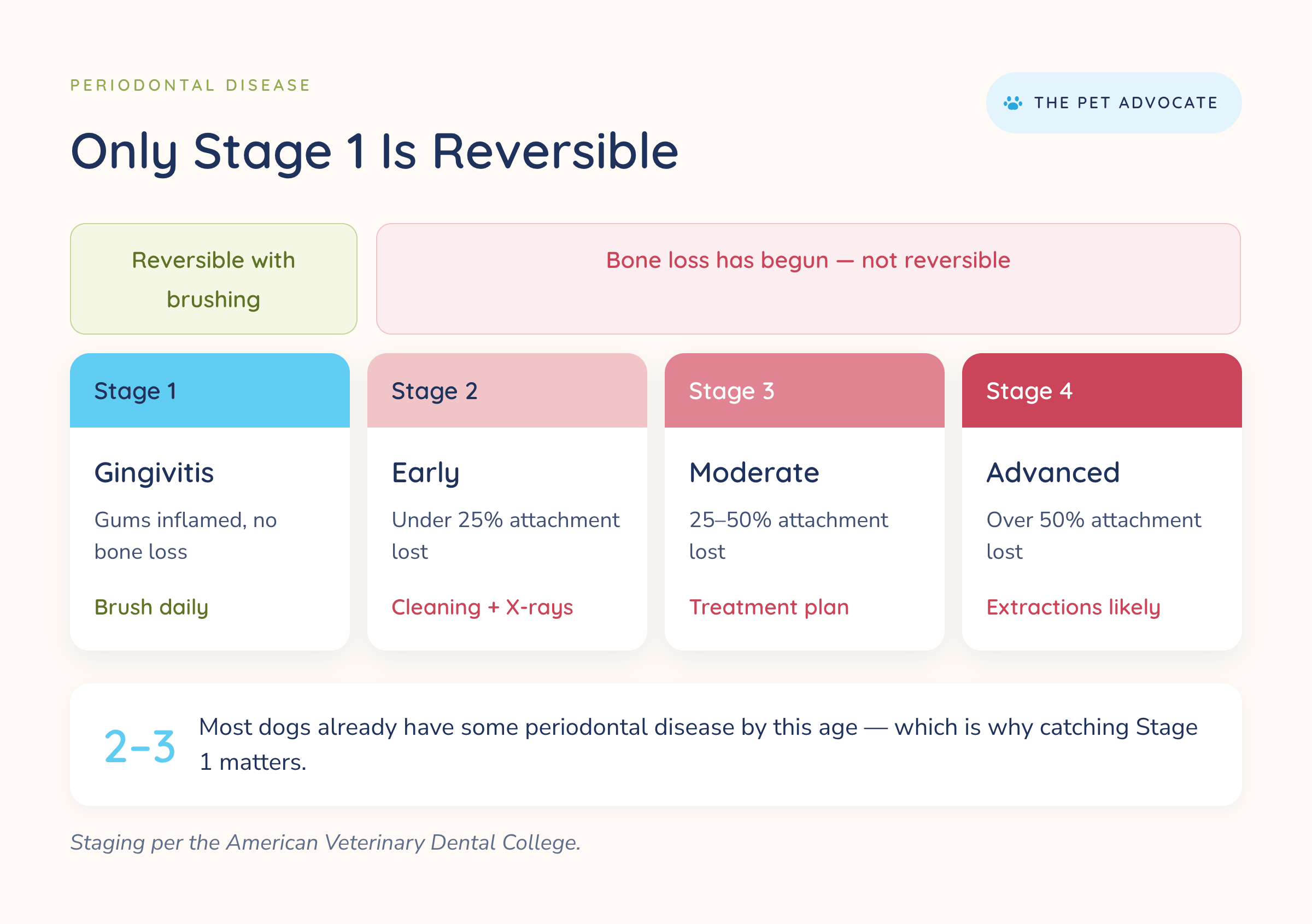
It is Stage 1 of periodontal disease and the only stage that can still be fully reversed. Later stages involve bone loss and are no longer reversible. Small breeds and short-muzzled dogs often show it earlier because their mouths are crowded, but any dog can develop it.
Gingivitis stays localized around the teeth in its early form. It is different from more severe conditions that involve deeper tissue destruction or widespread oral inflammation. Most dogs over the age of two or three already have some degree of periodontal disease, so catching the earliest stage matters. The 2019 AAHA Dental Care Guidelines stress early detection and professional care to stop progression and protect the rest of the body.
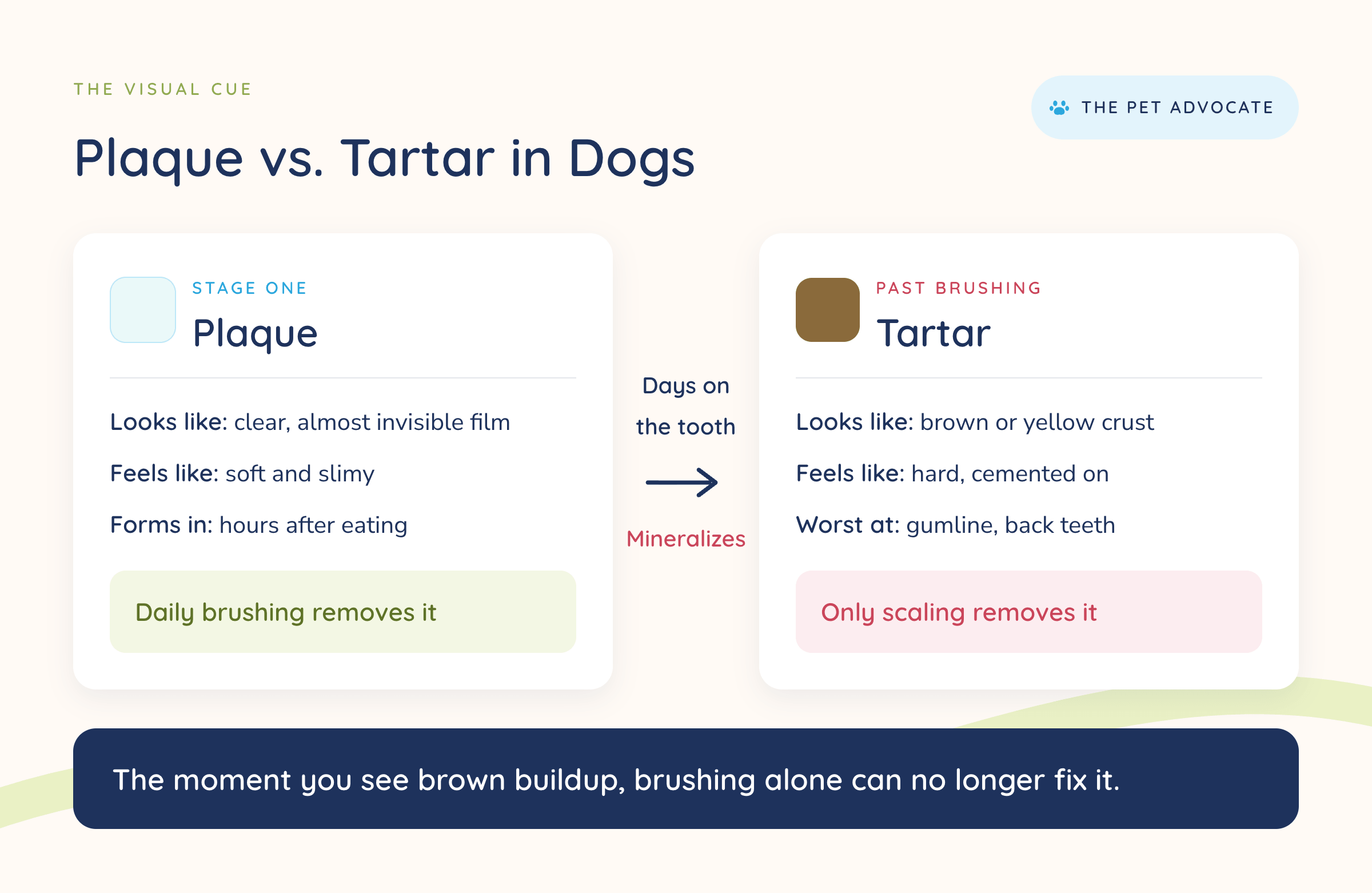
Plaque is a soft, nearly invisible biofilm that forms on teeth within hours. Think of the slimy film you feel on your own teeth first thing in the morning before you brush—that is plaque. It is clear and can be removed with brushing.
If plaque stays on the teeth long enough, it mineralizes into tartar. Tartar looks like brown or yellowish hard debris, especially along the gumline and on the back teeth.
The moment you see that brown buildup, your dog has moved past the brushing-only stage. Tartar cannot be removed effectively at home. That is your clear signal to schedule a professional cleaning.
Brushing removes plaque and can reverse early gingivitis. Once tartar forms, brushing helps slow new buildup but cannot eliminate what is already there. This simple visual check saves many dogs from more advanced disease.
Early gingivitis often shows as a thin red line along the gumline. The gums may look slightly swollen, but the dog still eats normally.
As it progresses you may notice:
In more advanced cases dogs eat less, favor one side of the mouth, or show visible gum recession. These signs can overlap with deeper periodontal disease, so we always recommend a full oral exam under anesthesia with X-rays when tartar is present.
The main driver is plaque bacteria that accumulate from everyday eating. Soft foods leave more residue. Lack of daily mechanical cleaning lets the biofilm thicken and mineralize.
Small breeds, brachycephalic dogs, and dogs with crowded or misaligned teeth build plaque faster. Age increases risk. Underlying conditions such as diabetes can worsen inflammation, though we see plenty of otherwise healthy dogs with gingivitis.
Genetics and diet play supporting roles, but the controllable factor is daily plaque removal. Left untreated, the bacteria can enter the bloodstream and affect the heart, kidneys, and liver over time.
Yes—when it is still driven by soft plaque. Diligent daily brushing can reverse early gingivitis before tartar forms.
Once you see brown tartar, a professional dental cleaning is the most effective step. Under anesthesia we scale and polish the teeth, take full-mouth X-rays, chart every surface, and remove any teeth that cannot be saved. Owners receive before-and-after photos so they can see the difference.
Between cleanings, daily brushing remains the gold standard. We also recommend VOHC-accepted products because they have been independently tested for real plaque and tartar reduction. Some larger abrasive dental chews help through friction when the dog bites through them, but they work best alongside brushing, never instead of it.
There are many products marketed for dog dental health that have never been evaluated by a third party. We route owners to the Veterinary Oral Health Council list rather than packaging claims.
At our clinic the process starts with an online form and three clear photos of the teeth. We use those photos to classify the case as a straightforward cleaning or more complex. A $50 deposit holds the appointment.
On the day of the procedure the dog arrives at 8 AM after fasting from midnight. An RVT performs a car-side history check, then the veterinarian completes a pre-anesthetic physical exam and preliminary oral exam with the owner present.
Pre-anesthetic bloodwork is run in-house for every dental patient. Once approved, the dog is pre-medicated, induced, intubated, and placed on IV fluids.
The RVT charts and probes every tooth. Full-mouth digital X-rays are taken, and the veterinarian reviews the findings. If extractions are recommended we call the owner for consent before proceeding.
Nerve blocks are placed, extractions (if needed) are performed, sites are sutured, and post-extraction X-rays confirm complete removal. The teeth are scaled ultrasonically above and below the gumline and polished. Pre- and post-cleaning photos are provided.
Most dogs are ready for pickup about two hours after the procedure is complete. Our base cleaning fee of $600 includes the bloodwork, anesthesia, full-mouth X-rays, scaling, polishing, and oral exams. Cases that require extractions most commonly land between $800 and $1,200 all-in. The highest we typically see is around $2,000. For a deeper look at how those numbers break down, see our dog dental cleaning cost guide.
We do not recommend anesthesia-free “awake” cleanings for dogs with true gingivitis or periodontal disease. Those services only address visible crown tartar and leave everything below the gumline untouched. See our detailed comparison of anesthesia-free versus full dental cleaning for the side-by-side differences.
Daily brushing is the single most effective thing you can do at home. Use a soft dog toothbrush or finger brush with enzymatic toothpaste made for pets. Focus on the gumline and brush in small circular motions. Many dogs adapt if you start slowly and pair the session with a favorite treat.
VOHC-accepted dental chews, water additives, and diets can support the effort by reducing plaque accumulation through mechanical action or chemistry. They are helpful adjuncts, never replacements for brushing.
I have a hard enough time getting my own kids’ teeth clean, so I never judge owners who find brushing their dog challenging. Consistency beats perfection. Even three or four days a week is better than none. When home care is not enough, a professional dog dental cleaning resets the mouth so brushing can stay effective.

Start mouth handling early so puppies accept brushing as routine. Schedule regular dental evaluations before tartar gets ahead of you. Combine that with daily home care and VOHC-accepted products.
A textured diet and occasional approved dental treats support the effort, but nothing replaces mechanical plaque removal. Dogs that stay on a consistent program need fewer extractions and stay more comfortable as they age. Early habits make the biggest difference, which is why we include dental discussions in our new puppy checklist.
Do not wait if you see brown tartar, persistent bad breath, bleeding gums, or any change in eating habits. These are signs that gingivitis has progressed past the home-care stage and professional care will make a measurable difference.
Early intervention keeps the problem manageable and saves teeth and money over the dog’s lifetime. If you are unsure whether your dog’s gums are still in the plaque stage or have crossed into tartar, submit clear photos through our dental requirements page. We review them and give you an honest plan and quote the same day.
Our base price for a complete dog dental cleaning is $600 ($550 when bundled with a spay or neuter). See current prices and rates for full details. Extractions, when needed, are discussed after X-rays and only with your consent. For more on how extraction costs work, see our dog and cat tooth extraction cost guide.
Yes, when it is still caused by soft plaque. Daily brushing can reverse early gingivitis. Once brown tartar is present, a professional cleaning under anesthesia is required to fully resolve the inflammation.
A thin red line or swollen band of tissue along the gumline is the classic early sign. Brown hard buildup on the teeth is tartar and means the problem has advanced beyond brushing alone.
Daily brushing with dog-safe enzymatic toothpaste is the most effective home treatment for early plaque-driven gingivitis. VOHC-accepted chews and products help, but they do not replace brushing.
Early gingivitis may cause mild discomfort. As inflammation and tartar increase, many dogs experience real pain while chewing, which shows up as dropping food, favoring one side, or reluctance to eat hard treats.
It depends on the individual dog, breed, and home care consistency. Small breeds often need cleanings more frequently. We base the recommendation on the oral exam and X-ray findings rather than a fixed calendar.
Gingivitis is Stage 1: inflammation limited to the gums with no bone loss. It is reversible. Periodontal disease refers to the later stages that involve loss of the supporting bone and ligaments and are no longer fully reversible.
Yes. Crowded mouths, retained baby teeth, and earlier onset of tartar make small and toy breeds more susceptible. Early and consistent home care is especially important for them.
Gingivitis in dogs is extremely common, but it does not have to become a lifelong problem. Catch the plaque stage while brushing still works, book a professional cleaning once brown tartar shows up, and keep the daily habit going afterward.
At The Pet Advocate we make dental care straightforward and affordable. Whether your dog needs a first cleaning or ongoing support, we review photos the same day, provide clear quotes, and focus on keeping your dog comfortable and healthy for years to come.
Book a dental evaluation or submit photos for a quote today. We are here to help you and your dog enjoy many more years of happy, pain-free meals.
Last reviewed July 2026 by Michael Wesselink, DVM – The Pet Advocate