
Or call us at 209-879-9367 — we'll answer Mon–Fri, 8 AM to 4:30 PM.📍 1973 N. Tracy Blvd., Tracy, CA 95376
Schedule OnlineBy Mike Wesselink, DVM. Owner of The Pet Advocate in Tracy, CA. Doctor of Veterinary Medicine, UC Davis School of Veterinary Medicine, 2015.
Anesthesia-free dog teeth cleaning scrapes tartar off the visible part of an awake dog's teeth with a hand tool. The crowns come out whiter, and the work stops at the gumline. Most dental disease starts below that line.
My team does around six dental procedures a day at our clinic. I also see what awake cleanings leave behind. Often it shows up years later, once a dog is under anesthesia and we take X-rays.
If you are weighing an awake cleaning for your dog, here is what it can and cannot do for their health.
Anesthesia-free cleaning is awake scaling. A provider holds your dog still and scrapes tartar off the tooth surfaces they can see.
Vets call this non-anesthetic dental scaling, or NADS. The American Veterinary Dental College uses that term because the word "cleaning" suggests a result the procedure cannot give.
Groomers, pet stores, and mobile providers offer it. A few clinics do as well. The dog stays awake and restrained for the whole session.
Here is how the two approaches compare on the things that affect your dog's health.
An awake cleaning handles the tartar you can see. The crowns look brighter, and that visible change is what sells the service.
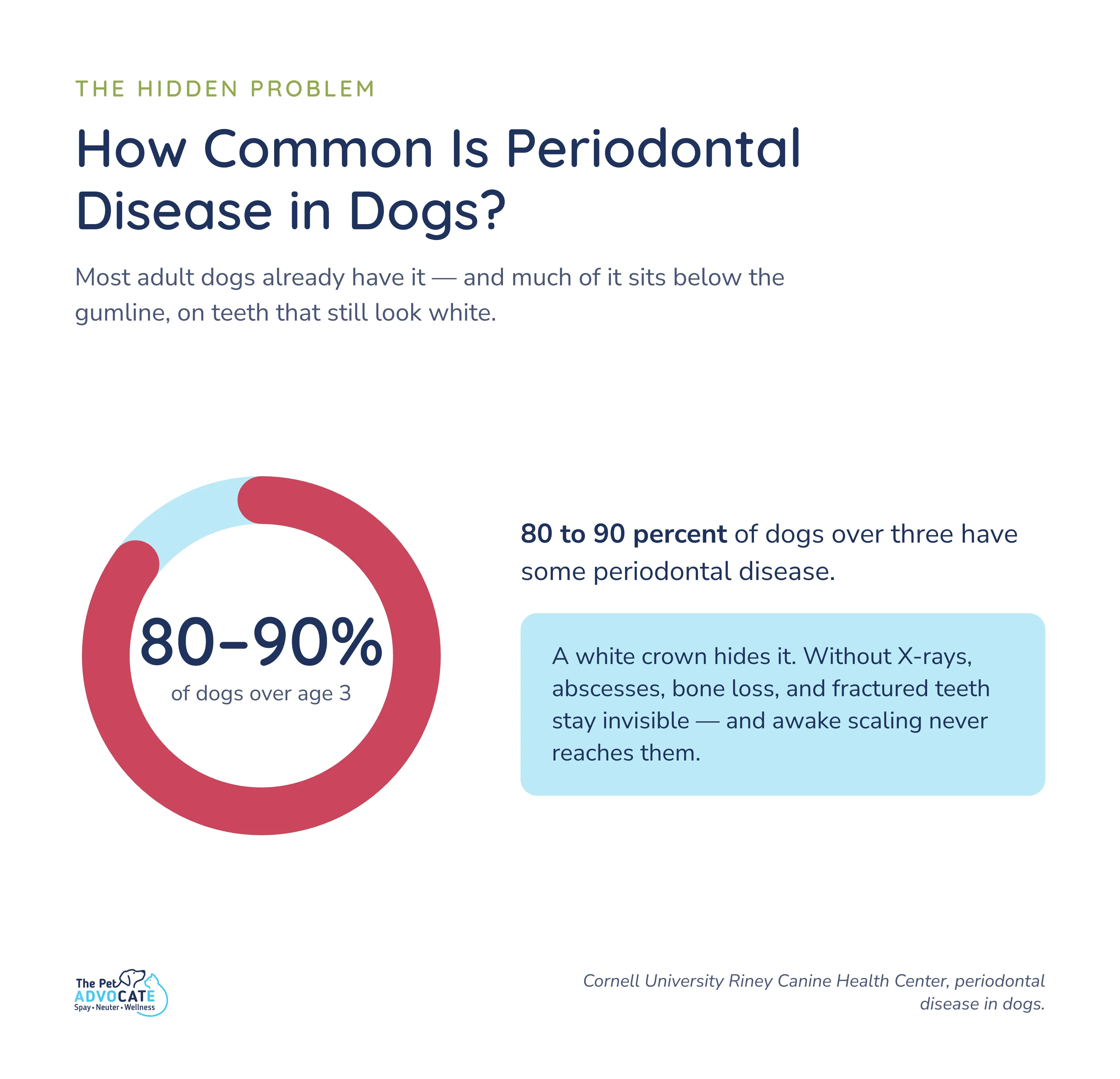
Below the gumline, nothing changes. That is where periodontal disease takes hold, and a hand scaler on an awake dog never reaches it. Without X-rays, abscesses, fractured teeth, bone loss, and oral tumors stay hidden.
Cornell's veterinary college reports that 80 to 90 percent of dogs over age three have some periodontal disease. Much of it sits below the gumline, on teeth that still look white.
I see this pattern often. A dog comes in with a history of yearly cleanings, and the owner tells me the teeth have been cared for. Under anesthesia, with full-mouth X-rays, I find several teeth that need to come out.
Those past cleanings were awake, on the surfaces you can see, with no X-rays. The owner had no idea, because the teeth looked white. The dog carried painful disease the whole time.
Awake cleaning carries risks. A sharp scaler near a moving dog can cut the gums. Without a breathing tube, debris can reach the lungs.
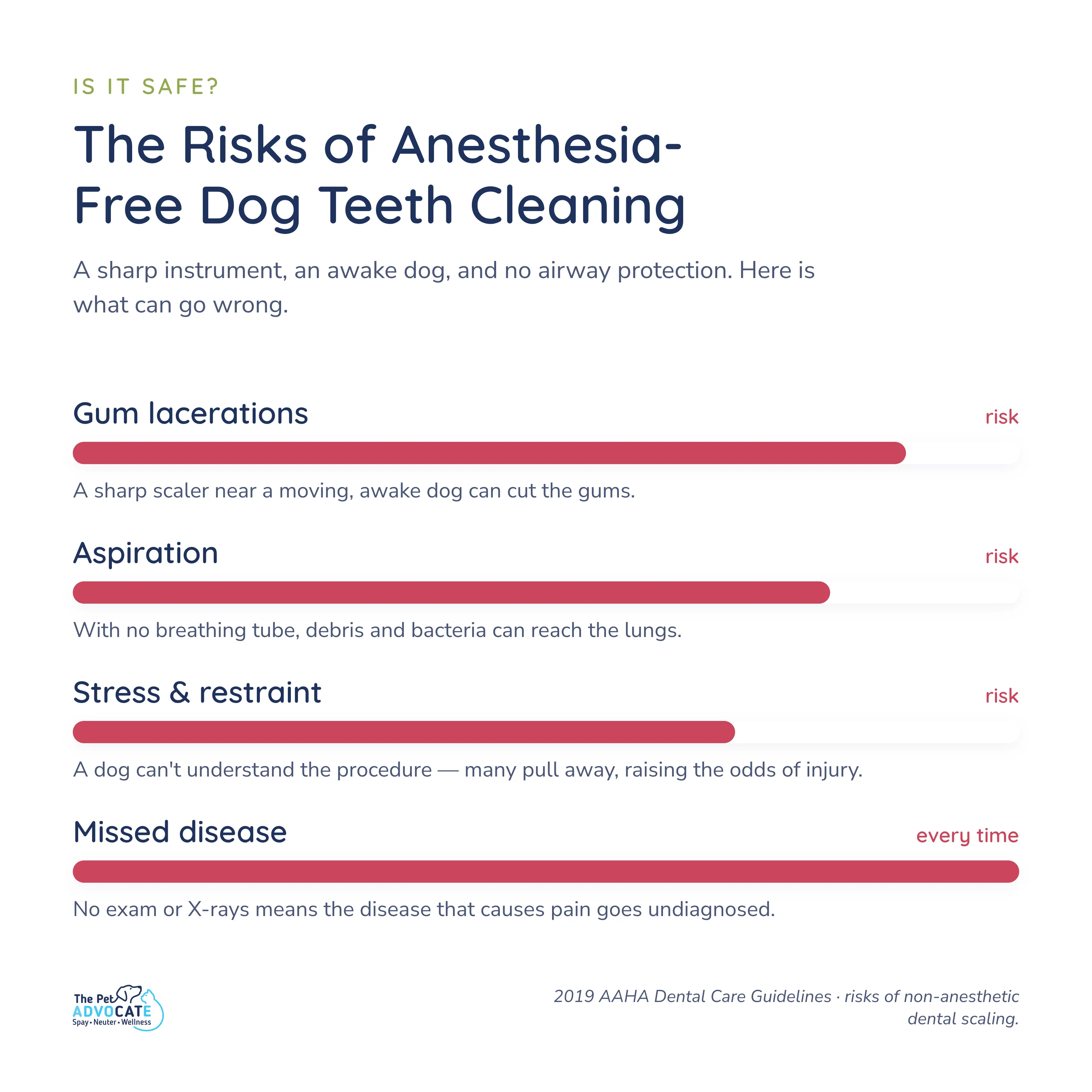
A dog cannot understand why someone holds its mouth open and scrapes. Many pull away. That stress, paired with a sharp instrument, raises the odds of an injury.
The AVMA and the AVDC advise against awake scaling. The 2019 AAHA Dental Care Guidelines call it inappropriate, citing patient stress, injury, aspiration risk, and the lack of any real diagnosis.
Daily care at home matters between professional cleanings. Brushing with dog toothpaste does the most to slow plaque. Vet-approved dental chews, diets, and water additives help as well.
Look for the Veterinary Oral Health Council seal to find products with trial data behind them.
Home care keeps the surface cleaner. It does not reach below the gumline or find hidden disease. Treat it as maintenance, not a substitute for a professional cleaning.
One case sits apart. A dog with a medical reason it cannot go under anesthesia is a real exception. That call belongs to your vet, who weighs the dog's heart, age, and overall health. Even then, awake scaling reaches only what it can see.
A dog's dental starts the night before, when you hold back food and water from midnight. On the morning of the appointment, we draw blood and run it on our in-house analyzer while you wait. One of our vets reviews the results before anything else happens.
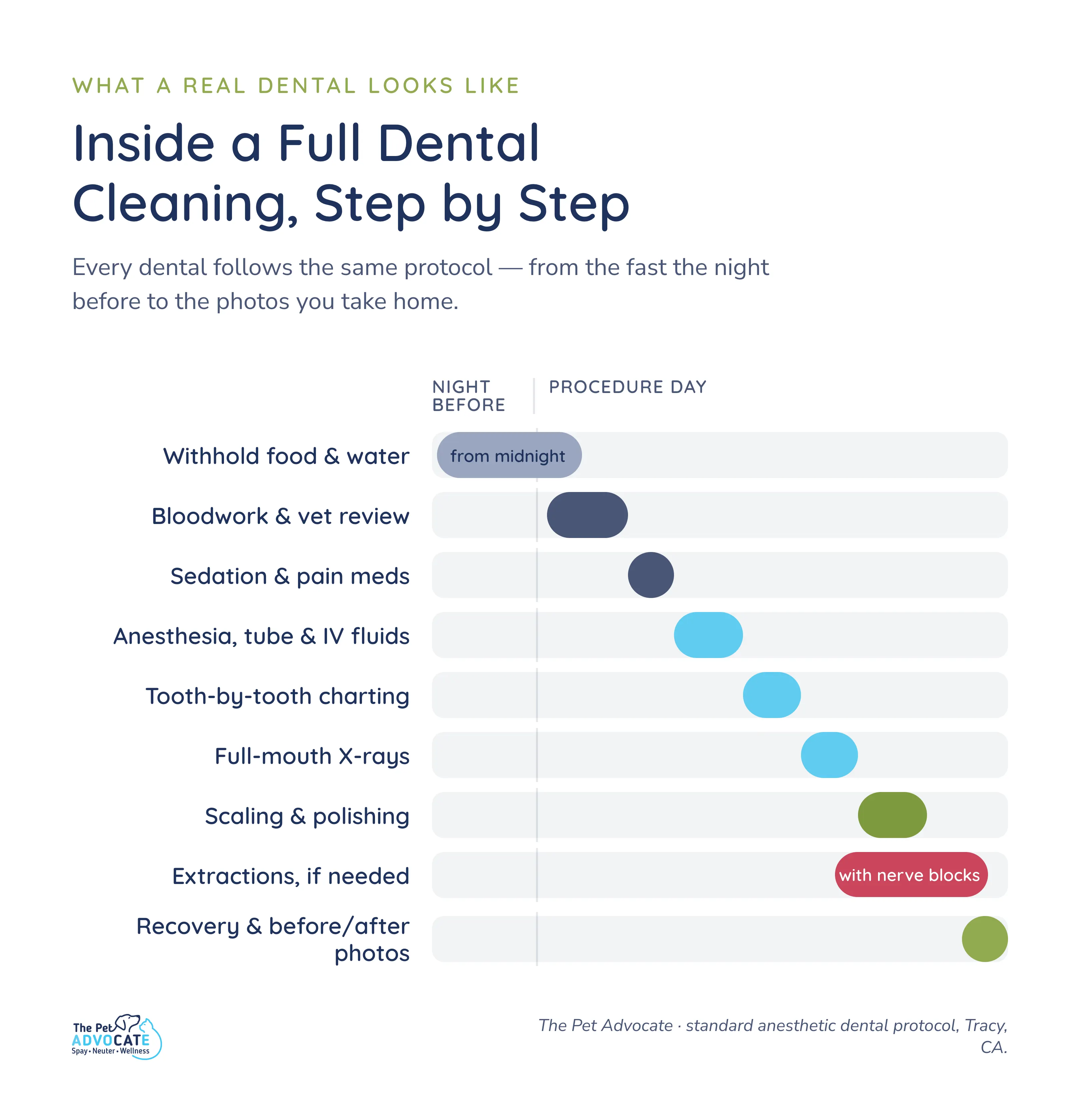
Once your dog is cleared, we give a light sedative and pain medication, then bring them under anesthesia. We place a tube into the windpipe to protect the airway. That tube keeps fluid and debris out of the lungs, and an IV catheter delivers fluids during the procedure.
Then the cleaning begins. Our technician charts every tooth, measures the pocket around each one, and notes loose teeth, gum recession, and bone loss. We take full-mouth X-rays. We scale above and below the gumline, then polish.
We recommend extractions only when the exam and X-rays show a tooth needs to go. We call you with the plan before we proceed. We use nerve blocks for any extraction. We take a second set of X-rays to confirm the whole root came out, then send you home with before-and-after photos.
A standalone dog dental cleaning at our clinic is $600. That covers the bloodwork, anesthesia, full-mouth X-rays, scaling, polishing, and an oral exam by a vet and a technician. Booked alongside a spay or neuter, it drops to $550.
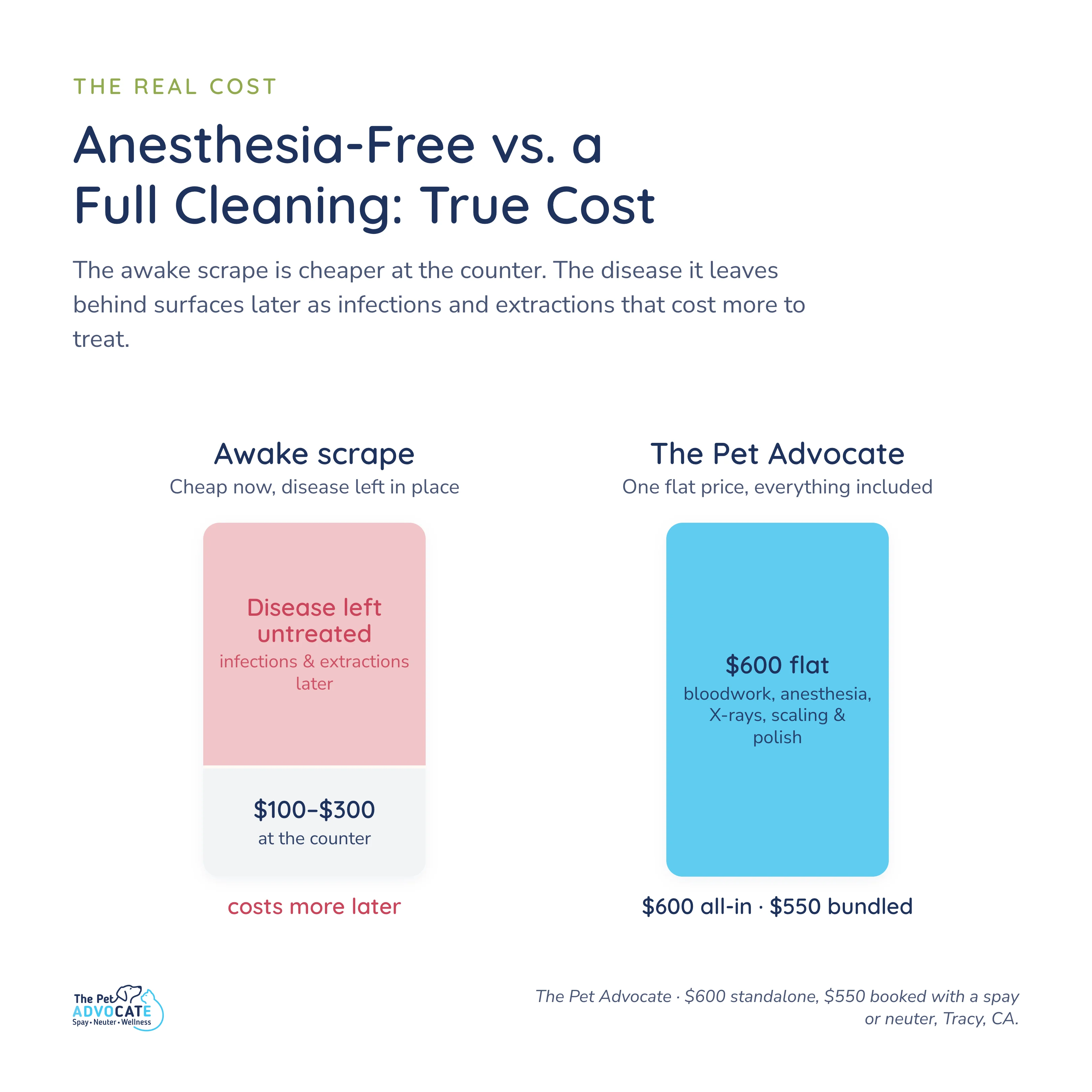
An awake cleaning from a groomer or mobile provider costs less at the counter. It also leaves disease in place. That hidden disease tends to surface later as infections and extractions, which cost more to treat than a cleaning would have. Our prices page lists the current rates.
We do not offer anesthesia-free cleaning. It cannot clean below the gumline or find the disease that hurts dogs.
We do full cleanings under anesthesia at a price built for families who would otherwise put off care. Demand has grown enough that we are adding a second dental suite. Clients drive in from across the Central Valley and the East Bay.
If your dog is due for a cleaning that treats the whole mouth, see our dog dental cleaning page or call the clinic. Our dental requirements page covers what to send before booking.
Bad breath, dropping food, pawing at the mouth, and reluctance to chew can all point to dental pain. Many dogs show no signs at all, which is why a vet exam and X-rays matter. Plaque below the gumline does the damage long before you notice it.
No. A hand scaler on an awake dog reaches the visible surfaces only. The tartar and bacteria that drive gum disease sit below the gumline, out of reach.
Ask whether they take dental X-rays and whether they clean below the gumline. Awake scaling does neither. If the answer skips both, the service treats the look of the teeth, not the health of the mouth.
Modern veterinary anesthesia carries low risk for older dogs when paired with pre-anesthetic bloodwork and monitoring. We do dental procedures on dogs up to 13 and run bloodwork on every dental patient first. We assess the dog in front of us rather than treating a number as a disease.
An awake cleaning gives you whiter crowns and a fresher first impression. The disease that causes pain sits below the gumline, where a cleaning under anesthesia and a set of X-rays can reach it.
Your dog cannot tell you when a tooth hurts. A full cleaning finds the problem before it spreads. If your dog is due, our dog dental cleaning page has the details, or call and we will help you plan the visit.