

Or call us at 209-879-9367 — we'll answer Mon–Fri, 8 AM to 4:30 PM.📍 1973 N. Tracy Blvd., Tracy, CA 95376
Schedule OnlineUpdated August 2026 by Mike Wesselink, DVM
Owners ask this question every week at our Tracy clinic. They hope neutering will turn a restless, marking, or high-energy dog into a quieter companion. The honest answer is that it depends on the behavior and when the procedure is done.
Neutering reduces certain hormone-driven behaviors in most male dogs. Neutering does not change a dog’s core personality, energy level, or behaviors that were already learned. At The Pet Advocate we perform these procedures every day, and the most common concrete example we see is marking. Timing makes the biggest difference.
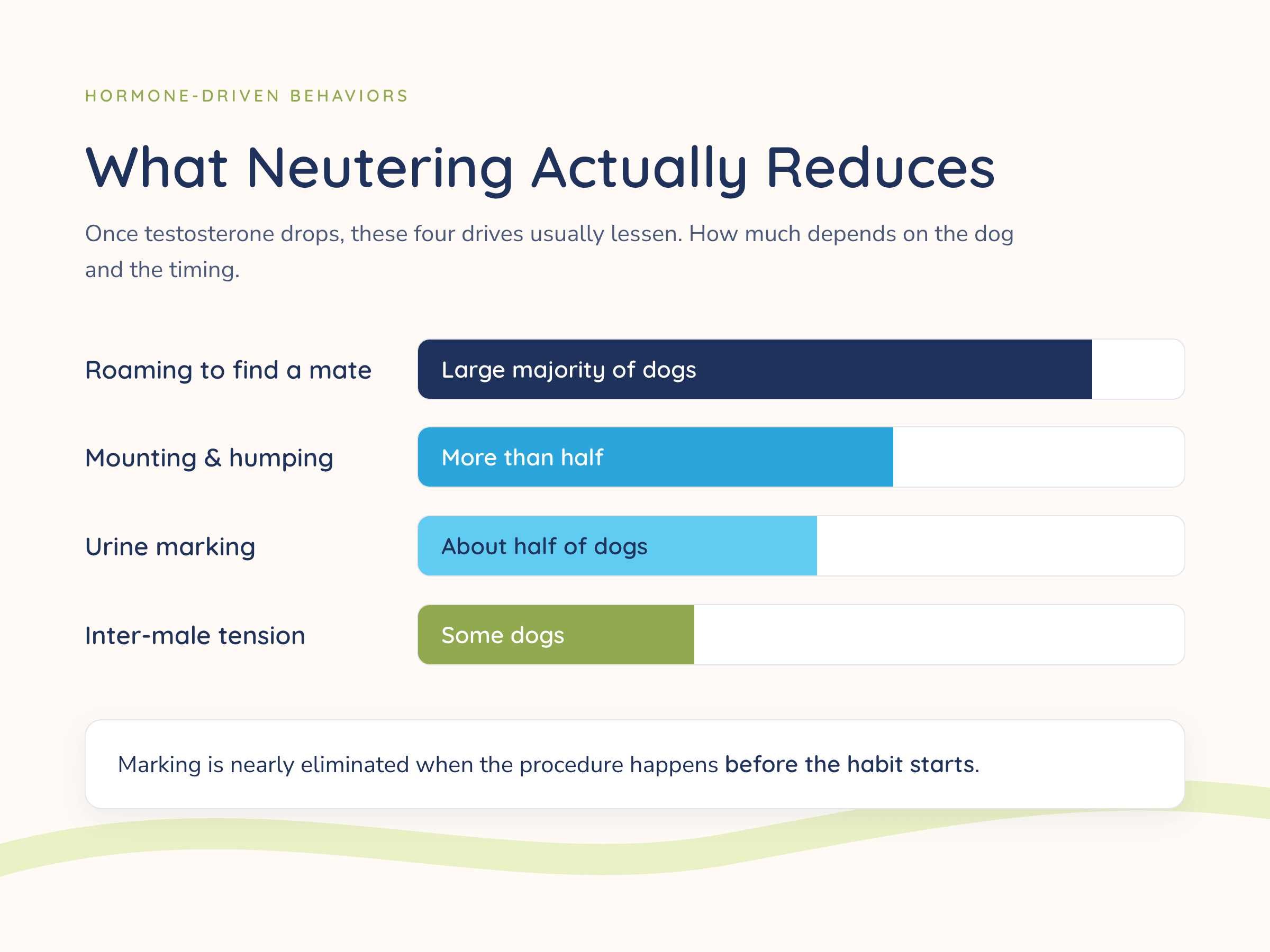
Neutering removes the testicles, the main source of testosterone. Once hormone levels drop, several reproductive and territorial drives usually lessen:
Clinical experience and supporting research show these reductions consistently. Marking is reduced in roughly half of dogs overall and nearly eliminated when the procedure happens before the habit starts. Roaming drops in a large majority of dogs. Mounting decreases in more than half. These are the behaviors most owners notice as “calmer.”
PetMD notes that neutering before marking begins can reduce the behavior to nearly zero, while already-established marking is much harder to reverse. The ASPCA also reports that neutered males are less likely to roam, mark, and mount, though individual results vary.
The change is strongest when the dog is still young and the behaviors have not become fixed habits. Early neutering prevents the drive from ever fully developing in the first place.
Neutering does not turn a high-energy dog into a low-energy dog. Breed, age, exercise, and mental stimulation still determine activity level. Puppies stay puppies. Working and sporting breeds keep their drive.
Neutering does not rewrite personality. A confident dog stays confident. A fearful or anxious dog does not automatically become bold. Some research even links early neutering to increased fear responses in certain dogs.
Learned behaviors stay. Jumping, pulling on leash, excessive barking, separation anxiety, and resource guarding require training and management. Neutering is not a substitute for those.
If the main problem is general hyperactivity or poor manners, exercise, enrichment, and consistent training remain the primary tools. At our clinic we see this clearly with dogs that come in already well past sexual maturity. The surgery helps the hormonal piece, but the habits the dog has already practiced often need separate work.
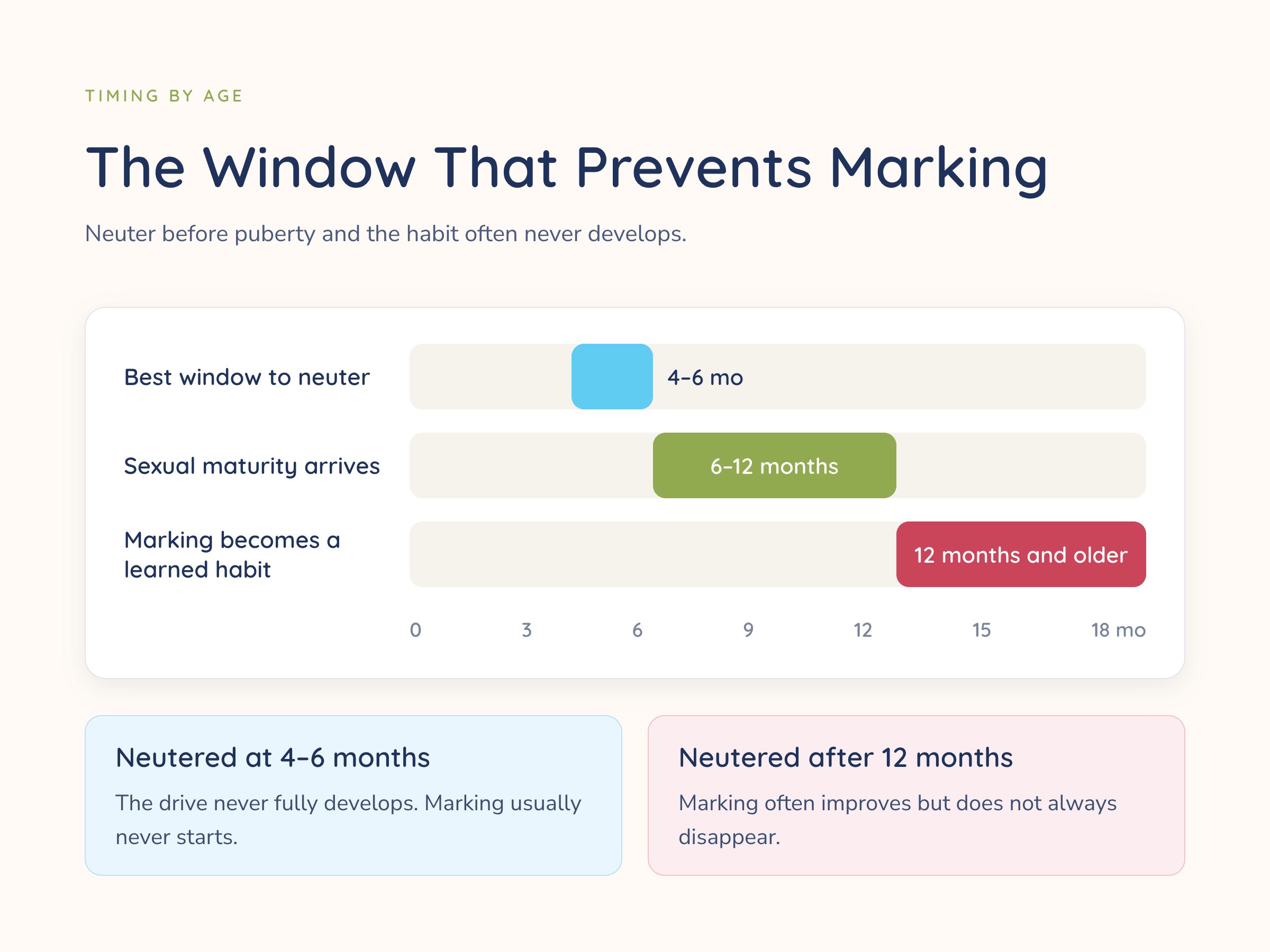
Sexual maturity in dogs usually arrives between six months and one year. Marking and other testosterone-driven behaviors typically appear after that point.
The most reliable way to prevent marking is to neuter before puberty, commonly at four to six months of age. When the procedure is done early, the habit often never develops. You can review our current pricing and rates while you decide on timing.
Once a dog is already a year old and marking regularly, the picture changes. Testosterone levels drop over the next month or two after surgery. Some improvement can occur.
In many cases the marking does not disappear completely because the behavior has already become a learned pattern. This is the scenario owners bring in most often at The Pet Advocate, and it is the one where expectations need to stay realistic. If you are still weighing the decision, our low-cost neuter options make early prevention practical.
Our recommendation of four to six months for most dogs serves both the behavioral prevention goal and the larger mission of reducing unwanted litters. Large and giant breeds sometimes prompt a longer discussion about skeletal maturity. In those cases the owner and their primary veterinarian can weigh the orthopedic literature against the reproductive and early-behavior benefits.
You can read the full comparison of procedures and timing in our spay vs neuter guide.
Testosterone falls relatively quickly after the testicles are removed. Behavioral shifts are slower.
Most owners notice the first reductions in marking or restlessness within four to eight weeks. Some dogs continue to settle over three to six months as the learned component fades or as training continues. Immediate calm the day after surgery is not realistic. The dog is recovering from anesthesia and the incision, not yet showing the hormone effect.
At The Pet Advocate we tell owners to plan for that window rather than expect an overnight shift. The first few days at home are about rest and incision care. The behavior changes come later. Clear recovery instructions are included with every scheduled appointment.
If marking continues after the hormone drop, management and training still help. Clean previously marked spots thoroughly, limit free roaming access to favorite marking locations, and reinforce outdoor toileting. A behavior professional can address residual territorial habits.
For energy and manners, daily exercise matched to the breed, short training sessions, and puzzle toys produce more change than the surgery itself. Neutering removes one driver. It does not replace the work of living with an active dog.
Early socialization and consistent training in the first year make a bigger long-term difference than any single procedure. At our clinic we see the benefits of that foundation every day with the dogs that come through for their neuter. Our new puppy checklist covers the full first-year plan including this decision.
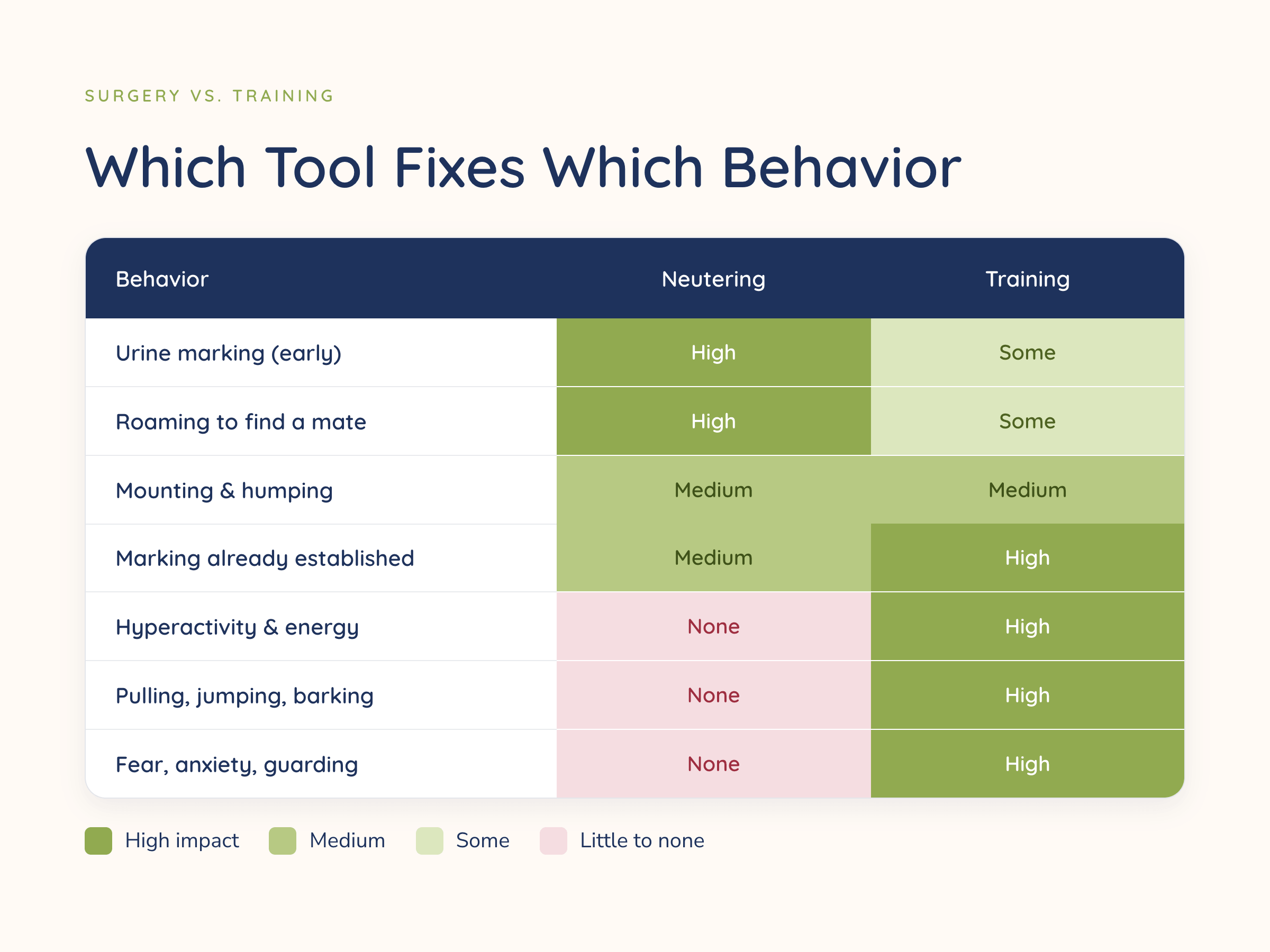
Neutering does not reduce general energy or hyperactivity. Those traits come from breed, age, and lifestyle. Hormone-driven restlessness may ease, but a high-drive dog still needs exercise and outlets.
Hormone levels drop within weeks. Noticeable behavior changes for marking or roaming usually appear in four to eight weeks and may continue for a few months. Energy level itself stays largely the same.
It depends on timing. Done before marking starts, neutering prevents the behavior in nearly all dogs. Once a dog is already marking as a mature adult, the behavior often improves but does not always disappear. Habit can persist after testosterone falls. Clinical data and sources such as PetMD show the strongest results come from early intervention.
No. Core personality, playfulness, and the bond with you remain. The only shifts are reductions in specific hormone-driven behaviors.
Neutering can reduce certain forms of inter-male competition and hormone-influenced tension. Aggression rooted in fear, resource guarding, or poor socialization is not reliably fixed by neutering and may need separate training or behavior work.
For the majority of dogs the answer is yes. That window prevents the onset of marking and other testosterone-driven habits while also supporting population control and reducing certain health risks. Individual large-breed conversations may adjust the timing with the primary veterinarian. See our spay vs neuter guide for more on timing by size and breed, and review current pricing when you are ready.
If a dog is still young, neutering between four and six months of age gives the best chance of preventing hormone-driven marking and roaming. If the dog is already showing those behaviors, the surgery can still help, but owners should keep realistic expectations and continue training.
The Pet Advocate Vet in Tracy performs high-volume, low-cost dog neuters. Transparent pricing is published online, recovery instructions are given at discharge, and owners receive a phone call two hours before pickup. People regularly drive from the Bay Area and Central Valley for the combination of cost and care. You can schedule online at any time.
Schedule your dog’s neuter or review the full pricing and rates before you book. Check our locations we serve if you are planning the trip. For younger dogs, start with the new puppy checklist so the timing fits the rest of the first-year plan.