
Or call us at 209-879-9367 — we'll answer Mon–Fri, 8 AM to 4:30 PM.📍 1973 N. Tracy Blvd., Tracy, CA 95376
Schedule OnlineBy Michael Wesselink, DVM
You notice red gums or a little bleeding when your cat yawns or eats. Is it just gingivitis, or something more serious?
At The Pet Advocate, we see this every week. Gingivitis is the earliest and only reversible stage of periodontal disease in cats. Caught early, it can be turned around with consistent home care. Once tartar builds up, the window narrows and most cats need a professional cat dental cleaning.
In our experience at our Tracy clinic, the difference between plaque and tartar is the single most useful visual cue owners can learn. Daily brushing reverses plaque-driven gingivitis, but brown buildup means it is time to book a cleaning. Severe cases can cross into stomatitis, which brushing alone cannot fix.
Here is exactly what to watch for at home, when to schedule a dental procedure, and the prevention plan that works best for real cats and real owners.
Gingivitis is inflammation of the gingiva—the gums that surround the teeth. It starts when plaque bacteria trigger an immune response along the gumline.
It is the first stage of periodontal disease and the only one that can still be reversed. In our clinic we see it frequently during dental procedures. Many cats arrive with some degree of gum inflammation even when owners are doing their best at home.
Gingivitis stays localized around the teeth in its early form. It differs from stomatitis, a more severe and diffuse inflammatory condition in cats that often requires a full dental procedure and extractions. The key distinction is that simple gingivitis responds to plaque removal, while stomatitis involves a deeper reaction that brushing cannot fully resolve.
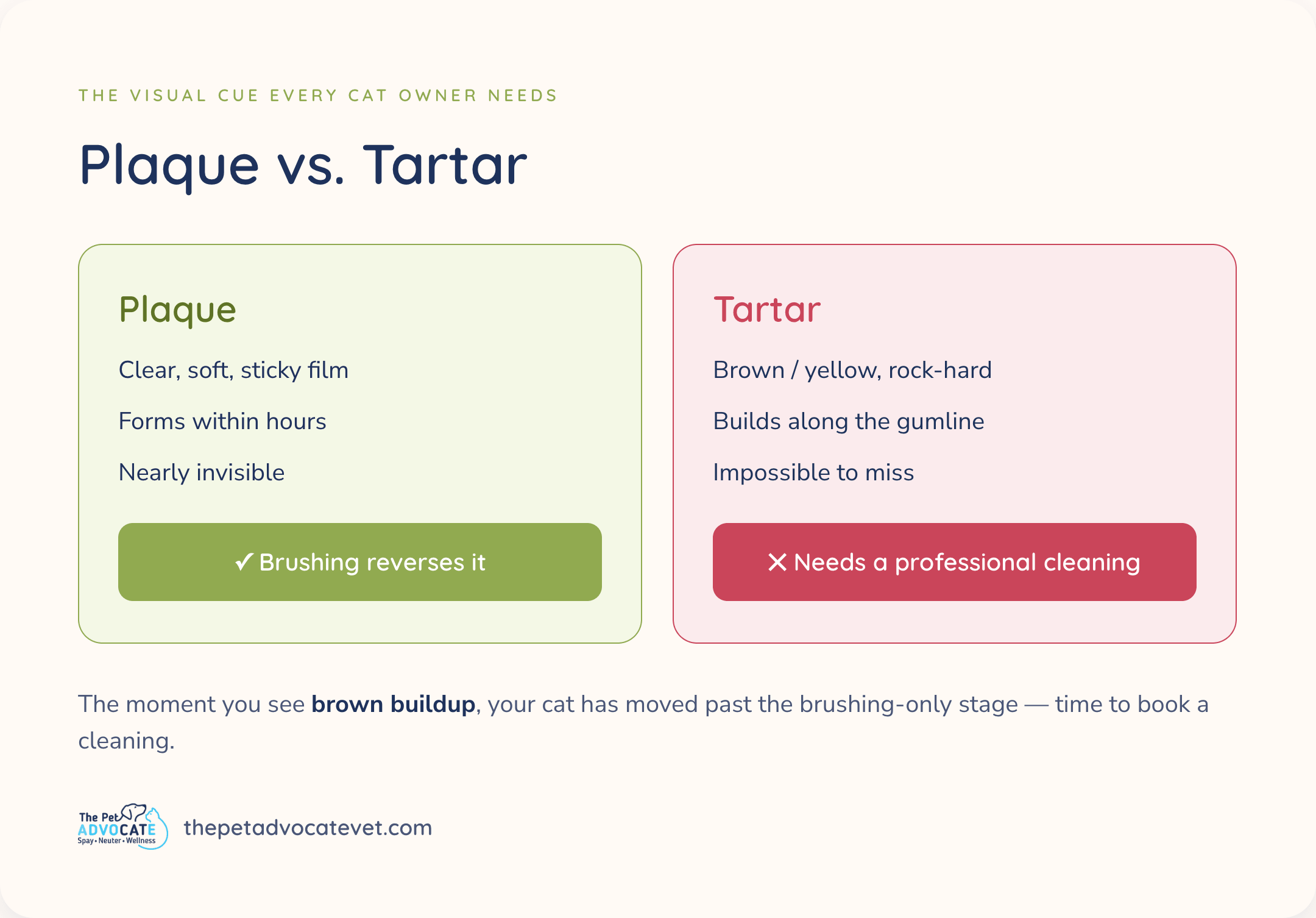
Plaque is the invisible biofilm that forms on teeth within hours. Think of the slimy feeling on your own teeth first thing in the morning before you brush—that is plaque. It is clear and soft.
If plaque stays on the teeth long enough, it mineralizes into tartar. Tartar looks like brown or yellowish hard debris, especially along the gumline and on the back teeth.
The moment you see that brown buildup, your cat has moved past the brushing-only stage. Tartar cannot be removed effectively at home. That is your clear signal to schedule a professional cleaning.
Brushing removes plaque and can reverse early gingivitis. Once tartar forms, brushing helps slow new buildup but cannot eliminate what is already there. This simple visual check saves many cats from more advanced problems.

Early gingivitis often shows as a thin red line along the gumline, especially on the inner cheek side. The gums may look slightly swollen but the cat still eats normally.
As it progresses you may notice bleeding gums during play or meals, mild bad breath, drooling, or the cat dropping kibble. Some cats paw at their mouth or turn their head while eating.
In more advanced cases cats eat less, lose weight, or show very red and inflamed gums that extend beyond the teeth. These signs can overlap with stomatitis or tooth resorption, so we always recommend a full oral exam under anesthesia with X-rays.

The main driver is plaque bacteria that accumulate from everyday eating and grooming. Cats that groom frequently can also swallow fleas and develop tapeworms, but the oral plaque itself comes from food debris and saliva.
Small breeds, older cats, and cats with crowded teeth tend to build plaque faster. Diet plays a role—soft foods leave more residue than textured kibble. Underlying conditions such as feline leukemia or immune-mediated issues can make inflammation worse, though we see plenty of otherwise healthy cats with gingivitis.
Stomatitis stands apart because its cause is not fully understood. It goes beyond normal plaque reaction and often requires more aggressive treatment.
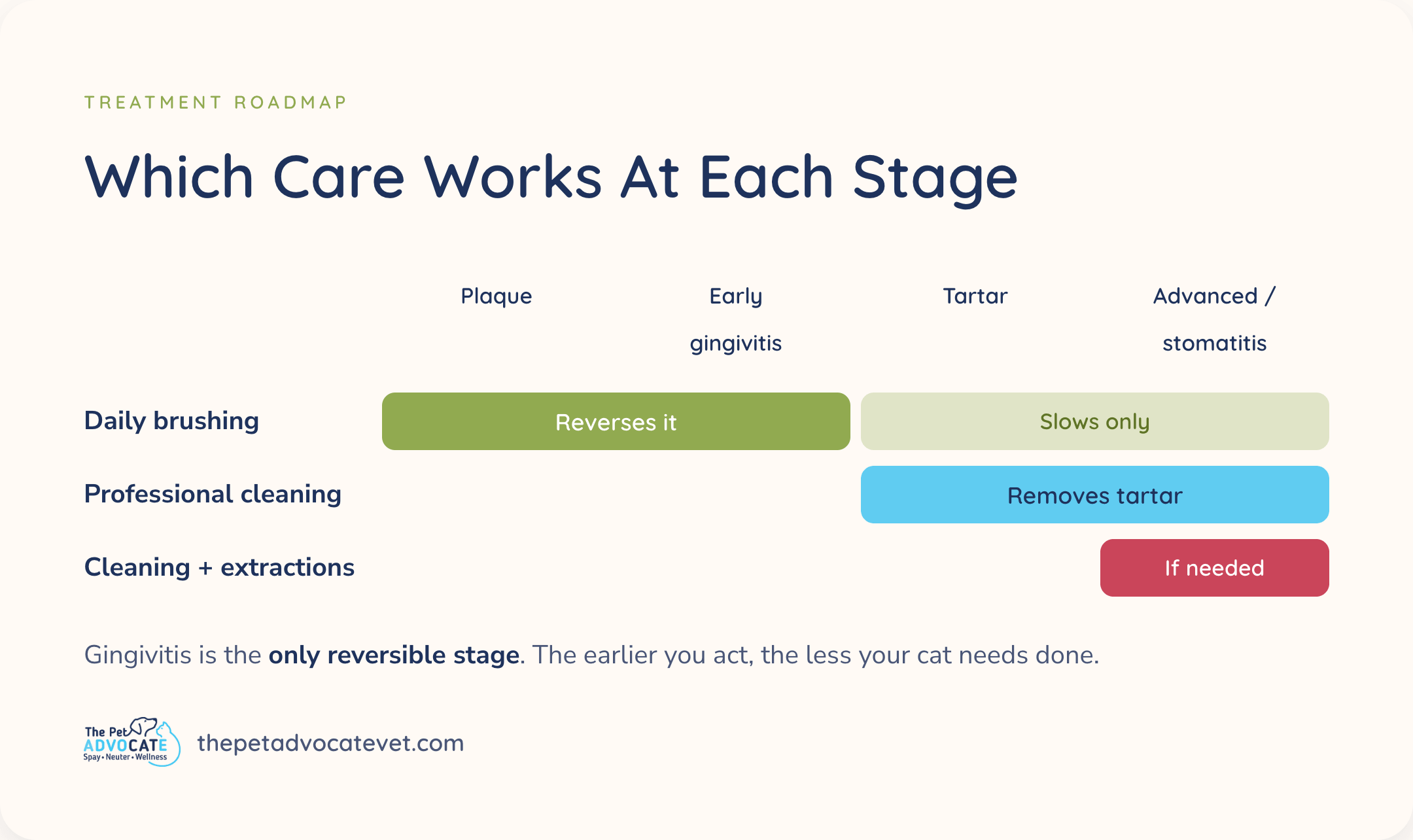
Yes—when it is still driven by plaque. Diligent daily brushing can reverse early gingivitis before tartar forms.
Once you see brown tartar, a professional cat dental cleaning is the most effective step. Under anesthesia we scale and polish the teeth, take full-mouth X-rays, chart every surface, and remove any teeth that cannot be saved. Owners receive before-and-after photos so they can see the difference.
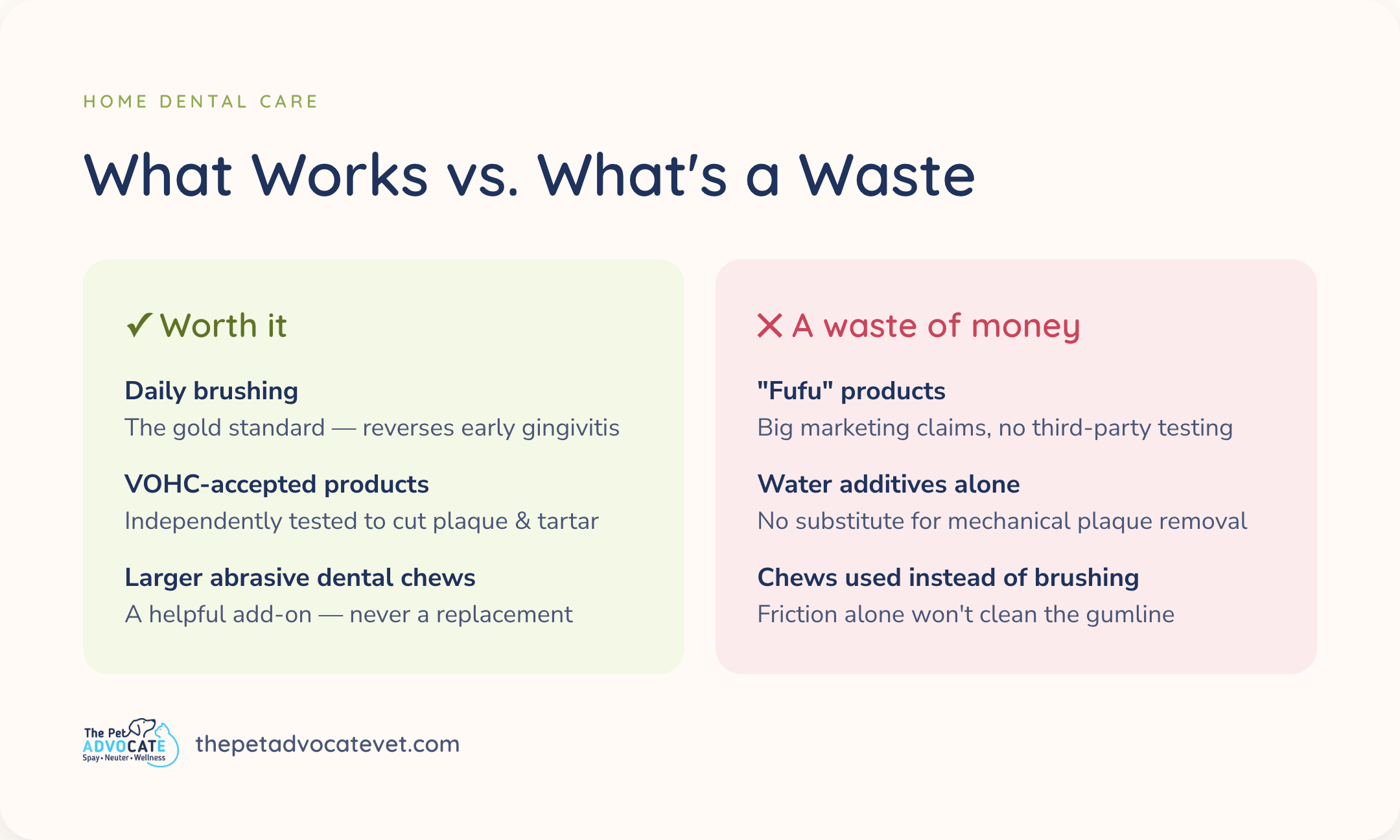
Between cleanings, daily brushing is the gold standard. We also recommend VOHC-accepted products because they have been independently tested for real plaque and tartar reduction. Some larger abrasive dental chews help through friction when the cat bites through them, but they work best alongside brushing.
For stomatitis or advanced cases we often combine cleaning with extractions. The goal is always to eliminate the source of inflammation so the cat can eat comfortably again.
If you are unsure whether your cat’s gums are at the plaque or tartar stage, submit clear photos through our dental requirements page. We review them and give you an honest plan and quote.
Daily brushing remains the single most effective thing you can do at home. It sounds like a lot of work—and it is—but even a few weeks of consistency makes a noticeable difference.
The most reliable way to reverse early gingivitis is consistent daily brushing while the issue is still caused by soft plaque rather than hardened tartar. Use a soft cat toothbrush or finger brush with enzymatic toothpaste made for pets. Focus on the gumline and brush in small circular motions for 30–60 seconds per side. Many cats adapt well if you start slowly and pair it with a treat they love.
We steer owners toward products that carry the VOHC seal. These have been reviewed by veterinary dentists and shown to reduce plaque or tartar under controlled conditions. Skip the “fufu” products with big marketing claims but no third-party testing.
Larger abrasive dental chews can remove some plaque through mechanical action when your cat chews them thoroughly. They are helpful add-ons, never replacements for brushing.
I have a hard enough time getting my own kids’ teeth clean, so I never judge owners who find brushing their cat challenging. Start slow, use a finger brush or soft cloth, and pair it with something tasty. Consistency beats perfection every time.
The best prevention starts in the first year. Get kittens used to gentle mouth handling early so brushing becomes routine.
Schedule regular dental evaluations and cleanings before tartar gets ahead of you. Combine that with daily home care and VOHC-accepted products.
A textured diet and occasional approved dental treats support the effort, but nothing replaces mechanical plaque removal. Cats that stay on a consistent program need fewer extractions and live more comfortably.

Do not wait if you see brown tartar, persistent bad breath, bleeding gums, or any change in eating habits. These are signs that gingivitis has progressed and professional care will make a big difference.
Suspected stomatitis or sudden refusal to eat warrants faster attention. Early intervention keeps the problem manageable and saves teeth and money in the long run.
For more answers to the common dental questions we hear from owners, see our common questions page.
Can gingivitis in cats heal on its own?
Early plaque-driven gingivitis can improve with daily brushing, but once tartar forms most cats need a professional cleaning. It rarely resolves completely without intervention.
What’s the difference between gingivitis and stomatitis in cats?
Gingivitis is localized inflammation from plaque and tartar that responds to cleaning and brushing. Stomatitis is a severe, widespread inflammatory reaction that usually requires a dental procedure and extractions.
How do I know if my cat has plaque or tartar?
Plaque feels slimy and is often invisible. Tartar appears as brown or yellowish hard buildup on the teeth. If you see the brown material, schedule a professional cat dental cleaning.
Is daily brushing realistic for cats?
It takes patience and practice, but many cats adapt. Start with short sessions and a tasty toothpaste. Even partial consistency helps more than none at all.
Do VOHC products really work?
Yes. The Veterinary Oral Health Council independently tests them for plaque and tartar reduction. We recommend VOHC-accepted products because they have evidence behind them.
How much does a cat dental cleaning cost?
Our base price is $600 for a standalone cleaning (or $550 when bundled with a spay or neuter). See our current prices and rates for full details. Extractions are additional and discussed after X-rays.
My cat has red gums but no tartar—is brushing enough?
Yes, in the early plaque stage. Consistent daily brushing can reverse it. Monitor closely and recheck if redness does not improve in a few weeks.
Can indoor cats still get gingivitis?
Absolutely. Lifestyle does not prevent plaque buildup. Every cat benefits from daily home care and periodic professional cleanings.
Gingivitis in cats is common, but it does not have to become a lifelong problem. Spot the brown tartar early, act with a professional cleaning when needed, and stay consistent with daily brushing and VOHC-accepted products.
At The Pet Advocate we make dental care straightforward and affordable. Whether your cat needs a first cleaning or ongoing support, we review photos the same day, provide clear quotes, and focus on keeping your cat comfortable and healthy.
Book a dental evaluation or submit photos for a quote today. We are here to help you and your cat enjoy many more years of happy, pain-free meals.
Veterinarian-reviewed by Michael Wesselink, DVM – The Pet Advocate