Or call us at 209-879-9367 — we'll answer Mon–Fri, 8 AM to 4:30 PM.📍 1973 N. Tracy Blvd., Tracy, CA 95376
Schedule OnlineBy Michael Wesselink, DVM
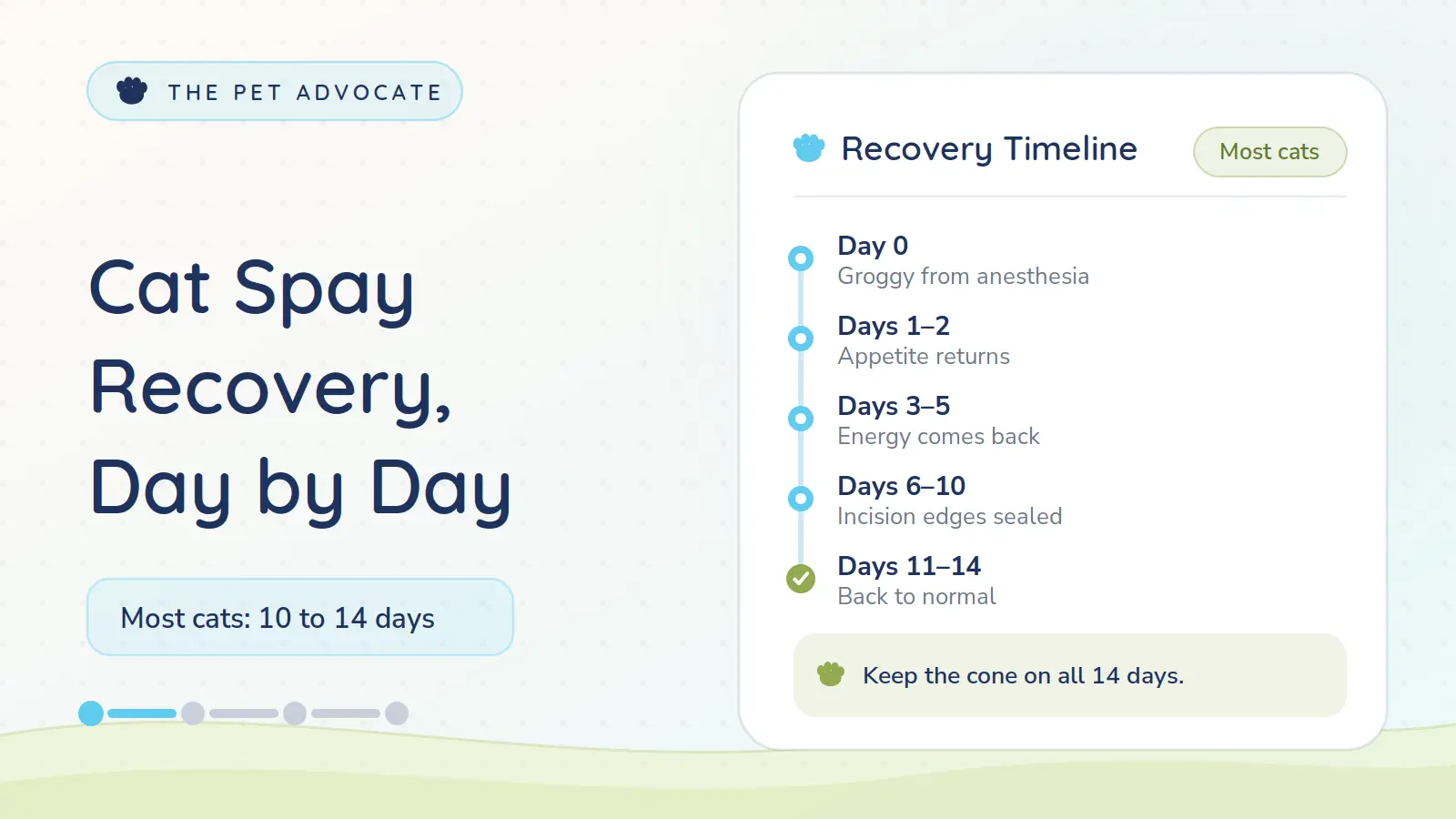
Most cats recover from a spay in 10 to 14 days. The cone must stay on the full time. Here is the exact day-by-day cat spay recovery timeline we walk owners through at our Tracy clinic, along with what a normal incision looks like and the real signs that mean you should call.
I am a veterinarian at a high-volume spay and neuter clinic in Tracy. In the thousands of cat spays we perform each year, the same questions come up after almost every procedure. Most turn out to be completely normal parts of healing. This guide gives you the practical details so you know what to expect and when something actually needs attention.
See our page on what to expect on surgery day for the full pre-op and pickup process.
Here is the timeline I share with owners at pickup. It is based on what we see with our own patients every week.
For the complete set of pickup instructions we go over with every owner, see our discharge instructions.
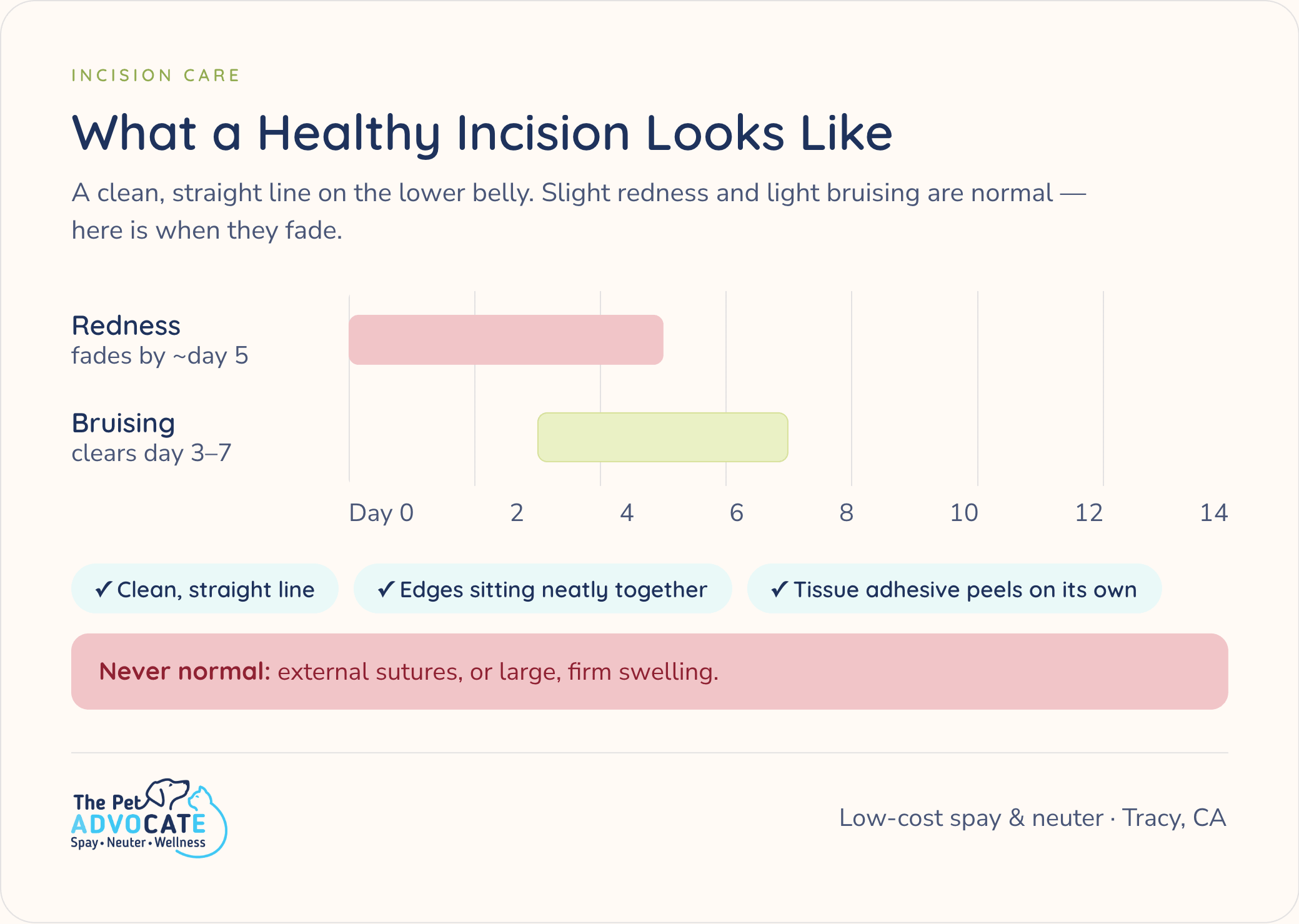
A healthy incision appears as a clean, straight line on the lower belly with the edges sitting neatly together. A little redness in the first two or three days is normal as the body starts repairing itself. That pinkness usually fades by day five.
Light bruising can show up around the site too, especially if there was a little more tissue handling during surgery. It typically yellows and disappears within three to seven days. You should never see external sutures or large, firm swelling.
We place a thin layer of tissue adhesive over the incision after closing the deeper layers. It acts like a liquid bandage that seals the site from the outside rather than holding the edges together. The adhesive peels away on its own as new skin forms underneath. Owners call about the peeling all the time, and it is almost always normal healing. This sealing approach is standard in high-volume veterinary clinics.
Check the incision once a day in good light. A quick photo each morning makes it easy to spot any real change instead of relying on memory. This simple habit is one of the best parts of good cat spay incision care.
Keep the cone on your cat for the entire fourteen days after surgery. The skin edges are usually sealed by day seven, but the bond is still new and fragile. One night of licking can reopen the incision completely.
This is the single most common recovery problem we see in female cats. Almost every case traces back to the cone coming off early, either because it slipped or the owner decided it was no longer needed. A cat’s tongue has tiny backward-facing barbs called lingual papillae that act like small hooks. Once she reaches the site, she can pull the edges apart fast.
Cats usually fight the cone for the first day or two, then accept it as part of their new normal. From the calls that come in every day after these procedures, we know the cone is the single biggest factor in preventing setbacks.
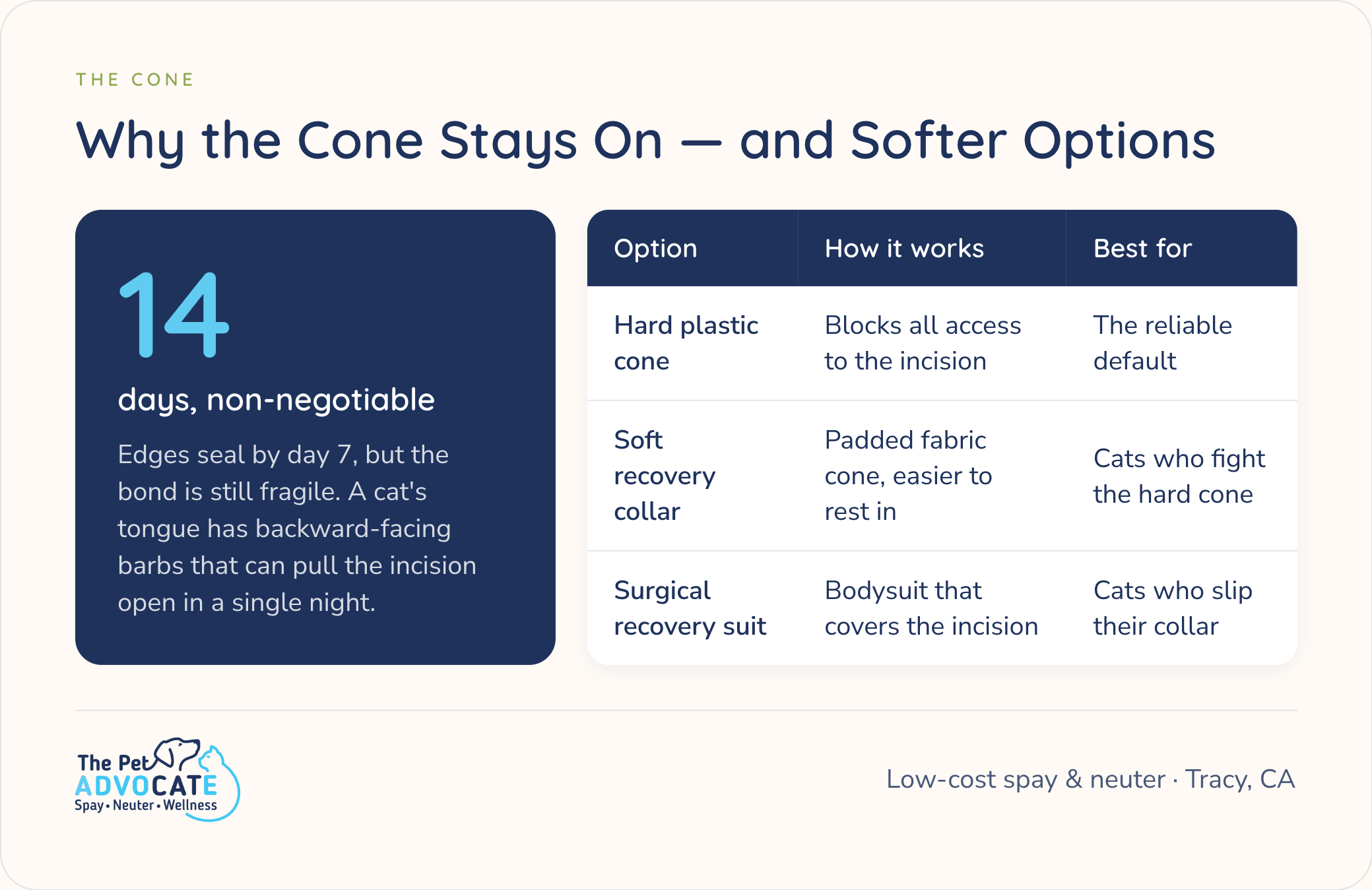
If your cat truly cannot settle with the hard plastic version, a soft recovery collar or surgical suit can work instead. The only requirement is that it prevents her from reaching the incision. Many owners find the soft options easier for their cats to tolerate while still doing the job.
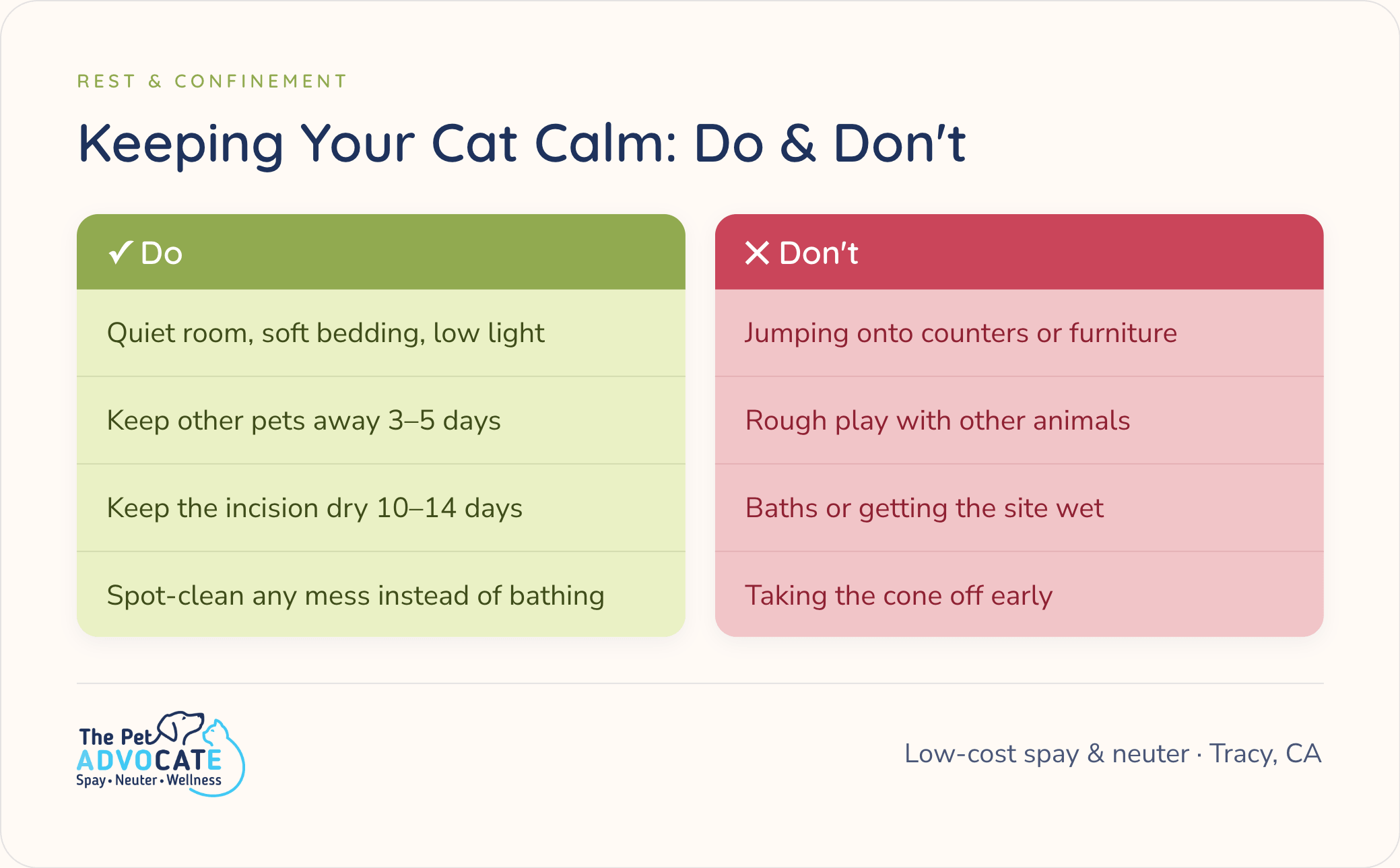
Set your cat up in a quiet room with soft bedding and low light for the first few days. Limit big jumps and climbing while the incision heals. Her instinct to leap onto counters or furniture returns long before the inside tissues are ready for that stress.
Keep other pets away for the first three to five days. This reduces rough play and stops another animal from licking the incision site. Most cats do fine with short, supervised interactions after that initial window.
Keep the incision dry for the full ten to fourteen days. Water can loosen the protective adhesive and raise the chance of infection while the site is still closing. Skip baths entirely and spot-clean any mess instead.
Offer a half portion of her regular food the evening of surgery. Many cats skip both food and water that first afternoon while the anesthesia wears off, and that is normal. Appetite usually returns the next day. In a few cases it takes two or three days to get back to normal.
Expect some grogginess and a little wobble for the first twelve to twenty-four hours. Energy and interest in moving around come back by day two or three. A calm, quiet space helps her rest while the deeper tissues do their slower work.
Use the litter box as usual. Most cats have no trouble posturing or eliminating after a spay. If you notice straining or absence of urine or stool for more than twenty-four hours, give us a call.
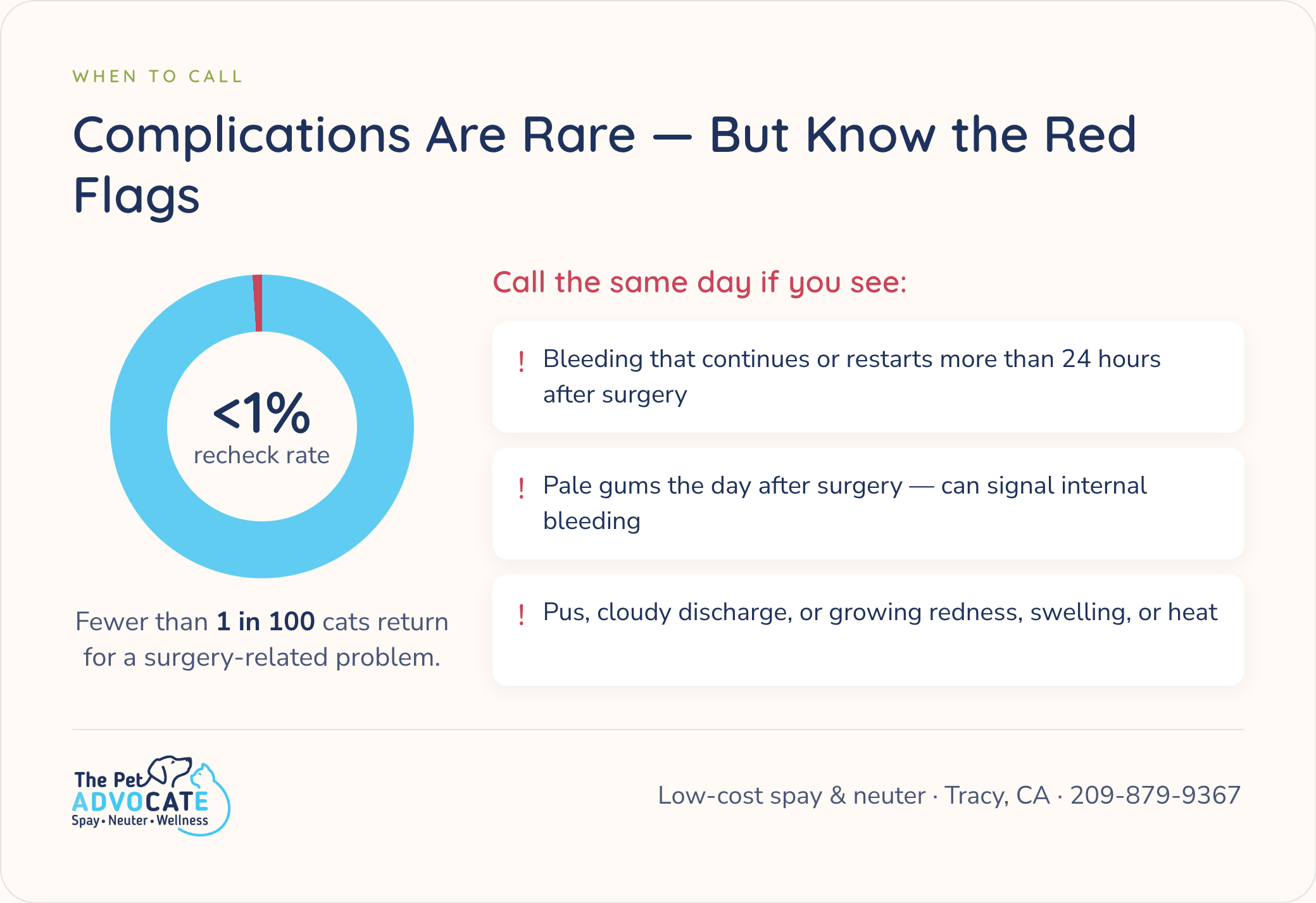
Complications after a cat spay are uncommon. Our recheck rate for post-surgical problems sits under one percent. That means fewer than one cat in a hundred needs to return for something related to the surgery itself. Most of the calls we take every day turn out to be normal variations in healing.
Still, a few situations deserve a phone call the same day you notice them:
None of these mean you did anything wrong. They simply mean the healing process hit a snag and we should take a look sooner rather than later. Calling early almost always makes the fix simpler.
Most cats recover from a spay in 10 to 14 days. The external incision closes within about a week, while the tissue underneath continues to strengthen for another week or two. Keep her calm and the cone on through the full window even if she seems back to normal.
A healthy spay incision looks like a clean, closed line on the lower belly with the edges touching neatly. Slight redness and light bruising in the first few days are normal and fade within three to five days for redness and up to seven days for bruising. You should not see external sutures or large swelling.
Licking can reopen the incision quickly. A cat’s tongue has backward-facing barbs that act like hooks, so she can pull the edges apart in a single night. This is the most common recovery setback we see, which is why the cone stays on for the full fourteen days.
Keep her in a calm space and limit jumping and climbing until the incision has healed. That lines up with the same two-week window as the cone. Her energy usually returns by day two or three, well before the inside is fully ready for normal activity.
Yes. Many cats skip food and water the afternoon and evening of surgery while the anesthesia wears off. Appetite returns the next day for most cats. Offer a half portion that first evening and do not worry if she turns it down. Call us if she refuses food for more than a day.
Her desire to be active comes back by day two or three, but the incision is still healing underneath. Hold off on big jumps, rough play, and climbing until the end of the two-week window when the deeper tissues have had time to strengthen.
A spay is one of the most common surgeries in veterinary medicine, and most cats come through it without any trouble. Keep her rested, leave the cone on for two weeks, offer that first half portion of food without worry, and look at the incision once a day.
If you are planning a spay or have a question partway through recovery, our team in Tracy is here to help. You can read more about our low-cost spay and neuter services, book a spay appointment if you're planning ahead, or call the clinic with any concern. We also have a guide to dog spay recovery if you have another pet at home.
For additional context on spay procedures and recovery from a broader veterinary perspective, the American Veterinary Medical Association (AVMA) provides helpful resources.