Or call us at 209-879-9367 — we'll answer Mon–Fri, 8 AM to 4:30 PM.📍 1973 N. Tracy Blvd., Tracy, CA 95376
Schedule OnlineBy Michael Wesselink, DVM
Kennel cough spreads fast in dog parks, daycares, and boarding facilities. The Bordetella vaccine targets one of the main bacterial causes. Not every dog needs it. This guide explains what it is, who benefits, how often to boost, the three delivery methods, side effects, and what it actually costs so you can decide with clear facts.
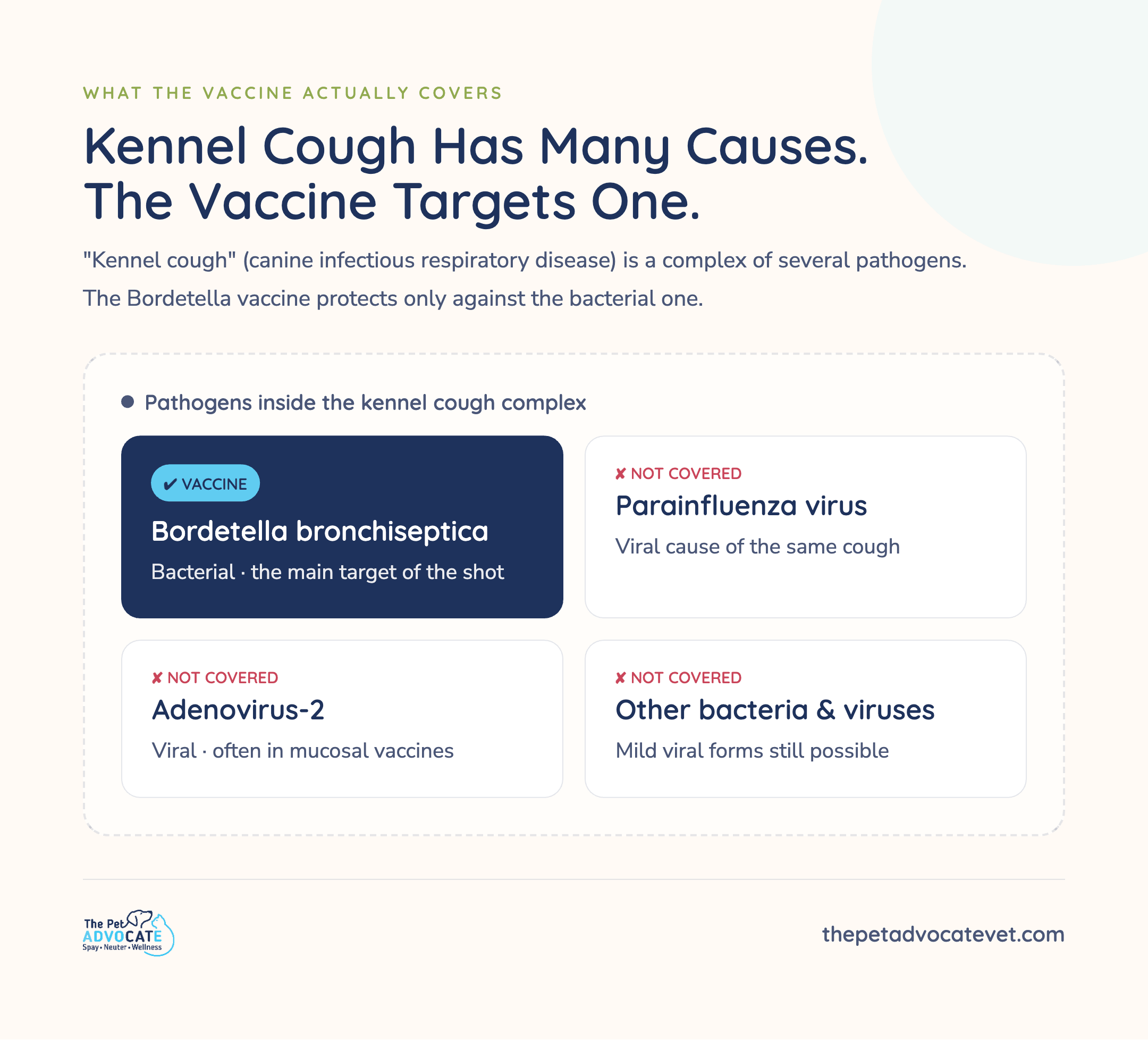
Bordetella bronchiseptica is a bacterium that infects the respiratory tract of dogs. It is the most common bacterial player in canine infectious respiratory disease complex, the broader syndrome people call kennel cough.
Kennel cough is not one disease. Viruses such as parainfluenza and adenovirus-2, plus other bacteria, can produce the same honking cough, sneezing, and nasal discharge. The Bordetella vaccine protects only against the bacterial component. Vaccinated dogs can still catch mild viral forms.
Spread happens through airborne droplets, shared water bowls, toys, or direct nose-to-nose contact. Puppies, seniors, and dogs with chronic respiratory issues face higher risk of severe signs or secondary pneumonia.
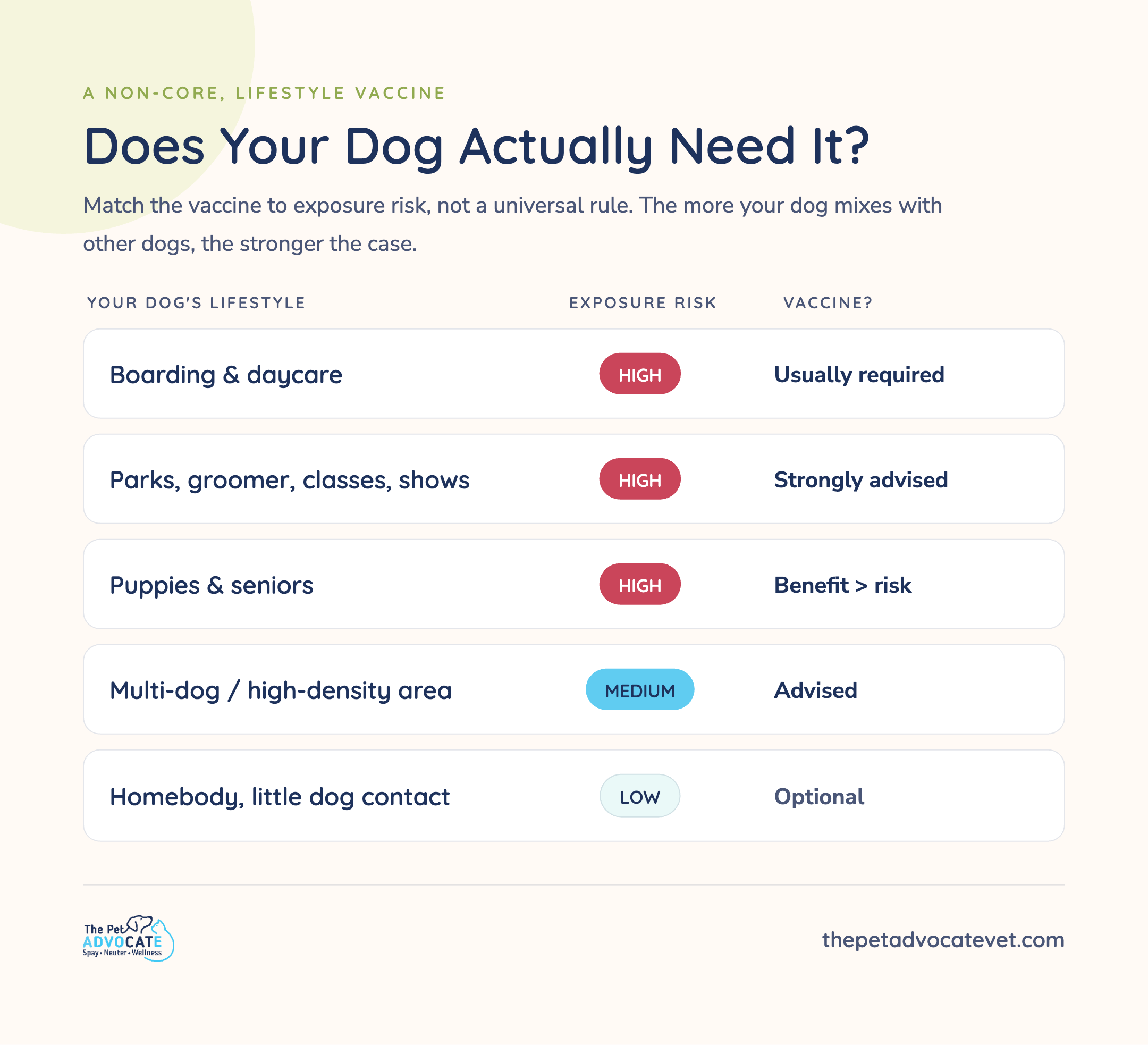
No. The American Animal Hospital Association lists Bordetella as a non-core vaccine. Give it based on lifestyle and exposure risk, not as a universal requirement.
Dogs that benefit most:
Homebody dogs that rarely meet other dogs have low risk. A fence-line chat or occasional neighborhood walk still carries some exposure, so many owners still choose the vaccine for peace of mind.
I treat non-core vaccines the same way I handle every optional service here. I explain the real risk for your dog, the rules most boarding and daycare places in our area follow, and then leave the final decision with you. No pressure. No bundled exam fee that turns a simple shot into a bigger bill.
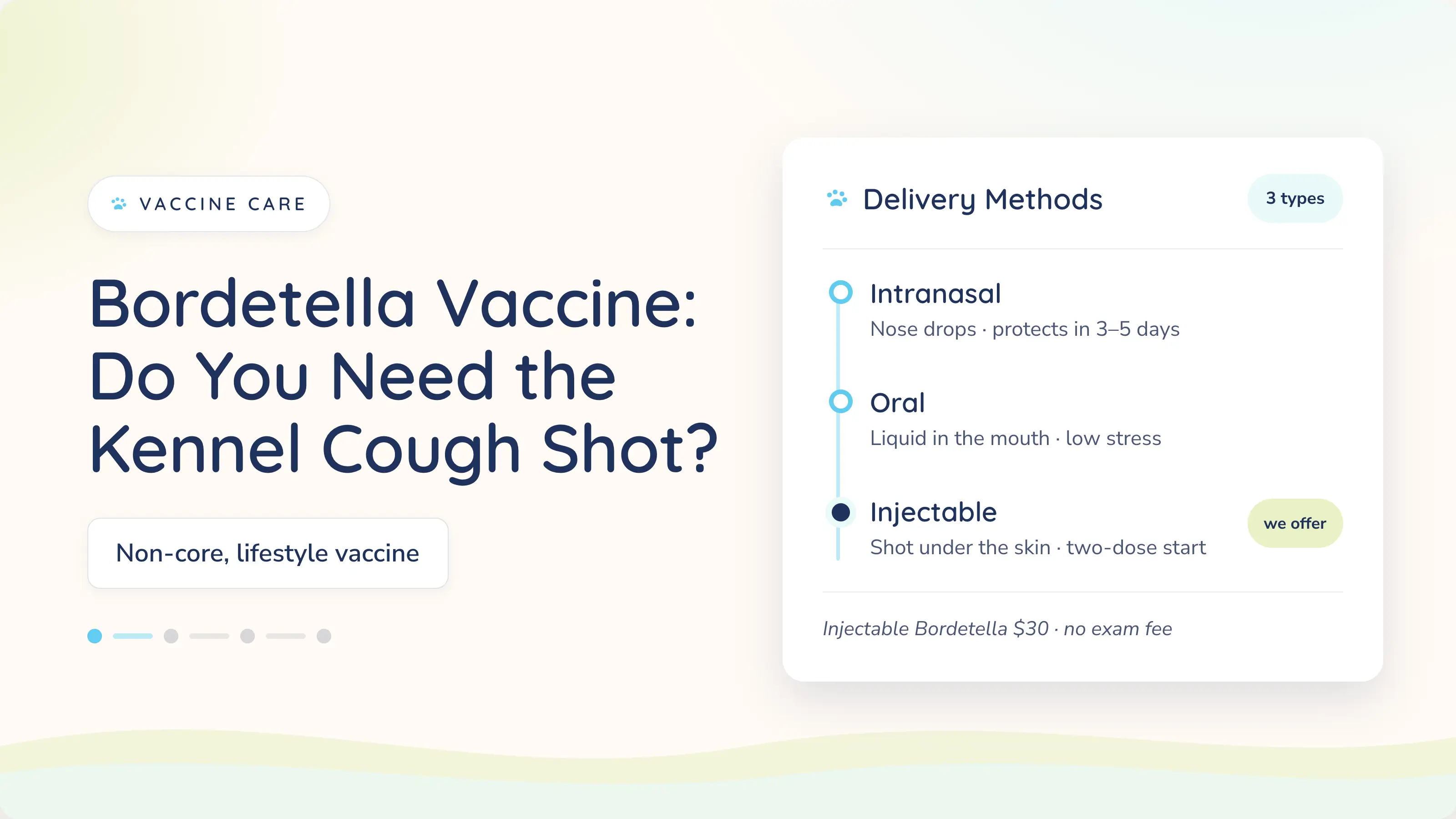
Three routes exist. Mucosal vaccines (nose or mouth) create local immunity in the respiratory tract faster than injectable.
Intranasal and oral forms often include parainfluenza or adenovirus for broader coverage against the common causes of kennel cough. Injectable versions induce systemic immunity and usually need a two-dose starter series.
We offer the injectable Bordetella vaccine. No Bordetella vaccine provides sterile immunity. It reduces severity of clinical signs, shortens the contagious period, and lowers the chance of progression to pneumonia.
Adult dogs receive Bordetella boosters every 6 to 12 months depending on risk. High-exposure dogs (boarding, daycare, parks) often need every 6 months to meet facility rules. Low-risk dogs can stay on annual boosters. Puppies start as early as 3-8 weeks with a second dose if using injectable.
Puppies: Intranasal can start at 3-4 weeks of age (commonly after 6 weeks). Injectable usually begins at 6-8 weeks with a booster 2-4 weeks later. This fits cleanly into the new puppy checklist we use for first-year care.
Adults: Match the schedule to real risk and facility requirements. Many boarding and daycare centers in California demand vaccination within the last 6 months. Give the dose at least 5-7 days before planned boarding so immunity has time to build.
Most dogs tolerate the vaccine well. Common mild reactions last 1-2 days:
A large safety review of more than 9 million doses found adverse reactions in less than 1 percent of dogs. Serious reactions (facial swelling, hives, collapse) are rare. Contact your vet if signs worsen after 48 hours.
Safety data for pregnant dogs is limited. Discuss timing with your veterinarian if your dog is expecting.

Average price across the U.S. ranges from $19 to $70 per dose in 2026. Low-cost clinics and high-volume practices often sit at the lower end. Full-service hospitals frequently add an exam fee of $60-$130 on top of the vaccine itself.
I see this every week. Owners walk in shocked at what they paid at another clinic for the exact same vaccine. The exam fee is usually the part that inflates the bill. At our clinic the injectable Bordetella is $30 with no exam fee as a walk-in. Check our current prices and walk-in vaccine hours. Ask whether the facility you use requires the 6-month or 12-month window.
Bring this checklist to your next visit. I walk through it with every owner and respect the choice you make. My goal is the same as yours: keep your dog healthy without overdoing it or overpaying. Many owners combine the Bordetella with other low-cost services like microchipping or a spay or neuter during the same trip.

No. It is a non-core, lifestyle vaccine. Necessary only if your dog has regular contact with other dogs or if a boarding facility requires it. Many low-risk dogs skip it without problems.
Every 6-12 months. High-risk dogs (boarding, daycare) often need every 6 months to satisfy facility rules. Low-risk dogs can do annual boosters.
Yes if your dog has minimal exposure to other dogs. Confirm any boarding or daycare requirements first, then decide with your veterinarian.
They remain susceptible to Bordetella bronchiseptica and may develop a more severe or longer-lasting cough if exposed. Mild cases often resolve with rest and supportive care. Severe cases can progress to pneumonia, especially in puppies and seniors.
No. Bordetella bronchiseptica is not considered a significant human pathogen under normal circumstances. Focus protection on other dogs.
No. Kennel cough is a complex caused by multiple pathogens. The vaccine targets the bacterial Bordetella component and reduces severity of that infection. Viral forms can still occur.
Match the schedule to your dog’s real life and give the vaccine early enough before boarding. Choose a clinic that prices it without unnecessary exam fees. When the risk and the limits are clear, the decision gets simple.
Ready to protect your dog without the markup? Check our prices and rates or book a walk-in vaccine appointment. I am happy to walk through your dog’s lifestyle and help you choose what makes sense.