

Or call us at 209-879-9367 — we'll answer Mon–Fri, 8 AM to 4:30 PM.📍 1973 N. Tracy Blvd., Tracy, CA 95376
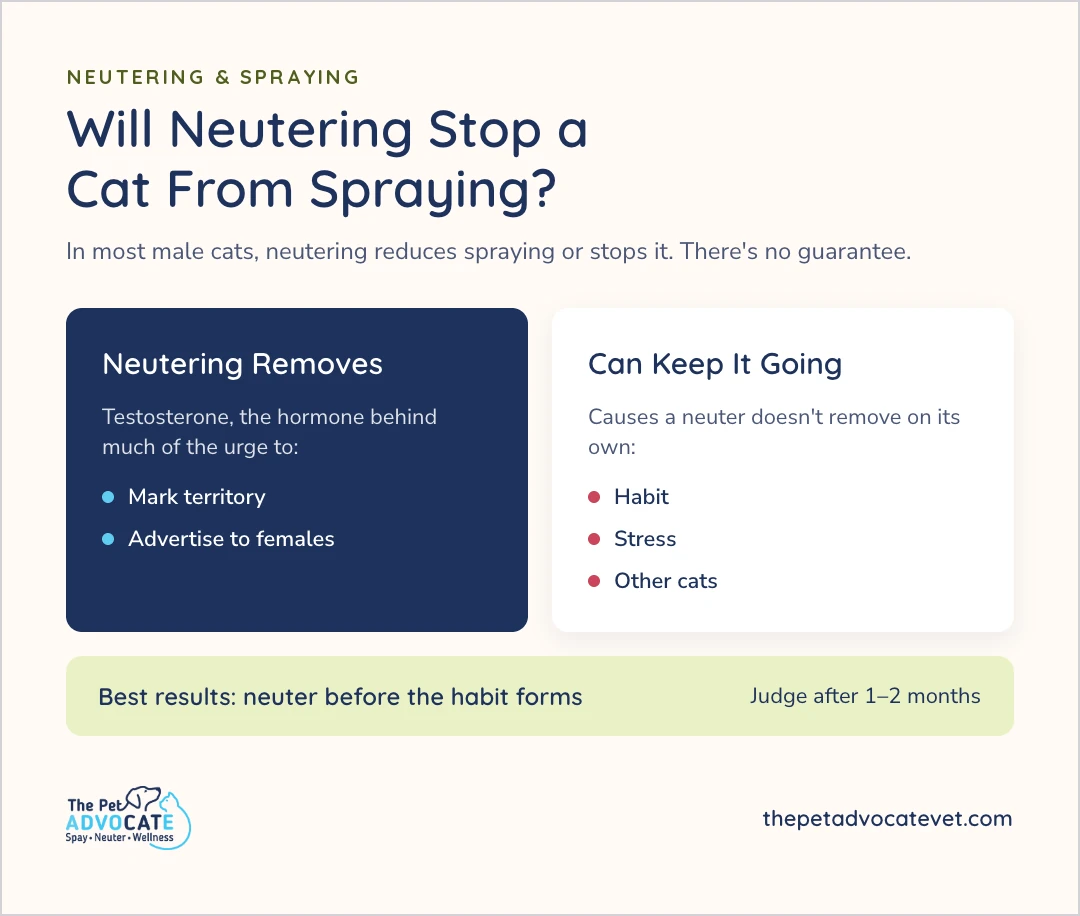
Schedule OnlineWill neutering stop a cat from spraying? In most male cats it reduces spraying or stops it, but there's no guarantee. Testosterone drives much of territorial marking, and we suggest giving it a month or two before judging the result.
You usually smell it before you see it: a sharp, musky streak on the back door, the couch, or the wall by the window.
The best results come from neutering before the habit forms.
Neutering decreases or ends marking in most male cats. It can't promise a full stop, and some neutered males keep spraying.
Spraying is largely a hormone-influenced way to mark territory and advertise to females. Take away the testosterone, and the urge often fades.
Habit, stress and other cats can keep it going, so timing and the reason behind the spraying both matter.
Intact tomcat urine also has a strong, pungent odor, and neutering changes that odor.
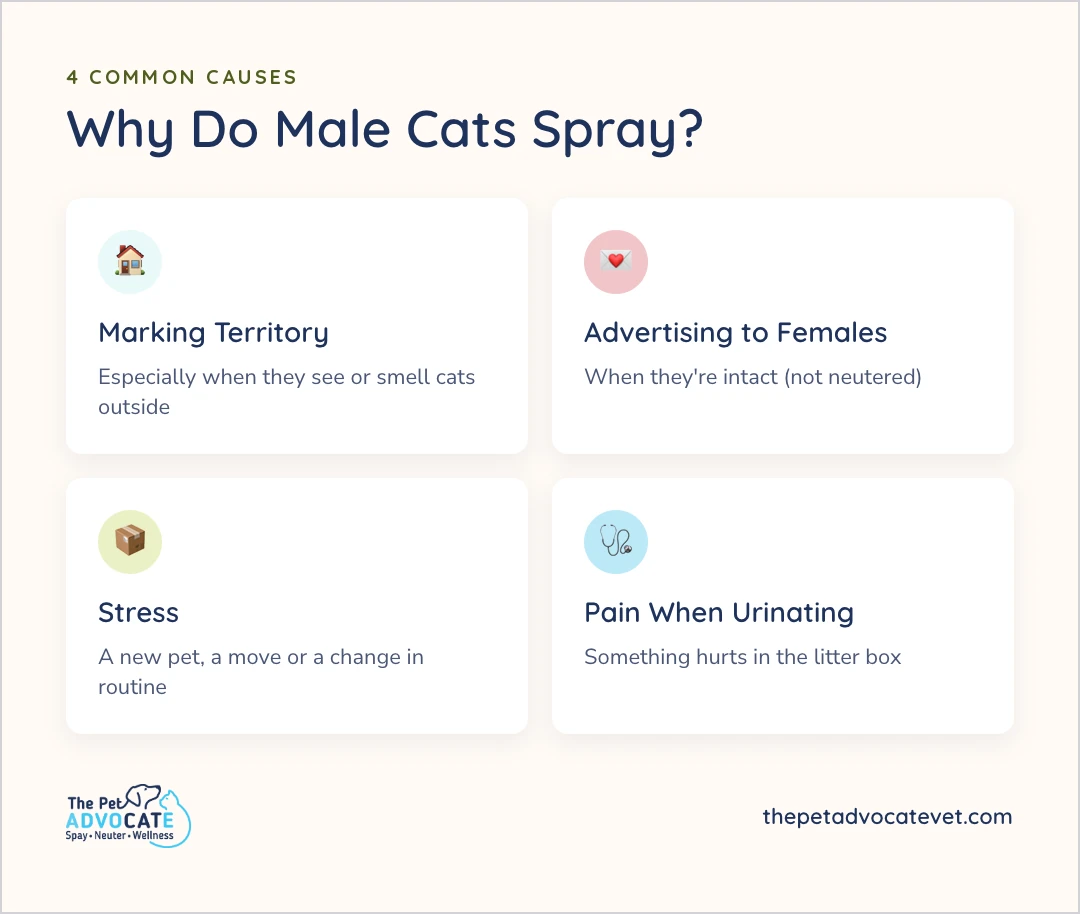
Many males start marking as they reach puberty, which can come anywhere from about 4 to 12 months of age. Our default is to neuter at 4 to 6 months, before marking has a chance to start. Our guide on when to neuter your cat covers the timing in more detail.

It varies, so we suggest giving it a month or two before you judge the result.
| Time after neuter | What to expect |
|---|---|
| First few weeks | Spraying may continue for a while |
| About 1 to 2 months | A reasonable point to judge the result |
| Still spraying after 2 months | Call us to look at medical and stress causes |
Recovery from the surgery itself follows a separate timeline, covered in our guide to cat neuter recovery.

Some neutered cats do still spray, though most neutered males mark less or stop.
Common reasons a neutered cat keeps spraying:
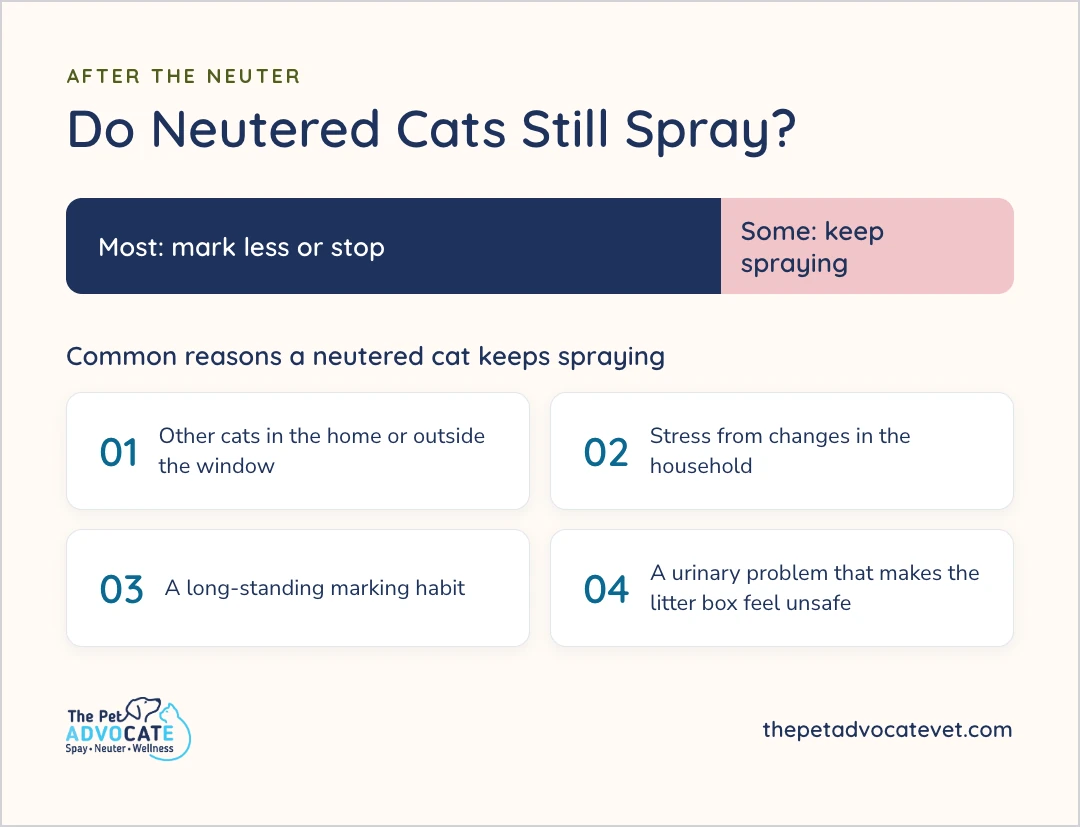
| Spraying | Urinating outside the box |
|---|---|
| Usually standing, tail up and often quivering | Usually squatting |
| Usually a small amount on a vertical surface | Often a larger puddle on a flat surface |
| Often territorial or stress-driven | Can point to a urinary problem like FLUTD or cystitis |
Straining, frequent trips, blood in the urine or crying in the box need a vet visit before anything else. A male cat who can't pass urine is an emergency.
If your cat shows signs of feline lower urinary tract disease (FLUTD) or feline idiopathic cystitis (FIC), let us know when you book. Urinary problems are worth looking at before an elective surgery like a neuter.
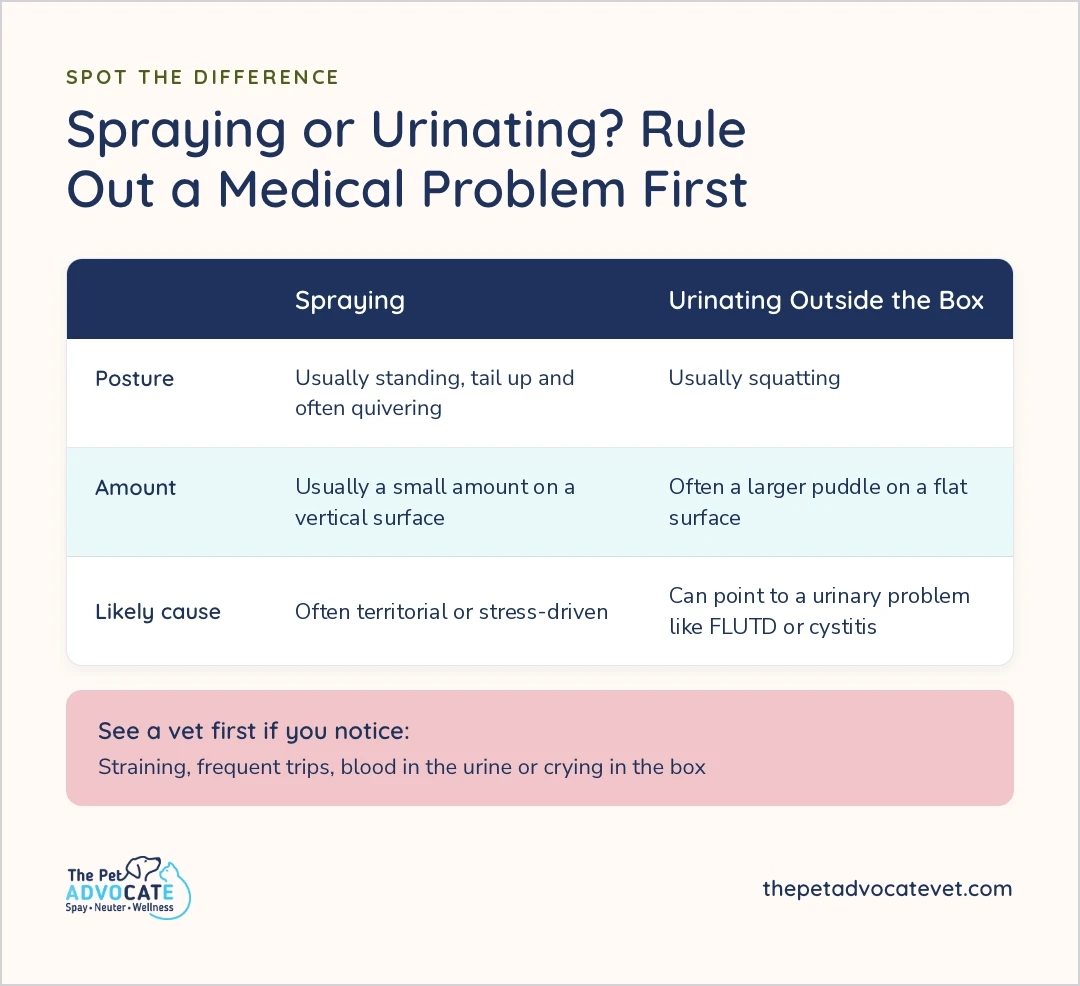
Neutering a cat that has sprayed for a while often improves things. It doesn't always erase a learned habit, and the longer a tomcat has been spraying, the more likely some marking is to continue.
That's the main reason we recommend neutering at 4 to 6 months, before marking becomes routine.
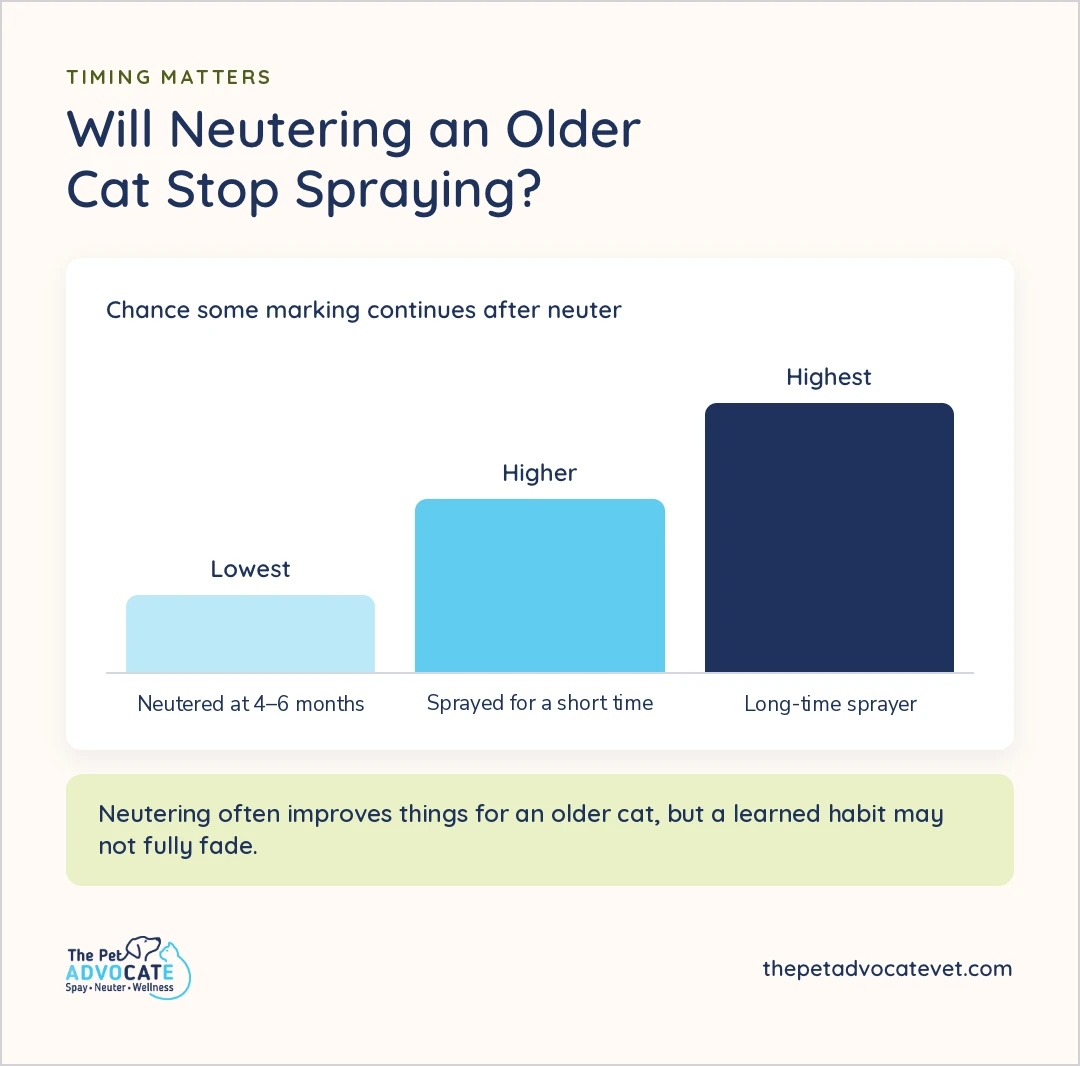
Start with an exam to rule out a urinary problem, then remove the scent and the triggers that invite marking.
If spraying continues after these steps, talk with your regular vet about behavior support.

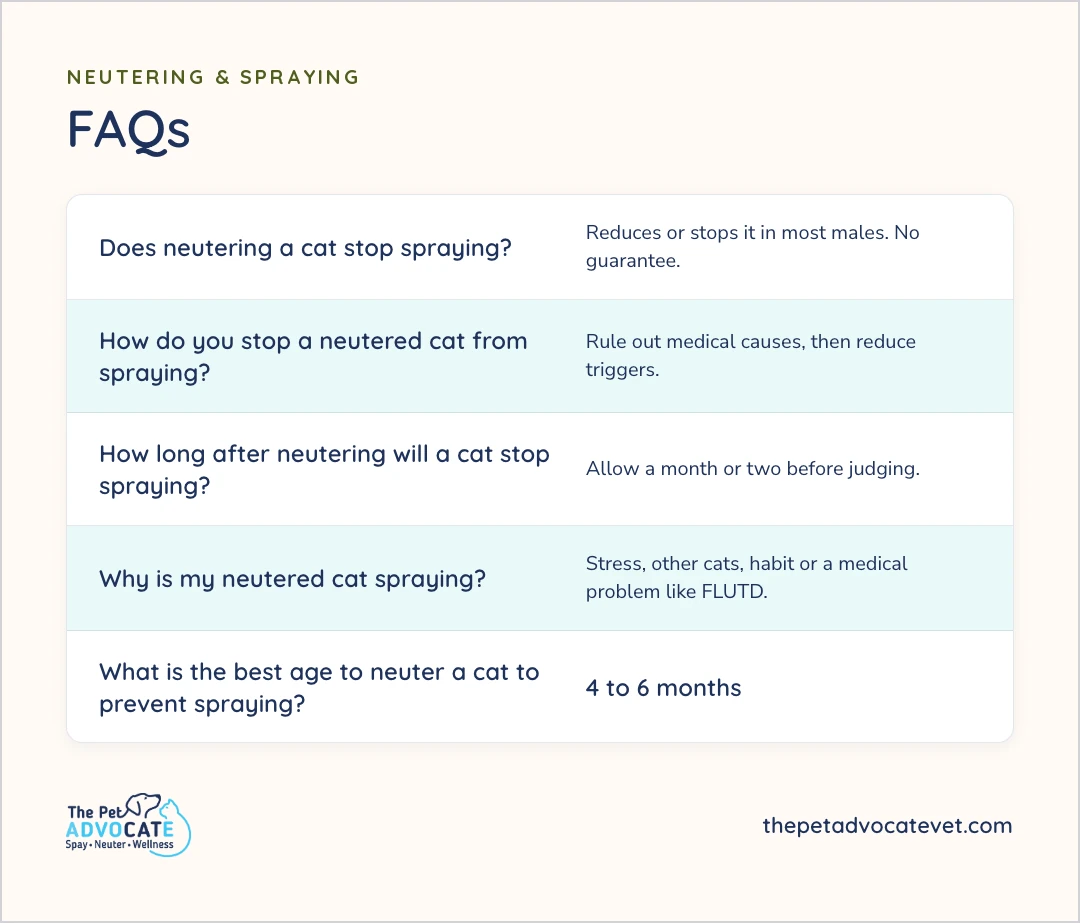
Neutering reduces or stops spraying in most male cats, but it can't guarantee a full stop. Give it a month or two before judging the result.
A neutered cat usually sprays less once medical causes are ruled out and the triggers are reduced. Clean marked spots with an enzyme cleaner, keep one more litter box than you have cats, and block views of outdoor cats.
Timing varies from cat to cat, so we suggest allowing a month or two after neutering before judging whether it helped.
A neutered cat usually keeps spraying because of territorial stress, other cats, a learned habit or a medical problem like FLUTD, so start with a vet exam.
The best age to neuter a male cat to prevent spraying is 4 to 6 months, before most males start marking.
A cat neuter (male) at The Pet Advocate is listed at $105, the cash price on our rates page. Neutering early is the simplest way to help keep spraying from starting.
You can see our prices and rates for add-ons like pain medication and a recovery collar. When you're ready, schedule your appointment and we'll be glad to see your cat.