Or call us at 209-879-9367 — we'll answer Mon–Fri, 8 AM to 4:30 PM.📍 1973 N. Tracy Blvd., Tracy, CA 95376
Schedule OnlineBy Michael Wesselink, DVM
The Pet Advocate Spay Neuter & Wellness | Tracy, California
A cryptorchid dog has one or both testicles that never dropped into the scrotum. This condition, also called cryptorchidism or undescended testicle in dogs, means the missing testicle sits either just under the skin in the groin (inguinal cryptorchid) or higher up inside the abdomen. It still needs to come out.
A retained testicle carries a real cancer and torsion risk, and a cryptorchid neuter is more involved than a routine neuter. The cost and recovery depend on where the testicle ended up.
We see cryptorchid dogs regularly at our Tracy clinic. Most owners come in once they notice a testicle they cannot feel.
Cryptorchidism is the medical term for an undescended testicle. The testicle is still there. It just stopped somewhere along the path it was supposed to travel before birth.
Most dogs have one retained testicle rather than two. The other testicle sits in the scrotum like normal.
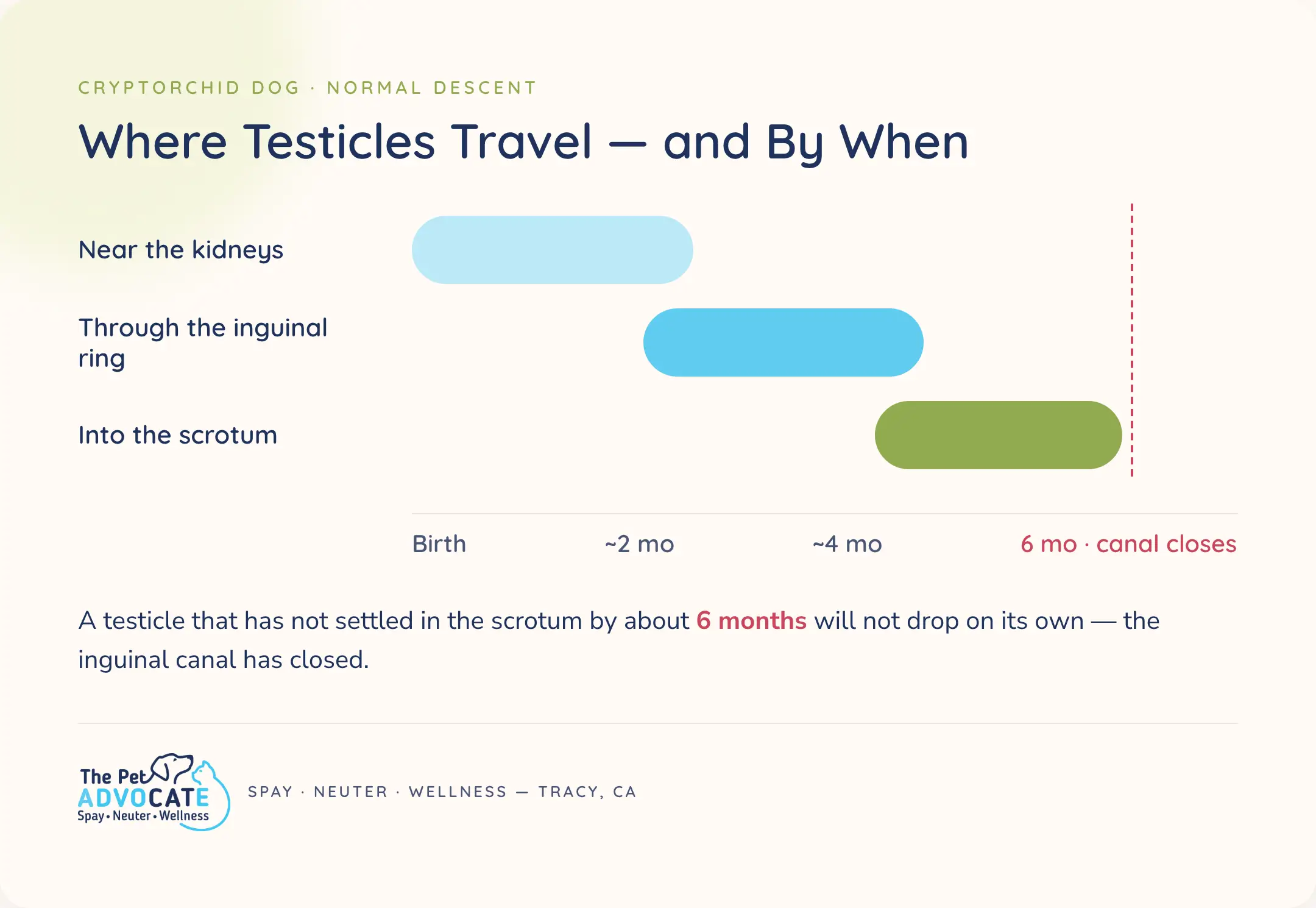
A puppy's testicles start near the kidneys, inside the abdomen. Before birth they get drawn back and pass through a small opening called the inguinal ring. That ring divides the abdomen from the area under the skin. From there the testicles should settle into the scrotum.
The inguinal canal closes around six months of age. A testicle that has not arrived by then is not going to drop on its own. Toy breeds and small dogs carry a higher risk of cryptorchidism compared to larger breeds, including toy poodles and Pomeranians.
The size of the surgery depends on where the testicle stopped. There are two patterns we see.
An inguinal testicle sits just under the skin in the groin. We can feel it during the exam, so we know where to make the incision.
An abdominal testicle stays up inside the belly and cannot be felt from the outside. It can sit anywhere along the path it failed to travel, so finding it is closer to an abdominal exploratory surgery.
A testicle left inside the body runs warmer than one in the scrotum, and over time that raises the odds of trouble. This is the reason we recommend removal rather than leaving it alone.
Dogs with retained testicles face a much higher risk of testicular cancer. One type, a Sertoli cell tumor, can produce hormones that cause hair loss and other body changes. For more details on the risks associated with cryptorchidism in dogs, including cancer and torsion, visit Cornell’s Riney Canine Health Center.
The second risk is testicular torsion, where the retained testicle twists and cuts off its own blood supply. That becomes a painful, urgent problem. Removing the testicle takes both risks off the table.
Every cryptorchid dog comes in for an exam first. During that visit we feel for the retained testicle to find out whether it sits under the skin or up in the abdomen.
If we can feel it, we know where it is and we can plan the surgery. If we cannot feel it, the testicle is somewhere inside the abdomen. We may then send you for an abdominal ultrasound to pin down its location before we operate.
You can review our spay and neuter requirements before you book.
The extra work is the reason for the higher price. A routine neuter removes two testicles that are both sitting in the scrotum. A cryptorchid neuter adds the work of locating and removing one that is not.
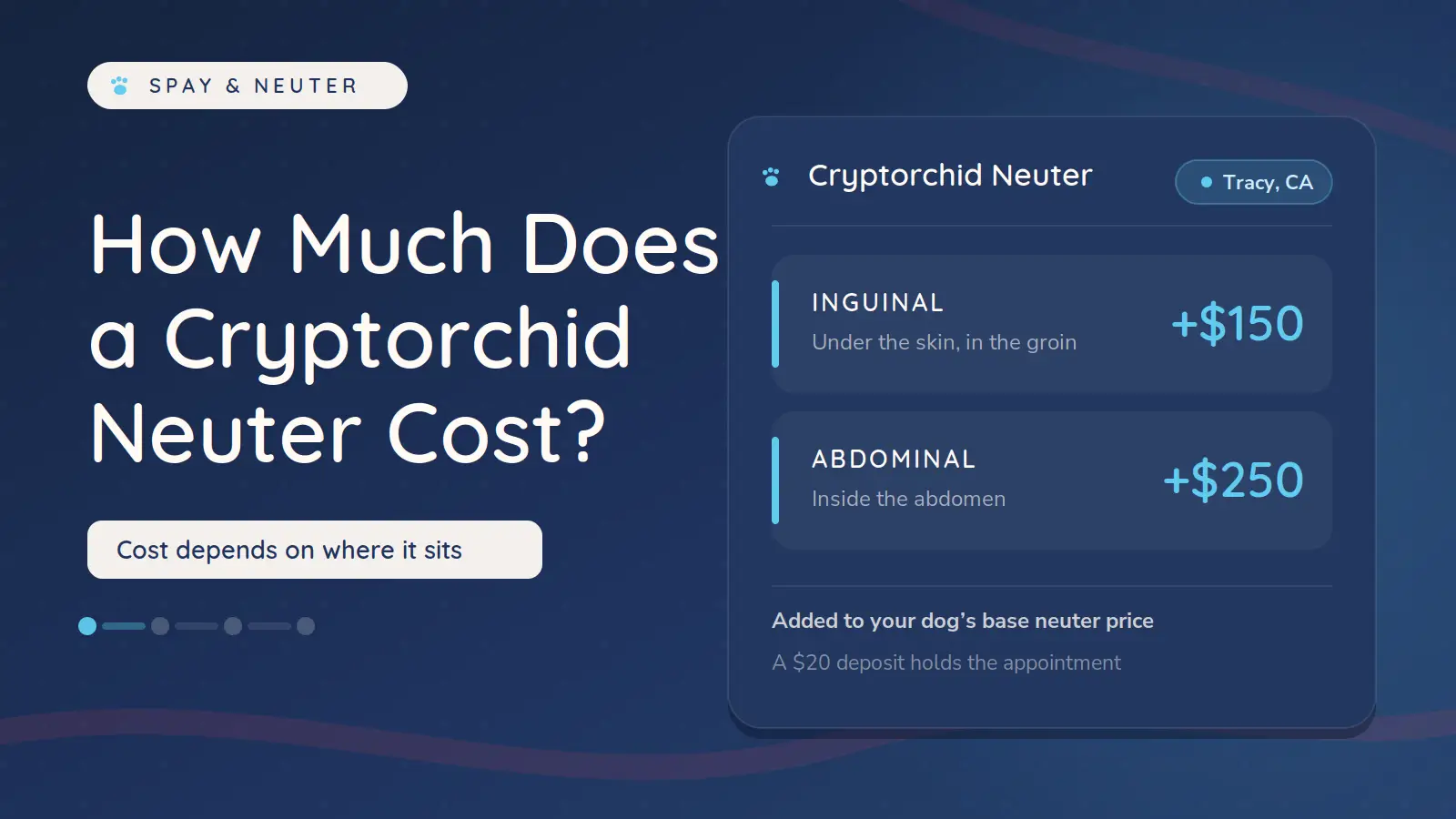
At our clinic, an inguinal testicle adds $150 to the neuter price. An abdominal testicle adds $250, because the procedure is longer and more involved.
You can see the base neuter price on our low-cost spay and neuter page and the full list on our prices and rates page. A $20 deposit holds the appointment and applies to the service.

A routine dog neuter takes us about four to ten minutes. An abdominal cryptorchid surgery is a different scale of work, because the testicle can be hiding anywhere in the belly. That kind of case can run for over an hour, sometimes several.
An inguinal case sits in between. We make a small extra incision in the groin to reach the testicle we already located.
The recovery for a cryptorchid neuter is close to the recovery for a routine one. The discharge instructions are the same: keep the dog rested and stop him from licking the incision while it heals.
The one exception is a long abdominal case. A surgery that runs much longer means we send the dog home with antibiotics, which most of our neuter patients do not need.
Our surgery day overview and discharge instructions walk through the full recovery.
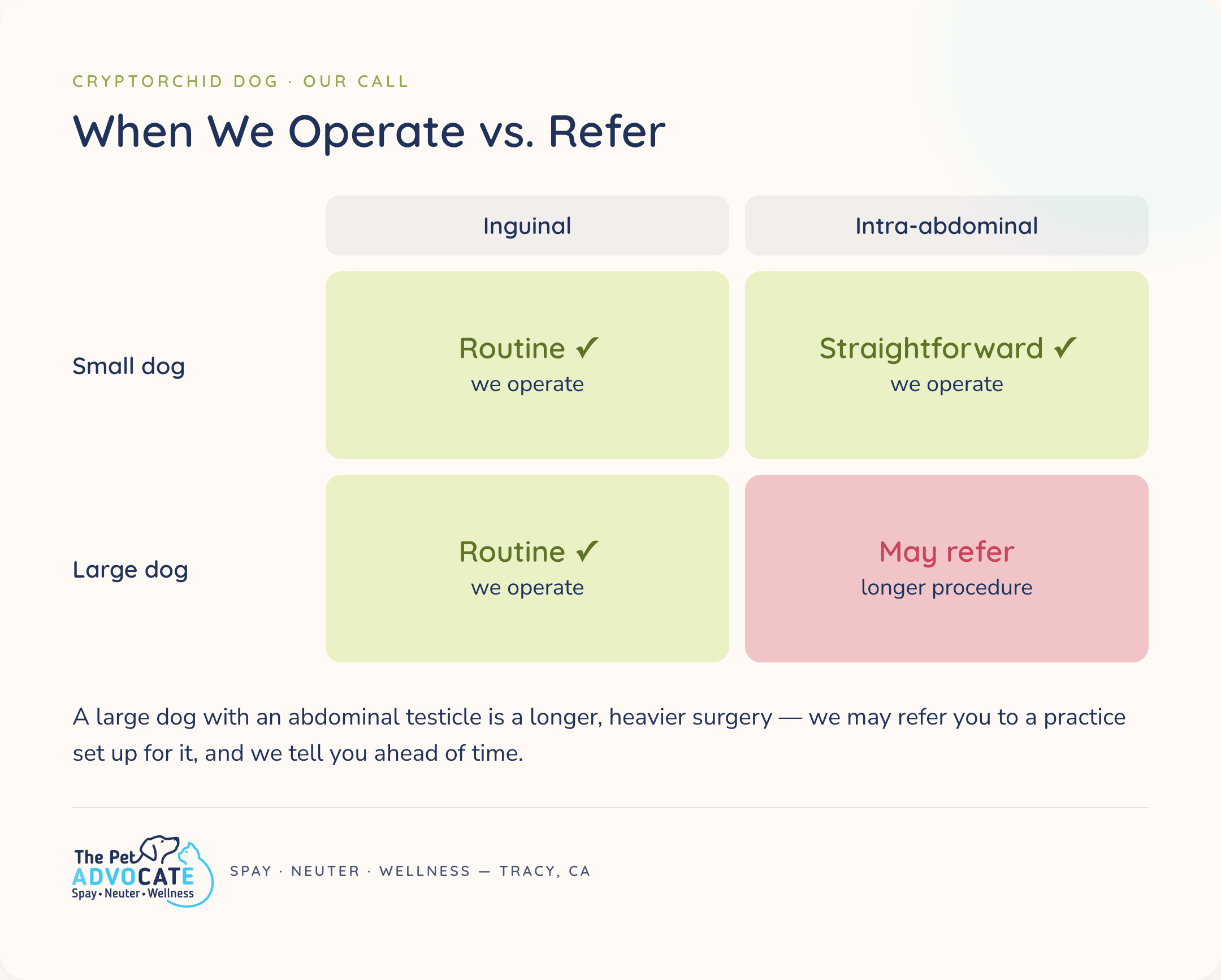
Most cryptorchid neuters are routine for us, including the ones we do for our shelter and rescue partners. Small dogs with an abdominal testicle are straightforward in most cases.
A large dog with an abdominal testicle is a longer, heavier surgery. A big breed like a German Shepherd with an internal testicle is a different matter. We may decline that case and refer you for an ultrasound or to a practice set up for a procedure that long. We tell you this ahead of time so there are no surprises on surgery day.
Cryptorchidism is inherited, so a dog with a retained testicle can pass the trait to his offspring. For that reason, breeding a cryptorchid dog is not recommended.
This is also why both testicles come out during surgery, not just the retained one. Neutering removes the cancer and torsion risk and takes the dog out of the breeding pool. You can learn more about our approach to spay and neuter procedures.
A cryptorchid dog has one or both testicles that failed to descend into the scrotum. The retained testicle sits either under the skin in the groin or inside the abdomen. It cannot correct itself after about six months of age, so surgical removal is the standard treatment.
Plan the surgery once the testicle is confirmed retained, which is clear by around six months when the inguinal canal closes. There is no benefit to waiting, since a retained testicle only carries risk the longer it stays in. Talk to your vet about the right timing for your dog's age and size.
At our clinic, an inguinal testicle adds $150 to the neuter price and an abdominal testicle adds $250. The exact total depends on the base neuter price for your dog, which you can find on our prices and rates page. The surgery costs more than a routine neuter because of the extra work to locate and remove the retained testicle.
A routine neuter takes about four to ten minutes. An abdominal cryptorchid surgery can run an hour or more, because the testicle can be hidden anywhere in the abdomen. An inguinal case falls in between, since the testicle is easy to reach once we have felt it on exam.
No. Cryptorchidism is an inherited trait, so a cryptorchid dog can pass it to his puppies. Veterinary sources recommend neutering rather than breeding affected dogs.
Yes. Both testicles come out during a cryptorchid neuter. Removing the descended testicle completes the neuter and prevents the dog from passing the trait to future litters.
Does your dog have a testicle you cannot feel in the scrotum? The next step is an exam so we can find it and plan the surgery. Book an appointment and we will walk you through the cost and the timeline for your dog.